J&J's Ottava Robot Folds Into the Operating Table Itself
Johnson & Johnson's long-awaited surgical robot hides its four arms beneath the table when not in use. The FDA just cleared it for ten common abdominal procedures.
Key points
- Johnson & Johnson MedTech received FDA de novo authorisation, a regulatory green-light for genuinely new devices without a direct predecessor, for its Ottava surgical robot in 2025.
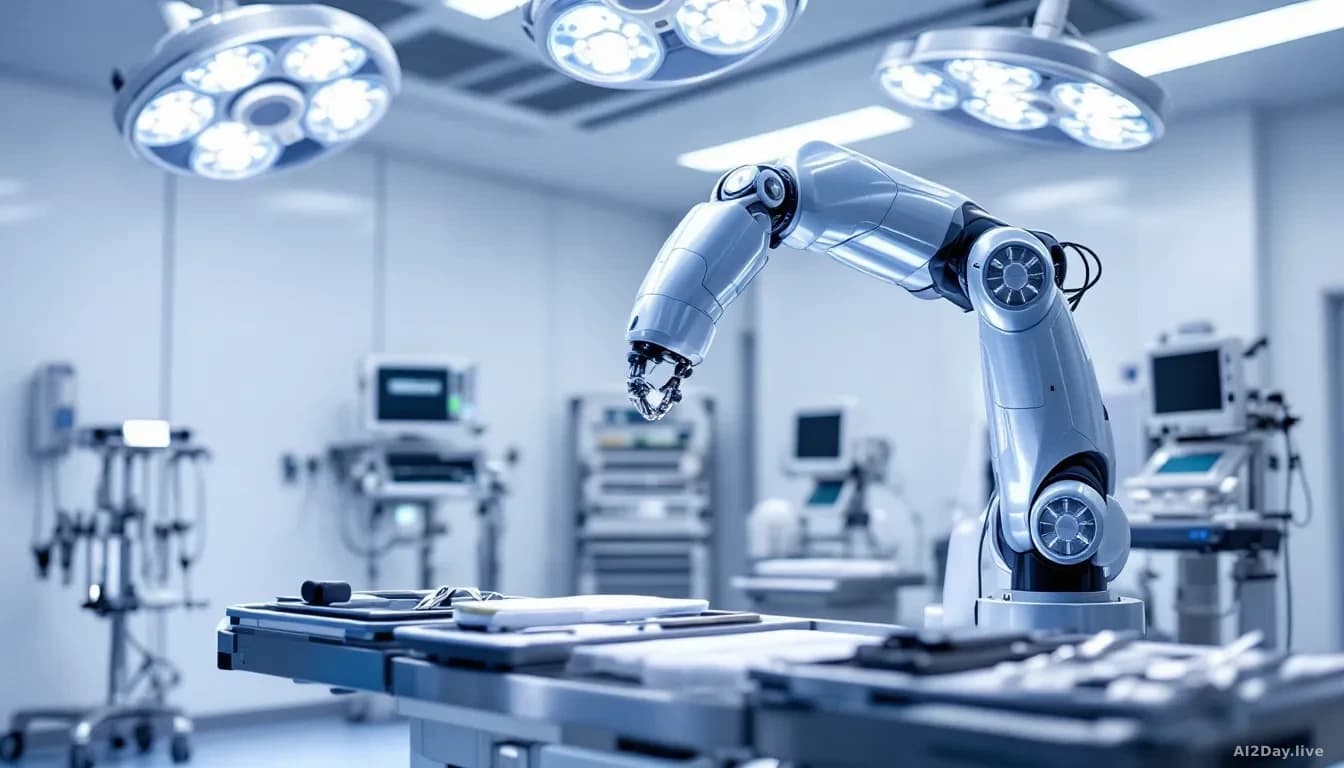
- Ottava's four robotic arms extend from beneath the operating table and retract when not in use, taking up 30% to 50% less floor space than conventional boom-and-cart surgical robots.
- The system is cleared for ten general surgical procedures, including gastric bypass, gallbladder removal (cholecystectomy), and hiatal hernia repair.
- An 83% rate of accidental suture cuts in robotic surgery motivated J&J to design a needle driver that physically prevents the wrong blade from activating.
Surgical robots already crowd the operating room. Ottava's big idea is to get out of the way.
Johnson & Johnson MedTech has unveiled Ottava after years of development, first reported by The Robot Report. The FDA cleared it under a "de novo" pathway, which applies when a device is genuinely new and has no close existing product to compare against. It's the first surgical robot with arms built directly into the table itself.
What makes this robot different?
Ottava's arms live inside the table, not on a separate cart wheeled in and clamped to the patient's bedside. That design cuts the system's footprint by 30% to 50% compared with the boom-and-cart robots that dominate most hospital operating rooms today.
At the push of a button, software coordinates all four arms into position for a specific procedure, shortening setup and teardown time. Surgeons work from a console designed for upright posture to reduce eye and neck strain, with personalised settings that load automatically at login.
What does it mean for patients?
The instruments got a redesign aimed at two problems J&J identified through surgeon surveys.
| Instrument | Problem it fixes | Stat behind it |
|---|---|---|
| Two-in-one needle driver | Accidental suture cuts | 83% of surgeons reported at least one per month |
| Redesigned monopolar scissors | Dull blades that don't cut cleanly | 98% of surgeons reported this; 30% said it happened most of the time |
Fewer accidental cuts during suturing and consistently sharper instruments both reduce the chance of complications that extend a hospital stay. Those aren't cosmetic improvements.
Ottava connects to J&J's Polyphonic digital platform, collecting procedure data for training and research, the same ecosystem used by J&J's Monarch bronchoscope robot. Hospitals can study their own outcomes rather than relying on a manufacturer's summary, which matters more than it sounds.
The cleared indications cover ten abdominal procedures today. More will require separate FDA submissions.
What happens next?
Ottava enters a market Intuitive Surgical has owned for two decades with its da Vinci system. J&J has deep hospital relationships, but Ottava is brand new and carries no long-term safety record yet. The contrast with Vicarious Surgical, which announced plans to dissolve last month, is worth keeping in mind: hardware alone doesn't win this market.
Hospitals weighing a purchase should ask hard questions about training time, service contracts, and what the outcome data actually shows once real-world cases accumulate. Cleared doesn't mean proven at scale.
One honest takeaway: If you're scheduled for a robotic-assisted procedure, it's completely reasonable to ask your surgeon which system they trained on and how many cases they've done with it. Experience with the specific robot matters more than the brand name on the table.