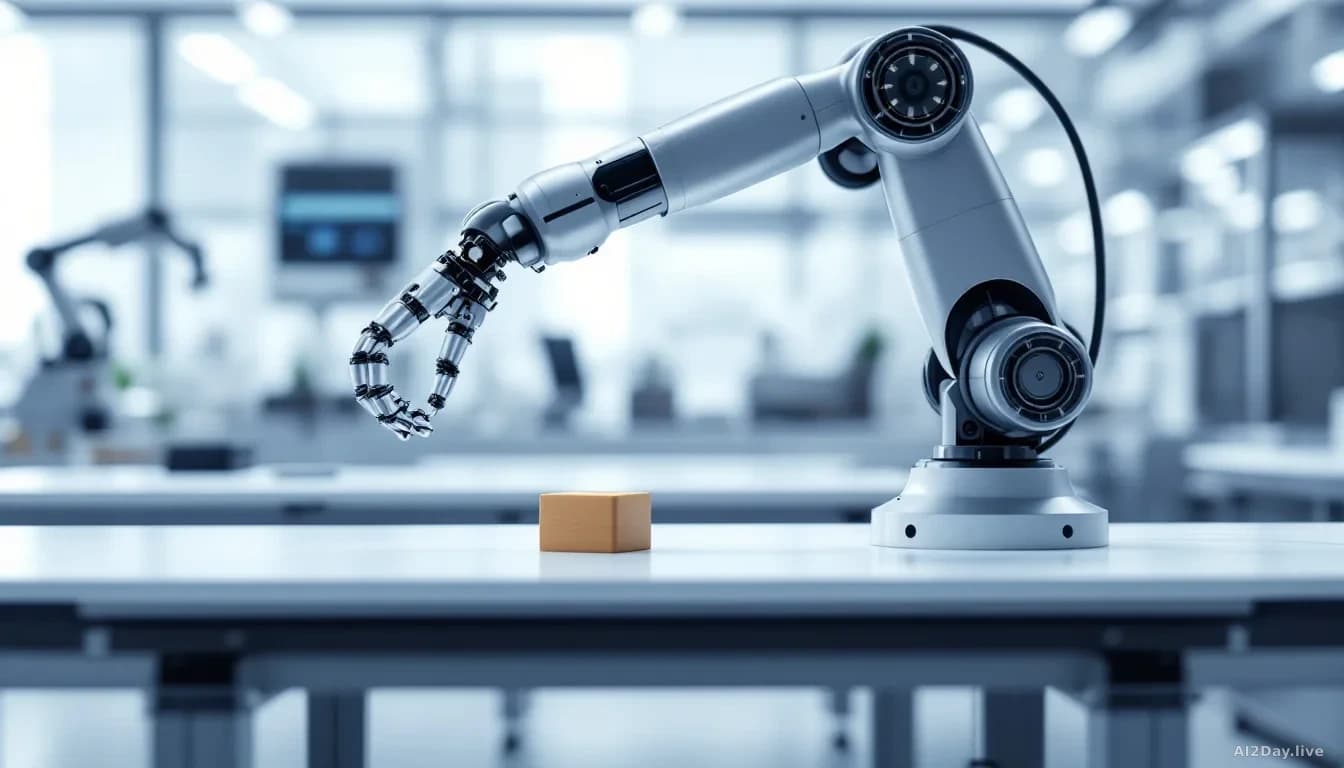
Humanoid robots could become a $370 billion market by 2040. Here is what is slowing them down
McKinsey puts the general-purpose robotics market on track for massive growth, but the software tools used to design these machines are still stuck in the past.
Key points
- McKinsey values the general-purpose robotics market at under $1 billion today, but projects it could reach $370 billion by 2040 if development continues at its current pace.
- Tesla and Figure AI are among the companies racing to be first with a commercially viable humanoid robot.
- Design and simulation software used by most manufacturers don't talk to each other properly, and that disconnect is slowing everything down.
- Siemens has launched a platform called Xcelerator that aims to connect every stage of robot design in one place.
- This piece was prompted by sponsored content from Siemens, first reported by The Robot Report.
Why is building a humanoid robot so hard?
It's not the arms or legs on their own. The problem is everything at once.
A typical humanoid robot has dozens of joints that must work together perfectly. Change the weight of one component and you throw off the machine's balance, its reach and how much power it drains. Every adjustment ripples outward.
Most manufacturers still use separate, disconnected tools. The team designing the body works in one piece of software; the team programming the robot's movement works in another. Bridging those two worlds often means rebuilding data by hand, so rough guesses replace real measurements. Simulations drift away from the actual design, and physical prototypes get frozen early just to avoid expensive do-overs later. A simulation that's drifted from reality is almost as bad as none at all.
What does this mean for the people who might use these robots?
If manufacturers crack the design problem, the upside for everyday workplaces is real.
Unlike traditional factory robots bolted to one spot on a production line, humanoid robots could walk between workstations, pick up unfamiliar objects and switch tasks without expensive hardware changes. Warehouses and hazardous worksites are the most likely early targets. Our earlier look at the factory-floor business case found that cost, not the technology itself, is still the bigger obstacle.
| Stage | Detail |
|---|---|
| Market today | Under $1 billion (general-purpose robotics) |
| Projected 2040 market | $370 billion (McKinsey estimate) |
| Key players racing | Tesla, Figure AI, others |
| Main technical hurdle | Design-to-simulation disconnect |
| Siemens solution launched | Xcelerator platform with Designcenter |
What is Siemens proposing?
Siemens says its Xcelerator platform connects mechanical design, motion simulation, manufacturing planning and software development in one shared environment.
The feature getting attention is native support for URDF files. URDF (Unified Robot Description Format) is a standard file type that describes a robot's joints and physical structure in a way simulation software can read directly. Siemens claims designers can export a URDF model from their design tool with a single click, rather than rebuilding it by hand at each stage. Those files then work with PhysX-based simulation engines, the physics software that tests how a robot moves before anyone builds a physical version.
Teams could validate balance, gait and reach far earlier in the process, cutting the number of costly physical prototypes needed. Whether that promise holds up outside a vendor's own benchmarks is the thing worth watching.
Common questions
Will humanoid robots actually arrive in workplaces soon, or is this still far off?
McKinsey's $370 billion figure is a 2040 projection, fifteen years out. Real commercial deployments at scale are still years away, but several companies are already running humanoid robots in pilot programmes inside factories today.
Should workers be worried about their jobs?
The honest answer is that nobody knows the full picture yet. Near-term targets are hazardous or highly repetitive tasks, not most skilled roles. Regulators, unions and employers will all shape how this plays out long before the technology reaches anything like mass deployment.