Hadrian Raises $1.37 Billion to Build AI-Powered Defense Factories Across the US
The automated manufacturing startup, valued at $7.87 billion after the round, now controls nearly three million square feet of factory space and plans to expand into munitions and autonomous weapons production.
Key points
- Hadrian Automation raised $1.37 billion in new equity financing, announced last week.
- The funding values Hadrian at $7.87 billion, up from $1.6 billion in January 2025.
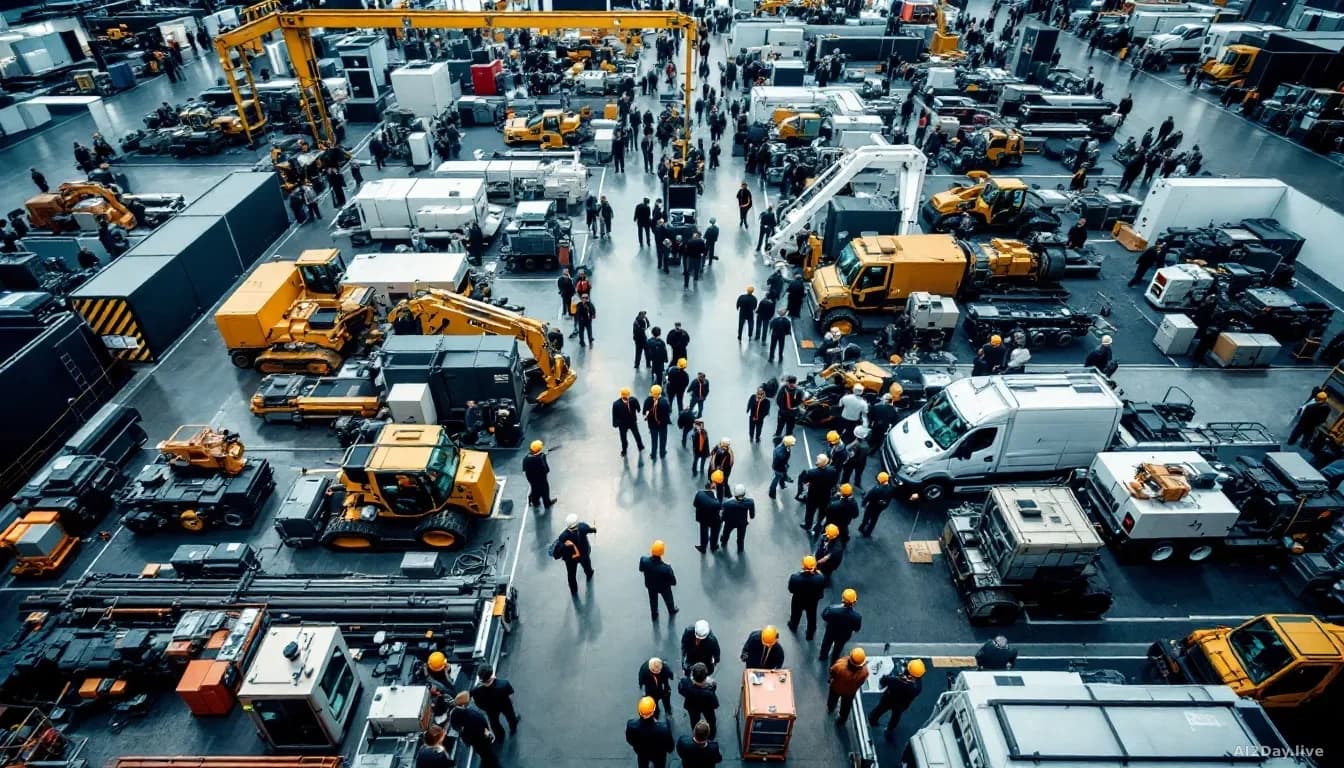
- Hadrian operates four factory sites totalling just under 3 million square feet across California, Arizona, and Alabama.
- WCM Investment Management, JPMorganChase, Andreessen Horowitz, and Founders Fund are among the investors.
- Hadrian plans to open additional factories and expand into munitions and autonomous-systems production over the next year.
A startup that builds highly automated factories for the US military and aerospace sectors just pulled in one of the largest manufacturing investment rounds in recent memory.
Hadrian Automation, based in Torrance, California, announced $1.37 billion in new funding last week, as first reported by The Robot Report. It's the company's second raise this year. The round lifts its valuation to $7.87 billion, up from $1.6 billion in January, roughly a five-fold jump in under twelve months.
What does Hadrian actually do?
Hadrian builds factories that combine AI, robotics, and process engineering to make precision parts for defence, aerospace, and industrial customers. It's essentially a contract manufacturer, but one where software and robots handle much of what a human machinist used to do.
Founded in 2020, the company runs its factories on a proprietary software system called Opus, which automates production end to end. Its stated ambition is to rebuild US industrial capacity and compete directly with China's manufacturing base.
Hadrian currently runs four sites. Its original 100,000-square-foot factory in Torrance is joined by newer facilities in Mesa, Arizona, and Muscle Shoals, Alabama, bringing total capacity to just under 3 million square feet. Our 10 August story on Tate Inc.'s 58-robot welding overhaul showed a similar bet paying off in per-unit output, which gives Hadrian's approach some grounding in demonstrated results rather than projection.
Where does the money go?
New factories, expanded R&D, and new production lines. Hadrian says the capital will let it move beyond individual precision parts and start delivering complete military systems, including munitions and hardware for autonomous systems, two areas where US defence planners say domestic supply has struggled to keep pace with demand.
The company also frames this as a workforce story, hiring and training technicians and engineers to work alongside its robots rather than replacing them.
"Production is now the frontline of deterrence," said Chris Power, Hadrian's founder and chief executive, in a statement to the original outlet. "America's ability to lead will depend on whether we can build, train, and scale faster."
Who put up the money?
The round was co-led by WCM Investment Management, Washington Harbour Partners, Valor Equity Partners, 137 Ventures, and Baillie Gifford. JPMorganChase's Strategic Investment Group joined as anchor co-lead, investing through the firm's Security and Resiliency Initiative. Apollo, T. Rowe Price Associates, Morgan Stanley Wealth Management, 1789 Capital, CapitalG, Andreessen Horowitz, Founders Fund, Lux Capital, Altimeter, and Construct Capital also participated.
The breadth of that list, spanning defence-focused funds, major banks, and Silicon Valley venture firms, signals broad institutional confidence that US government demand for domestic manufacturing capacity will hold.
| Milestone | Detail |
|---|---|
| Founded | 2020, Torrance, California |
| Valuation, January 2025 | $1.6 billion |
| Valuation after latest round | $7.87 billion |
| New funding raised | $1.37 billion |
| Factory footprint | Just under 3 million sq ft, four sites |
| Factory locations | Torrance CA, Mesa AZ, Muscle Shoals AL |
What's worth watching here isn't the valuation, it's whether Hadrian can actually deliver complete weapons systems at scale rather than precision parts. The jump from machined components to full munitions programmes is operationally enormous, and the next twelve months will show whether the automation thesis holds under that kind of pressure.