Google's Playground Lets Anyone Build a Video Game by Typing. Here's What Actually Comes Out.
The new AI experiment from Google Labs turns a text prompt into a playable browser game in minutes. The results are real, shareable, and limited in ways that matter.
Key points
- Google launched Playground, an experimental AI game-creation platform inside Google Labs, in October 2026, requiring no coding to build and share browser-based games.
- Games are built through typed prompts, a conversational approach sometimes called "vibe coding", where you describe what you want and the AI constructs it.
- Usage is capped: every new game and every revision draws down a credit allowance, and once it runs out you wait for it to refresh or pay for more.
- Wired AI tested the platform hands-on and found the results playable but samey, with similar menus, music and combat styles emerging across different genres.
- Google's own blog labels the platform explicitly experimental, meaning it hasn't graduated to an official product.
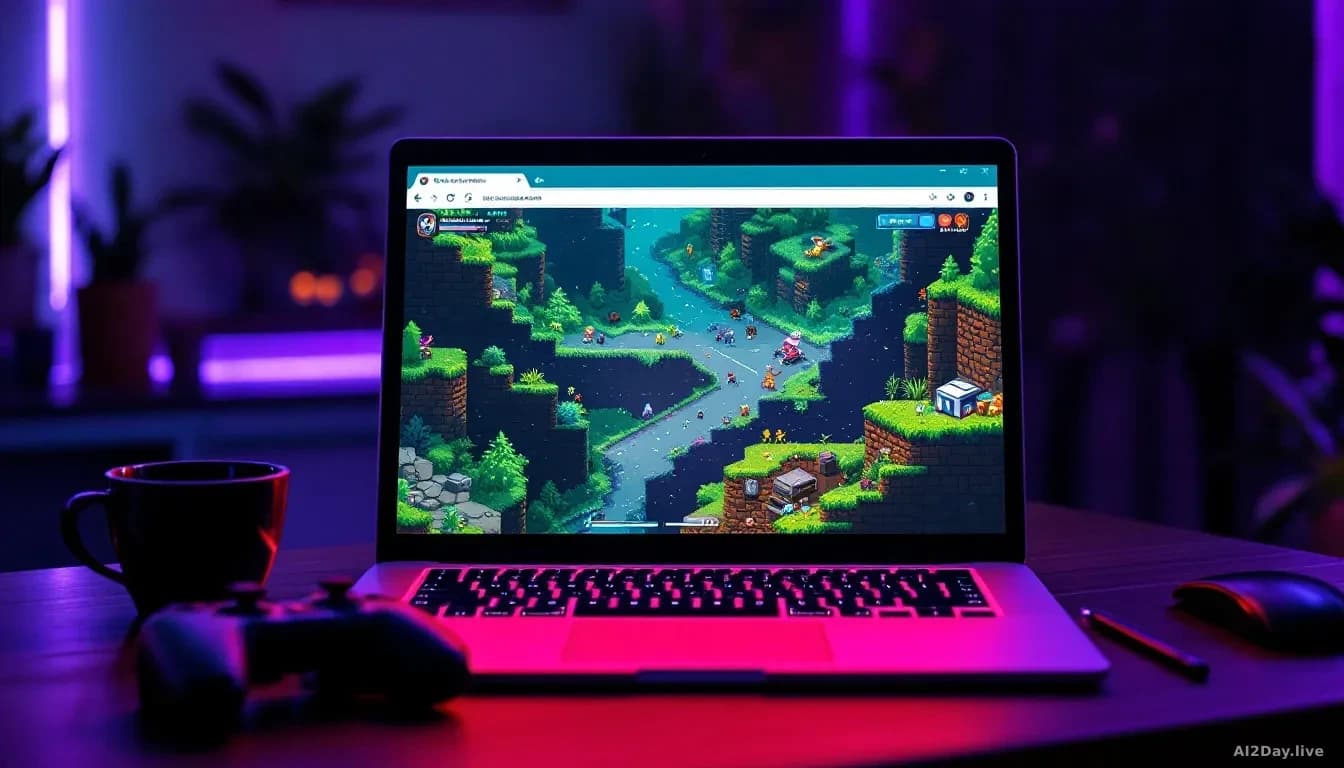
Anyone can sign in with a Google account and have a working game running in their browser within minutes. That's the actual promise of Playground, Google's new AI-powered game-creation experiment, which arrived this month inside Google Labs, the company's testing ground for ideas not yet ready for a full product launch. No code required, no game engine, no art background. Just a chat window.
What does Playground actually produce?
It produces real, playable games, but the ceiling arrives quickly. Wired AI built three games in a single day: a Tetris clone with pig-shaped blocks and a top-down cyberpunk shooter featuring a divorce-haunted antihero named Neon Don. The games ran, they had music, and strangers played them. Neon Don had racked up seven unique players by publication.
Scroll through the public library and a pattern emerges: different genres, almost identical menus and near-identical music, whatever the theme. The AI's creative range is narrower than its concept range.
Iterating helps. A patient user who knows how to describe game mechanics precisely, things like level scaling and enemy variety, can push the output further. Someone with actual game-design knowledge gets more mileage than someone typing "make Don taller" or "more divorced." Both are valid instructions. Only one of them sharpens the game.
Who else is doing this?
Meta announced a comparable service called Horizon Create in September 2026. The approach is similar: describe a game in plain language and an AI builds a playable version. Two major platforms arriving within weeks of each other says something about where development effort is currently going.
We first covered Google Labs on 18 September, when Jane Wade and Sergio Hudson used Google Flow to pre-style models for NYFW on a constrained budget. A no-code game builder is a different application of the same logic: open a creative discipline to people who'd previously needed years of technical training to enter it.
Playground is still an experiment, though. Google's blog says so explicitly, and the usage cap reinforces it. Every prompt, every tweak, every rebuild costs credits. Run out and you wait.
Should anyone take this seriously?
For casual creativity, yes. For anything close to a finished product, not yet. The sameness Wired AI identified fits the broader pattern of AI slop, content that's technically functional but feels mass-produced, and Playground's output can slide into that territory fast.
That's not a reason to dismiss it. It's a reason to walk in with accurate expectations. Playground is a sketch pad, not a studio. The person who uses it to discover what they actually want to build, and then goes to learn how to build it properly, will probably get the most from it. What's worth watching is whether Google lets this graduate, or whether the credit cap and the sameness problem quietly kill it first.
Common questions
Do you need a paid Google account to use Playground?
No. Google says you can sign in with a standard Google account to create and share games. A usage cap applies regardless of account type, and the platform is free in its current experimental form.
Can other people play the games you make?
Yes. Finished games are shareable and appear in a public library where any signed-in user can find and play them, as the Wired AI hands-on confirmed with real player counts.