Four of Google's Most Celebrated AI Scientists Are Leaving to Build a Machine That Does Science Itself
Jeff Dean, the engineer behind Google's search infrastructure and its Gemini AI model, is co-founding Discovery Loop, a startup whose goal is to run thousands of automated experiments and out-invent the world's largest research labs.

Key points
- Jeff Dean, co-founder of Google Brain and technical co-lead on Google's Gemini AI model, is leaving Google after almost 27 years to start a new company called Discovery Loop.
- Three other senior Google AI scientists are joining him: Sanjay Ghemawat, Oriol Vinyals, and Quoc Le make up the full founding team.
- Discovery Loop wants to build AI that runs the scientific method on its own, proposing experiments, running them, learning from the results, without human sign-off at each step.
- Google will take a stake in the new company and supply computing power for the first year, but all four founders are leaving full-time employment there.
- Khosla Ventures and Radical Ventures have backed the company; the funding total and valuation have not been disclosed.
Who is leaving, and why does it matter?
Jeff Dean is to Google what a head chef is to a three-Michelin-star kitchen. He helped build the search infrastructure millions of people use daily and co-led the Gemini project. Leaving with him is Sanjay Ghemawat, his long-time collaborator on Google's core computing systems, along with Oriol Vinyals, who served as VP of research at DeepMind, and Quoc Le, the scientist behind AutoML-Zero, a project that uses machine-learning algorithms to design new AI tools autonomously.
Alphabet CEO Sundar Pichai met with the group multiple times trying to keep them. He couldn't. "In a large organisation there is always a lot of inertia you have to overcome to make any radical changes," Vinyals told Wired AI. "We want to build something different."
Google gets a consolation prize of sorts: an equity stake, cloud computing credits for the startup's first year, and a research collaboration. It's still a significant loss.
What will Discovery Loop actually do?
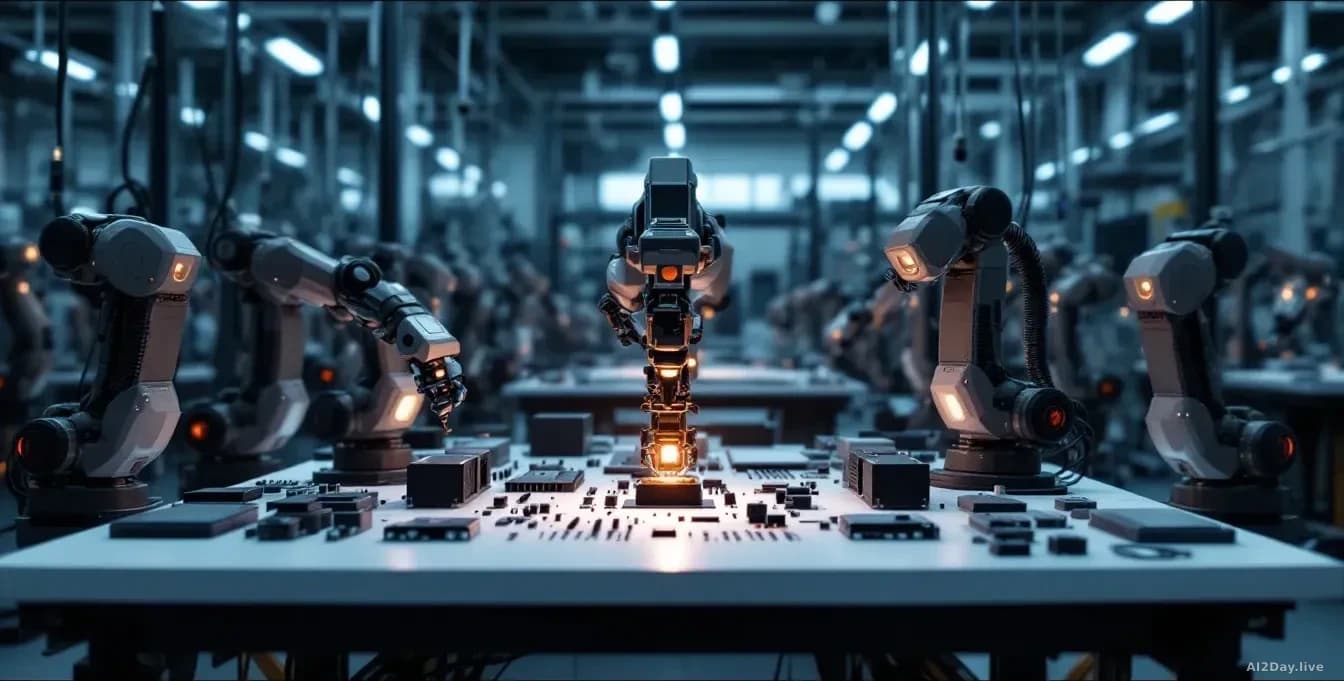
The core idea is to automate the scientific method. A scientist normally forms a hypothesis, designs an experiment, runs it, reads the results, then starts the whole cycle again. Discovery Loop wants software to handle every step, thousands of times in parallel, without waiting for human approval between rounds.
The first target is the company's own backyard: improving the machine-learning algorithms it will use to build its AI system. Better algorithms feed back into the loop, making each subsequent round faster. "It might be that we will discover a different transformer architecture," Le said, referring to the underlying design that powers most modern AI models including ChatGPT.
After that, the team plans to point the same loops at chip design, biology, drug discovery and material science. Small teams using Discovery Loop, the founders argue, could eventually match the output of entire corporate research departments, or exceed it.
On 22 July we reported how Google was already channelling $40 million of AI credits into America's national science labs, where one lab cut a 90-minute task to 13 minutes using Gemini. Discovery Loop is a far more radical wager on the same underlying idea.
Should ordinary people care about this?
For now, this is a story about a startup that has not yet hired staff or rented office space. Its ambitions are enormous; its current headcount is four.
But the direction of travel matters. If Discovery Loop delivers even a fraction of what it promises, it changes who gets to make scientific breakthroughs. Today that requires thousands of researchers and billions in funding. A tool that automates the experiment cycle could shrink that requirement dramatically.
Whether four brilliant engineers can actually build that tool is, of course, the whole question. "Building something to solve all those problems is a powerful idea," said Radical Ventures managing partner Jordan Jacobs, who is joining the board. "These people have been doing this kind of work in the past so they know what they're doing."
Vinod Khosla put it plainly: "Humans have been using AI to do research, not using AI to be a researcher."
That single sentence is the entire bet. The mission itself is not new; Sam Altman, Dario Amodei and Jensen Huang have each made versions of the same claim. What's different here is the team making it.