Australia's Government Is Writing the Rules for AI Data Centres. Can It Actually Work?
A senior minister is talking about copyright scraping, public distrust and national standards for data centres. What the policy push means for ordinary Australians.
Key points
- Australia's Labor government announced new environmental and energy safeguards for data centres in 2025.
- Assistant minister Dr Andrew Charlton is pushing for national standards that every data centre in Australia must meet.
- Anthropic, the US AI company behind the chatbot Claude, scraped Dr Charlton's own book without his permission.
- Low public trust in AI is one reason the government sees regulation as necessary rather than optional.
- The policy covers both environmental impact and energy use.
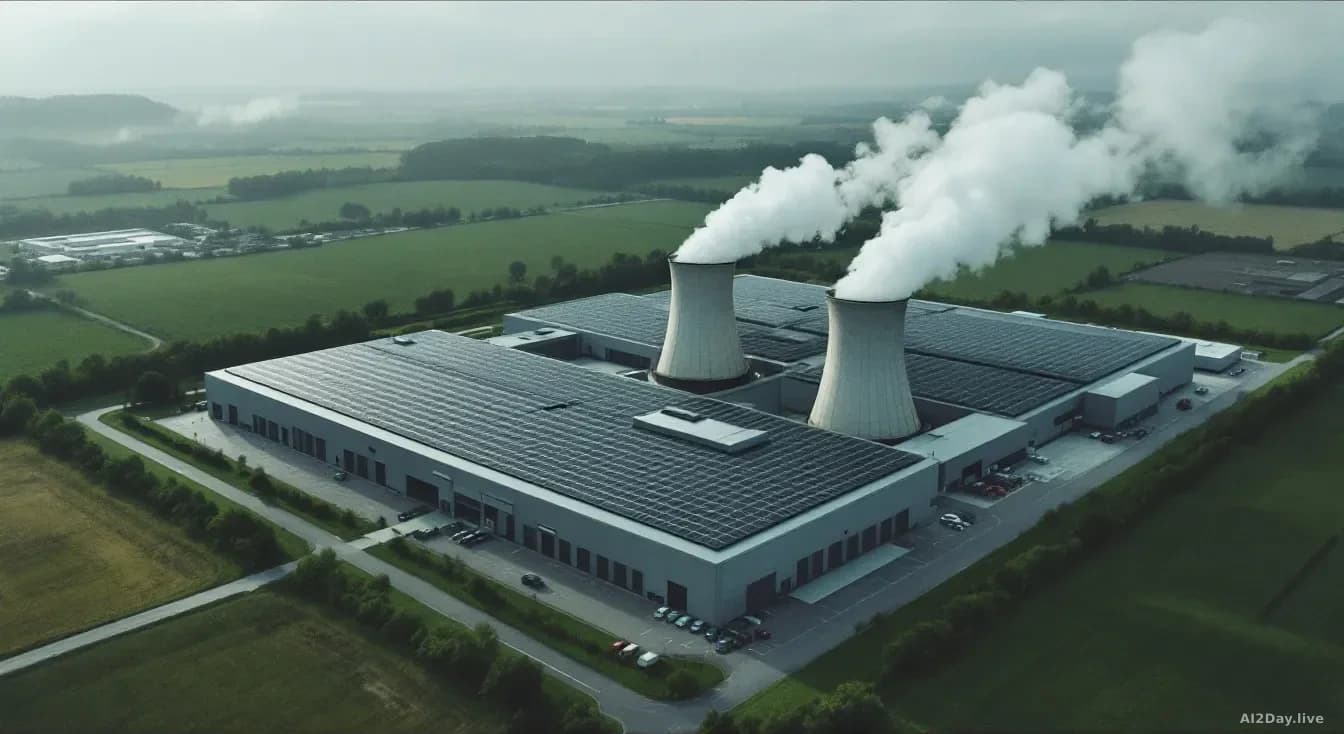
Australia just put data centres, the giant warehouse-scale buildings packed with computers that power AI services, at the centre of its technology policy. On Wednesday, the Labor government announced new environmental and energy safeguards covering these facilities. The rules are designed to make sure the country's AI boom doesn't come at an unchecked cost to the power grid or the environment.
Assistant minister for science, technology and the digital economy Dr Andrew Charlton spoke to The Guardian Australia's political editor Tom McIlroy about the plan. He wants a single set of national standards that every data centre must meet, not a patchwork of state rules.
Why should ordinary Australians care?
Data centres quietly run almost everything digital, from your streaming service to your bank's app. More AI means more data centres, and more data centres mean more electricity drawn from the grid and more pressure on local land use. Britain has already moved on this: we reported on 29 July that Ofgem wants data centre operators to put real money on the table before reserving a grid connection.
Charlton's framing is a balance: attract the jobs and economic growth, but not at any price.
What about AI and copyright?
One detail stands out. Charlton, an economist and former adviser to Prime Minister Kevin Rudd, revealed that Anthropic scraped his own published book without permission to train its AI models. Training means feeding an AI system vast amounts of text so it learns to generate human-like responses.
It's a personal illustration of a problem that reaches well beyond politics. AI companies have hoovered up enormous libraries of human-created work, and who should profit from it remains largely unsettled in Australian law. AI2Day covered the broader fight on 29 July, when authors, musicians and illustrators sued tech giants for using their work without consent. On 1 August, we also found that old books are being bulk-bought, scanned for AI training data, then destroyed.
Does the public actually trust AI?
Not much, according to Charlton. Low public trust is one reason the government sees regulation as necessary. Trust doesn't appear automatically just because a technology is useful.
Charlton's argument is that clear, enforceable rules build the kind of confidence that lets people actually benefit from AI rather than fear it. Whether legislation can keep pace with the technology is the harder question, and the one worth watching.
Common questions
What are data centre safeguards, in plain terms?
They're rules that require data centres to meet minimum standards on energy efficiency and environmental impact before they can operate, similar to building codes for physical construction.
How does this affect me as a consumer?
Not much changes day-to-day in the short term. Over time, stronger standards could mean cleaner AI services built on infrastructure that doesn't strain the local grid.
What is the copyright scraping issue about?
When an AI company trains a model, it reads enormous amounts of text from books and online sources. Authors like Dr Charlton say that happened without their consent or payment, and Australian law hasn't clearly resolved whether that's legal.