Anyone Can Now Help Teach Robots to Pick Things Up
A new open-source handheld gripper called Grabette lets ordinary people record robot training data at home, no robot required.
Key points
- Grabette, released by Pollen Robotics in 2025, is a handheld gripper that records robot manipulation data without needing an actual robot.
- The device costs roughly 490 euros to build from standard, off-the-shelf parts.
- Recorded demonstrations upload automatically to the Hugging Face Hub, a public platform for sharing AI tools and datasets.
- A companion robot gripper called Gripette, costing around 120 euros to build, attaches to a robot arm and acts out what Grabette recorded.
- All hardware designs, software, and data are fully open source.
The biggest obstacle to teaching robots how to handle objects is not the AI itself. It is the sheer lack of training data: real-world examples of hands picking things up, opening drawers, placing cups.
Collecting that data normally means owning a robot, running expensive teleoperation rigs (systems where a human remotely controls a robot's movements), and logging hours of painstaking work in a lab. Most research teams cannot afford it at scale.
Pollen Robotics, a French robotics company, thinks the answer is to skip the robot entirely.
Their new device, Grabette, is a handheld gripper you hold in your own hand. You pick it up, perform a task, and press a button. Two cameras record what you did. One wide-angle fisheye camera captures the scene around the hand. One depth camera tracks the precise position and rotation of the gripper in space, a measurement called 6-DoF (six degrees of freedom, meaning every direction and angle of movement). A small computer called a Raspberry Pi stores everything locally.
Then you open a dashboard in your web browser, select the recordings you want, and click once. The system uploads the data, checks the motion tracking did not glitch, converts everything into a standard format called a LeRobot dataset, and pushes it to the Hugging Face Hub, originally reported as the distribution platform by Hugging Face. No software to install. No command line.
Grabette takes direct inspiration from Stanford's Universal Manipulation Interface, a research project that proved handheld demonstration devices could train real robot policies. Pollen's goal was to strip away every remaining barrier.
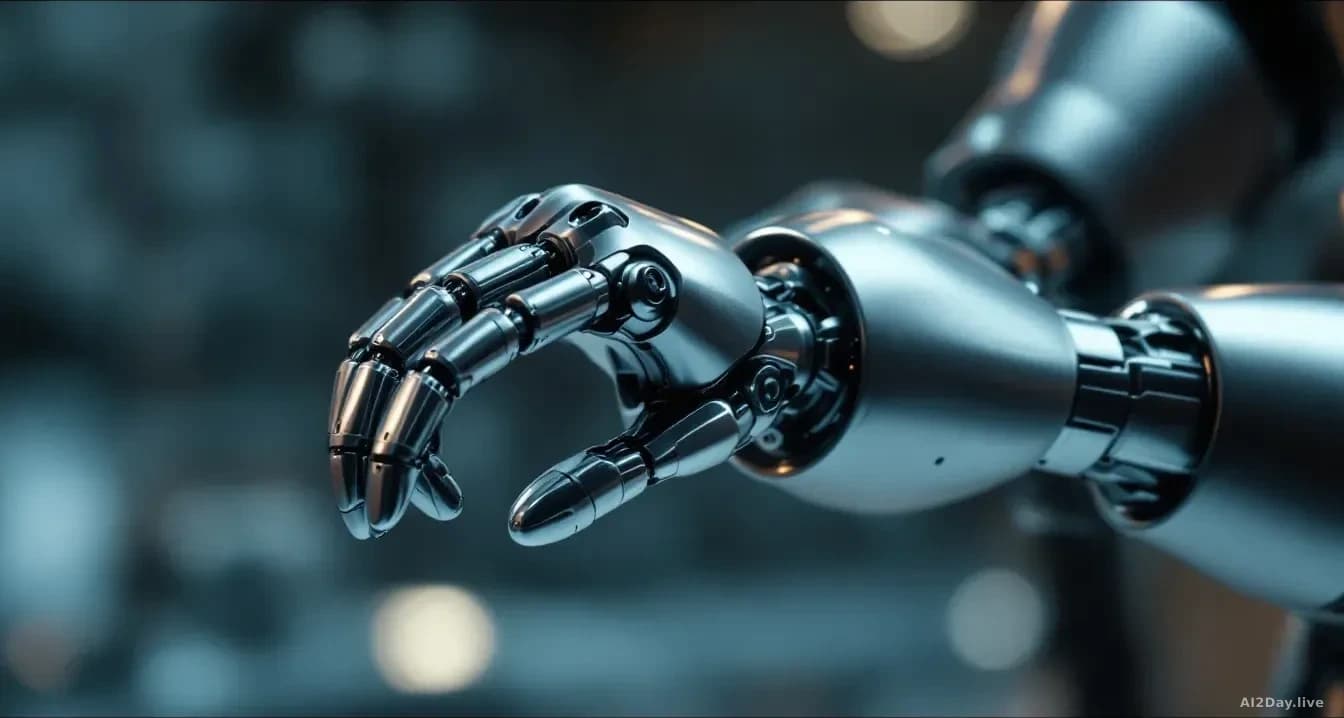
The recorded data does not sit idle. Pollen demonstrated the full chain using 200 demonstrations to train a diffusion policy, a type of AI model that learns to copy movement patterns, running on a single consumer graphics card. That trained model then drove a real robot arm fitted with Gripette, a motorised gripper twin that costs around 120 euros to build and shares the same design DNA as Grabette.
Nothing in the system locks you to one robot brand or one AI method. The data format is standard, so the same recordings can train different robots.
What does this mean for people outside robotics labs?
It means that building shared robot training datasets no longer requires a university budget or a warehouse full of hardware. A teacher who wants to demonstrate how to sort recycling, a physio who wants to capture a rehabilitation exercise, a small manufacturer who needs a robot to handle a specific part: each of them could record demonstrations on a workbench and contribute to a growing public dataset.
Pollen is openly asking the community to do exactly that. Every new recording makes the shared dataset broader and less biased toward tasks that only well-funded labs think to include.
A head-mounted camera device called Casquette, designed to capture a first-person point of view, is already in development as a companion tool.
All hardware designs, code, and datasets are publicly available on GitHub and the Hugging Face Hub.