America's AI Data Centers Run on Chinese Parts. Washington Wants to Change That.
From the boxes that regulate electricity to the cables that carry data, a surprising share of the hardware keeping US AI facilities running comes from China. Costs and delays loom if that changes fast.
Key points
- China supplies roughly 30% of certain transformer and switchgear categories used in US data centers, according to Johns Hopkins University research.
- Chinese firms account for over 40% of US battery imports and about two-thirds of global optical transceiver unit supply.
- US data center capacity is forecast to nearly triple, from 62 gigawatts in March 2026 to 152 gigawatts by 2030, per S&P Global.
- President Trump signed an executive order in 2025 declaring a national emergency over foreign-made power equipment, authorising the Energy Department to block certain purchases.
- Power transformer and substation markets already face estimated shortages of 15% and 8% respectively in 2026, before any new import restrictions bite.
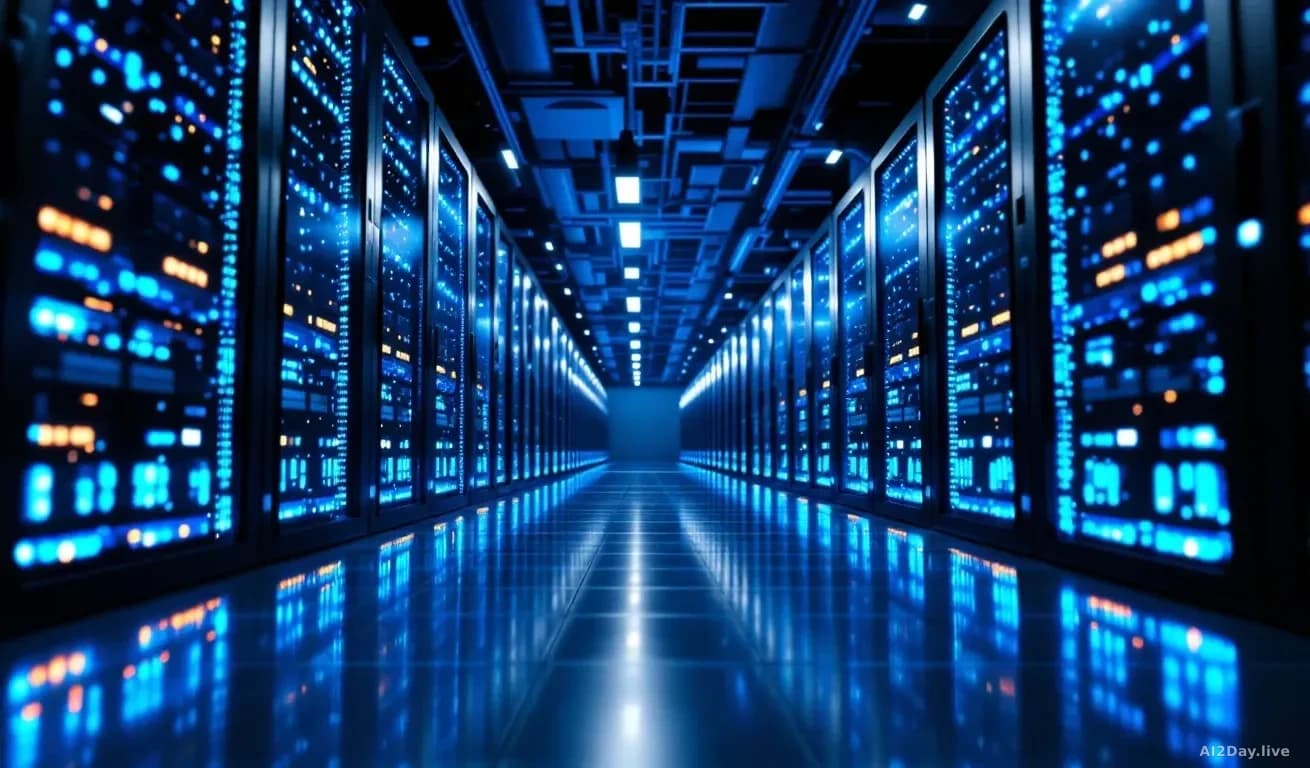
America is spending hundreds of billions of dollars building the data centers that run artificial intelligence. There's one uncomfortable detail buried inside that spending: a large slice of the hardware keeping those facilities powered and connected is made in China.
That dependency, first reported in detail by CNBC Tech, is drawing urgent attention in Washington.
What exactly comes from China?
The exposure is broader than most people realise. Data centers need transformers, large electrical devices that take high-voltage power from the grid and step it down to levels servers and cooling systems can safely use. Switchgear, control panels packed with circuit breakers and fuses, protect the facility when something goes wrong. Backup batteries keep systems alive during outages.
China's share of certain transformer and switchgear categories runs near 30%, according to Yury Dvorkin, an associate professor at Johns Hopkins University. China accounts for over 40% of US battery imports. Chinese manufacturers Zhongji Innolight and Eoptolink lead the optical transceiver market globally, with Chinese firms collectively supplying roughly two-thirds of global units, according to research firm Counterpoint. Optical transceivers are small modules that fire data as pulses of light along fibre-optic cables between buildings.
The exposure goes deeper still: copper and electrical steel, the raw materials those components are built from, also flow heavily from China.
Why is this a problem right now?
AI is hungry for electricity, and the demand is accelerating fast. US data center capacity is forecast to grow from 62 gigawatts in early 2026 to 152 gigawatts by 2030, S&P Global found in June. Building that infrastructure requires enormous quantities of exactly the equipment China currently supplies cheaply and quickly.
Power transformers and substations are already in short supply: Wood Mackenzie estimates shortages of around 15% and 8% respectively in 2026, before any restrictions take effect. Data center operators have leaned on Chinese manufacturers specifically to cut waiting times for the largest transformer sizes.
President Trump signed an executive order declaring a national emergency over foreign-made bulk-power equipment, authorising the Energy Department to block or impose conditions on related purchases. Washington is also reportedly drafting a ban on new Chinese optical transceivers. We've tracked the executive order's political context in our earlier piece on Trump's warnings to datacenter opponents.
What happens if the US cuts Chinese suppliers off?
Higher costs and longer waits, at minimum. Nvidia invested $2 billion each in US optical component makers Lumentum and Coherent in March, signalling a push toward domestic alternatives. But Neil Shah, VP research at Counterpoint, warned in an August report that Western rivals currently lack the cleanroom capacity, automated packaging infrastructure, and yield scale to absorb Chinese volume within 12 to 24 months. That's an honest assessment of how hard this is.
Hitachi Energy committed $1 billion in September 2025 to expand US grid hardware production, including a $457 million transformer facility. Siemens Energy pledged another $1 billion in February for US grid and gas turbine equipment. Those investments take years to bear fruit, and the gap between today's shortages and tomorrow's domestic capacity is where the real risk sits.
The comparison analysts reach for is the 5G rollout, where stripping out Chinese telecoms gear mid-build caused delays and rising costs for carriers. Washington appears determined not to repeat that with AI infrastructure, but determination doesn't shorten factory construction timelines.
Common questions
Does this affect ordinary people?
Not directly today, but slower or costlier AI infrastructure could delay AI-powered services and push up electricity prices in areas where large data centers are being built.
Are there US-made alternatives available right now?
For some components, yes, though not at the scale or speed needed. Domestic and allied-country manufacturers are expanding, but full replacement of Chinese supply will take several years by most accounts.