AI Datacenters Are Piling Up Debt. Is a Crisis Coming?
Some analysts warn that companies building AI datacenters are hiding enormous debts off their books. The comparison to past corporate collapses sounds alarming. Here is why most analysts think they're drawing the wrong parallel.

Key points
- Meta, Oracle, xAI and CoreWeave are borrowing billions to build AI datacenters at a rapid pace.
- Critics say some of that debt doesn't appear on company balance sheets, the official documents showing what a company owes.
- Analysts comparing this to the Enron scandal, where hidden debts caused a sudden corporate collapse in 2001, are reaching for the wrong parallel.
- The debt is real, but physical assets back it, and disclosure rules are tighter than they were in Enron's era.
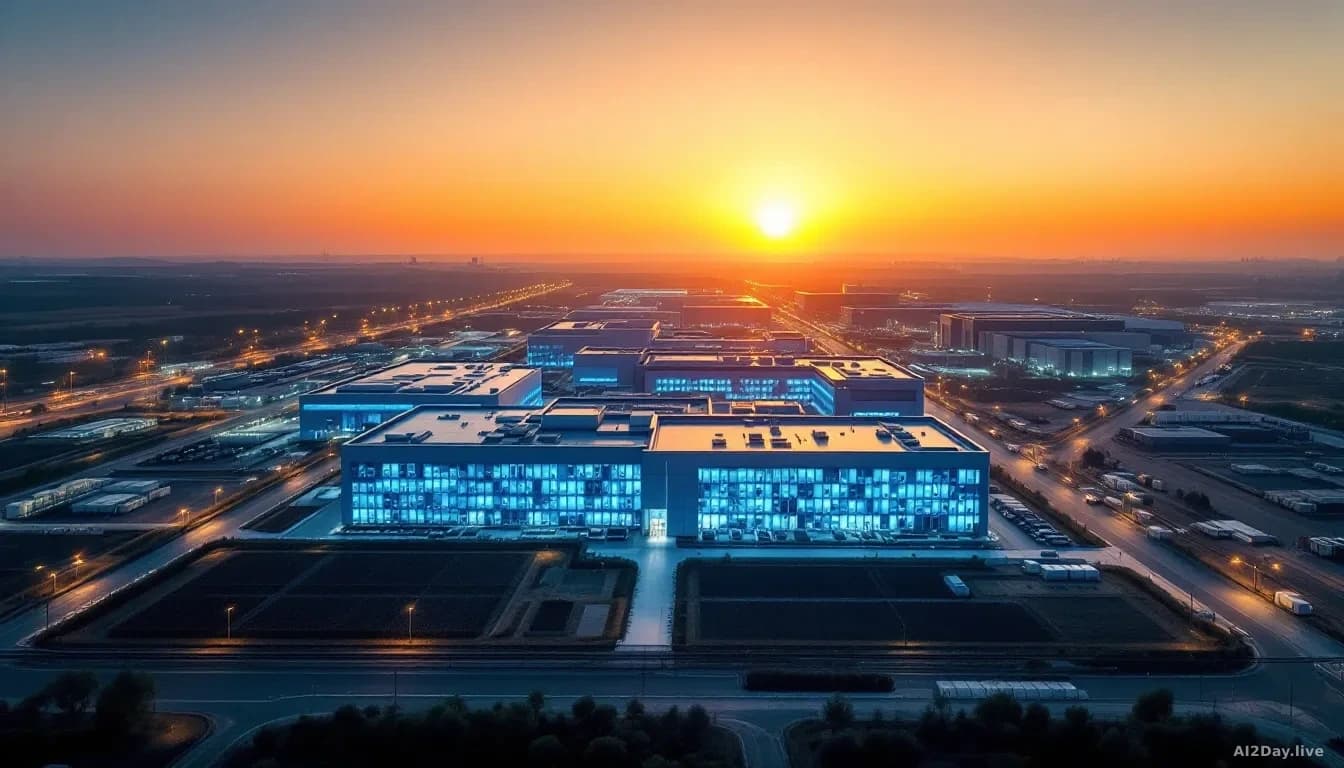
Across the United States and Europe, technology companies are pouring concrete and installing rows of specialised computing hardware to meet surging demand for artificial intelligence. Meta, Oracle, xAI (Elon Musk's AI company) and CoreWeave (a cloud computing firm that rents out AI hardware) are among the biggest spenders. The price tags run into the tens of billions of dollars, and most of that money is borrowed.
So what is the actual worry?
Some financial analysts are calling it a potential "debt bomb." Their concern is specific: a chunk of this borrowing doesn't show up clearly on the companies' balance sheets. A balance sheet is simply a snapshot of what a business owns and what it owes. If debts are kept off that snapshot, lenders, shareholders and regulators can miss how stretched a company really is.
The comparison circulating in financial circles is to Enron. That US energy company used off-book financial vehicles to hide billions in losses. When the truth emerged in 2001, the company collapsed almost overnight, wiping out employees' pensions and shaking global markets.
Alarming, yes. The wrong comparison, too.
Why this is not Enron 2.0
Enron hid liabilities that had nothing real behind them. Today's datacenter debt is backed by physical infrastructure that holds genuine value.
When CoreWeave borrows money to build a datacenter, that facility exists. It contains racks of GPUs, the specialised chips that handle AI's heavy number-crunching. Those chips can be resold; the building can be repurposed or leased. Enron's hidden debts were built on fictional accounting entries with nothing solid underneath.
We covered CoreWeave's role in a major regional buildout on 11 August 2026, when Firebird switched on a large AI factory in Armenia backed partly by CoreWeave. That story illustrates how concrete the underlying assets actually are: physical facilities, Nvidia hardware, signed expansion agreements.
There's a second difference. AI datacenter builders aren't hiding losses. They're using off-balance-sheet leasing, where a company signs a long-term deal to use a facility without technically owning it. Accountants and regulators have known about this practice for decades. The rules around it tightened after the 2002 Sarbanes-Oxley Act, which forced companies to disclose far more about off-book arrangements, and tightened again in 2016 when international accounting standards required most long-term leases to return to the balance sheet.
What should ordinary people take from this?
If you hold shares in any of these companies, or in funds that do, read their annual reports with one question in mind: where is the debt, and what backs it? That's always sound practice, not a crisis signal.
If you're simply a customer using AI tools, this debate doesn't change your day-to-day experience. The risk is financial, not a service outage.
Large bets on new technology often look reckless from the outside, and some of them do fail. The datacenter spending wave could overshoot real demand for AI computing, and some lenders could take losses. That's a legitimate concern worth watching. A sudden Enron-style implosion, driven by outright fraud rather than market misjudgement, is a different and far less likely story. The thing to watch is demand: if AI service revenue doesn't grow fast enough to fill these facilities, investors feel it long before the rest of us do.
Common questions
What does "off-balance-sheet debt" actually mean?
A company takes on a financial obligation, such as a long-term lease on a building, but structures the deal so it doesn't appear as a liability in the official accounts. It's a legal practice, but it can make a company look less indebted than it really is.
Could AI datacenter spending still cause a financial crisis, even without fraud?
Possibly, at a smaller scale. If demand for AI services doesn't keep growing, some datacenters will sit underused and lenders could face losses. That would be painful for investors, but it would look more like a sector correction than a systemic collapse.
Who regulates this kind of borrowing?
In the United States the Securities and Exchange Commission oversees public company disclosures. Accounting standards bodies set the rules for what must appear on a balance sheet. Since 2016, tighter international rules have required companies to put most long-term leases back onto their balance sheets, closing one of the older loopholes.