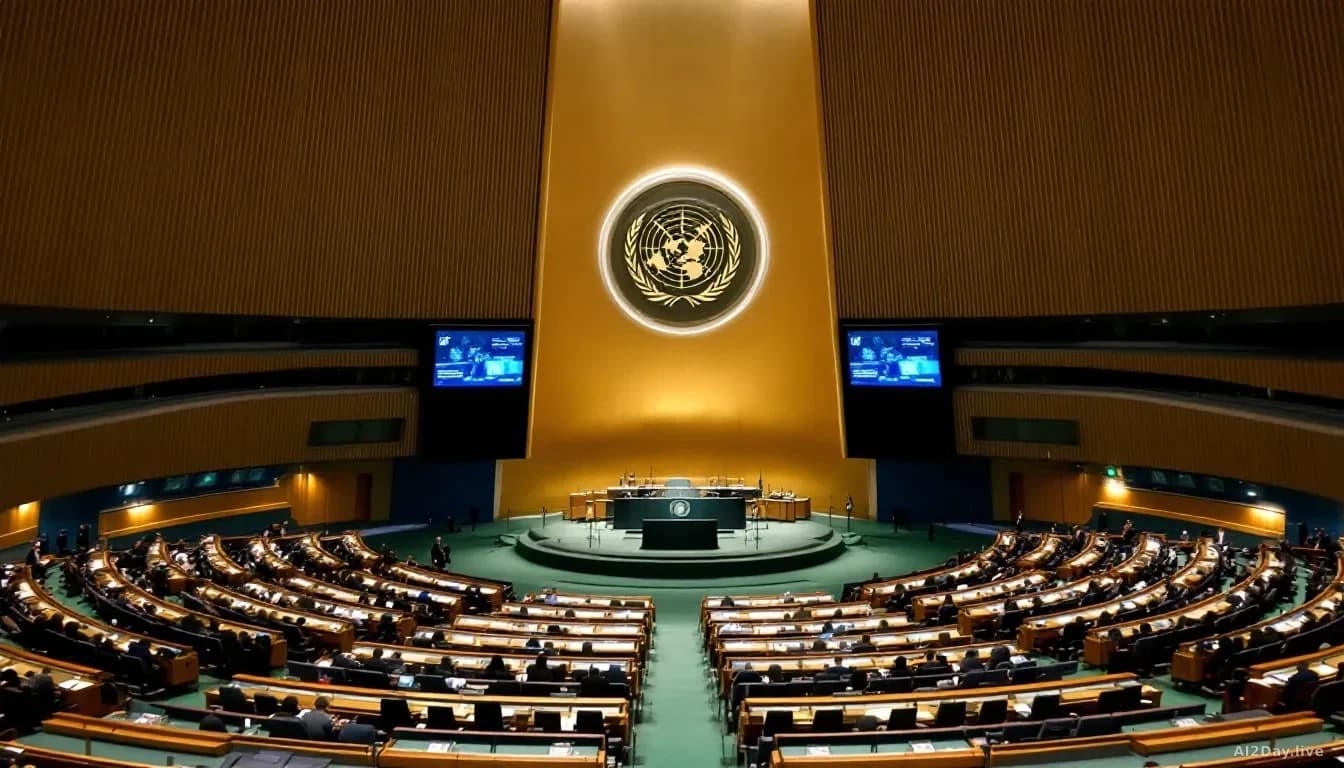
A top House Democrat is demanding a tour of SpaceX's AI data centers in Memphis
Rep. Frank Pallone says the facilities are running gas turbines without proper permits, polluting the air, and shifting energy costs onto ordinary residents. He wants answers by August 11.
Key points
- Rep. Frank Pallone (D-NJ) sent a letter to Elon Musk on Wednesday demanding a tour of SpaceX's AI data centers in Memphis, Tennessee, and details about their environmental impact by August 11, 2025.
- A Gallup survey published in May 2025 found that seven in ten Americans oppose AI data center construction in their local area, with 48% strongly opposed.
- SpaceX's Memphis facilities, Colossus and Colossus 2, house three data centers that xAI built before SpaceX acquired the company.
- The Trump administration's Department of Justice filed a motion to help xAI fight a lawsuit from environmental advocates and the NAACP over allegedly illegal, air-polluting gas turbines.
- New Jersey enacted a law earlier in July 2025 requiring data center operators to cover a fair share of electricity costs rather than passing them to residents.
The top Democrat on the House Committee on Energy and Commerce wants to walk through Elon Musk's AI facilities in Memphis, Tennessee, and he's not taking no for an answer.
Rep. Frank Pallone of New Jersey sent a letter to Musk on Wednesday demanding both a tour of SpaceX's data centers, the vast warehouse-like buildings packed with computing equipment that train and run AI systems, and a full accounting of their environmental impact. His deadline: August 11.
What is the actual complaint here?
Pallone says SpaceX trucked in off-grid gas turbines, portable generators that burn natural gas to produce electricity, to power its Memphis facilities without proper permits or pollution controls. He calls that "a massive health risk" to people living nearby.
The facilities are Colossus and Colossus 2, a pair of complexes holding three data centers. They were built by xAI, the AI startup Musk founded that develops the Grok chatbot and related tools, before SpaceX acquired xAI. We reported on 31 July 2026 that SpaceX has pledged to remove 69 of those unpermitted turbines, replacing them with a permanent power plant, though residents won't see that change until at least mid-2027.
Environmental advocates and the NAACP in Mississippi filed a lawsuit to stop the turbine use. The Trump administration's Department of Justice then filed a motion to intervene on xAI's side. Pallone's letter takes direct aim at that move: "The Trump Administration has essentially claimed that it alone decides whether SpaceXAI and other companies get a free pass to pollute unimpeded."
SpaceX didn't comment.
Why does this matter for ordinary people?
Data centers consume enormous amounts of electricity. When a large tech company builds one without covering its full share of grid costs, local bills can rise for everyone else.
Pallone's letter states that electricity prices are rising, the grid is under strain, and noise from the facilities is affecting community health. Those aren't abstract complaints: neighbors near large data centers have reported buzzing transformer noise along with higher utility bills.
Public opinion has shifted sharply. Gallup's May 2025 survey found seven in ten Americans oppose building an AI data center in their local area, with 48% strongly opposed. That figure spans projects from multiple companies, including OpenAI, Meta, Microsoft and Google, all of which have major buildouts underway.
New Jersey responded to similar concerns with new legislation, signed earlier this month by Governor Mikie Sherrill, requiring data center operators to cover a fair share of electricity costs rather than passing them to residents. New York went further: as we reported on 14 July 2026, Governor Kathy Hochul signed the first statewide moratorium on large data center construction, pausing projects drawing more than 50 megawatts while regulators write new rules.
What happens next?
Pallone's August 11 deadline is a congressional request, not a subpoena. SpaceX can decline. But ignoring a senior committee member's demand carries its own political cost, and the turbine lawsuit is still active in court.
For people near large data center projects, the New Jersey law offers a template for state-level action. Whether other states follow is the question worth watching.
Common questions
Are the Memphis gas turbines definitely illegal?
That's what the lawsuit alleges, and it hasn't been decided in court. The Trump DOJ argues the turbines are lawful; environmental groups and the NAACP disagree. A judge will ultimately decide.
Could this affect my electricity bill if I live far from Memphis?
Not directly. But the broader pattern, where data centers draw heavily on local grids without bearing their full costs, is a national policy debate that could affect rates anywhere a large facility lands.