Waymo opens in three new cities as the robotaxi race picks up speed
Alphabet's Waymo is now taking paying passengers in San Diego, Tampa and Denver, while Amazon-backed Zoox prepares to test its distinctive box-shaped vehicle in Houston and San Diego.
Key points
- Waymo launched commercial driverless rides in San Diego, Tampa and Denver in May 2026, marking its first paid operations in Colorado.
- Zoox plans supervised testing (a human driver rides along as a safety backup) in Houston and San Diego, bringing its total market presence to 12 U.S. Cities.
- Waymo delivers more than 500,000 rides per week across 14 U.S. Cities and aims to reach 1 million weekly rides by the end of 2026.
- Goldman Sachs Research puts the U.S. Robotaxi market at roughly $3 billion in 2027, rising to $48 billion in 2035.
Waymo now has paying customers in three more American cities. The Alphabet-owned company rolled out driverless rides in San Diego, Tampa and Denver in late May 2026. Denver is its first foothold in Colorado.
Passengers book through the Waymo app. The company says dozens of cars are running in each new location, with a stated goal of hundreds over time.
What is Waymo actually putting on the road?
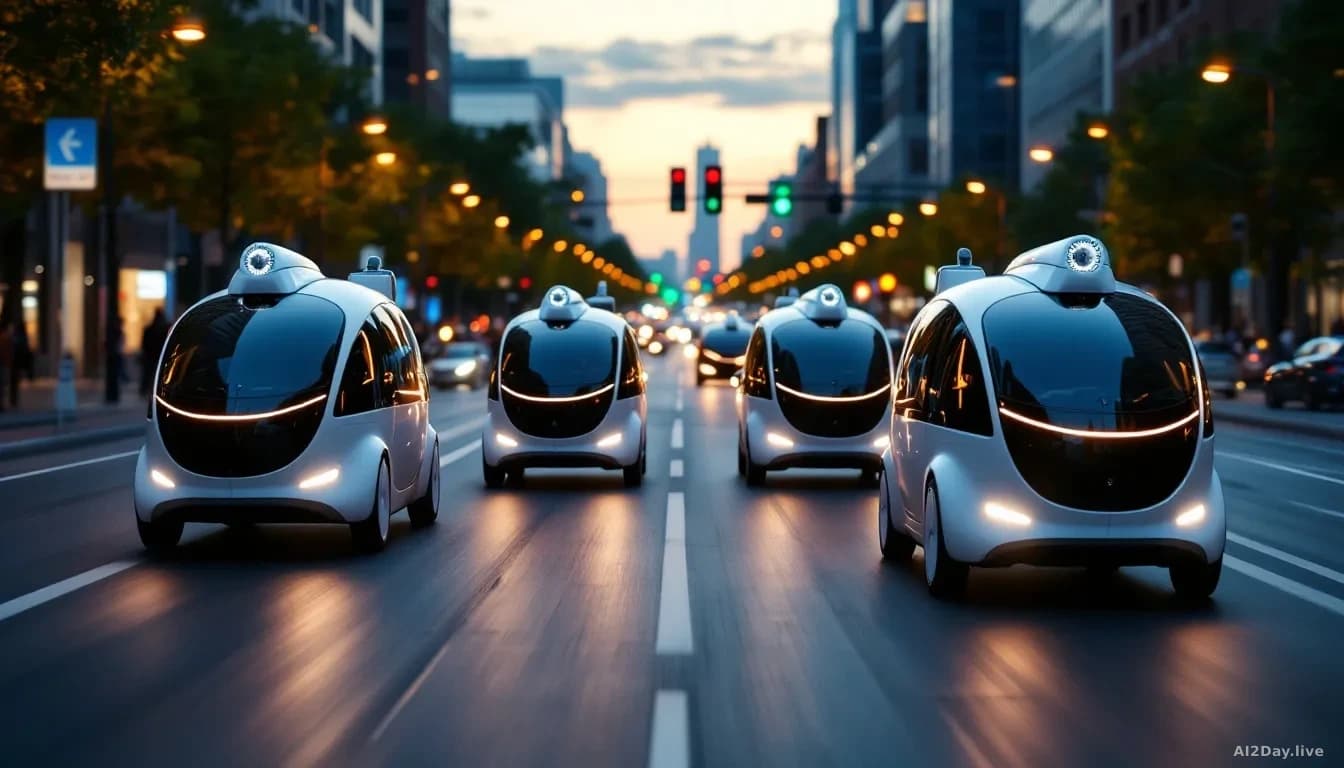
Waymo's newest vehicle is called the Ojai. It's built on a minivan-style frame by Chinese automaker Zeekr, assembled at a factory in Arizona, and fitted with automatic sliding doors, three large interior screens and an entertainment system tied to Google's Gemini AI assistant. It runs on Waymo's sixth-generation self-driving technology.
The full fleet now tops 4,000 vehicles across 14 cities. Waymo delivers over 500,000 rides a week and wants to clear 1 million weekly rides before the year ends. We covered the company's next international ambition on 28 August: Waymo plans to bring driverless taxis to Munich by late 2027, its first European city.
Where does Zoox fit in?
Zoox is a distant second. The Amazon-owned company's only paid service today runs in Las Vegas. Its vehicles are compact and roughly toaster-shaped, with no conventional front or back. Our 4 August story tracked Zoox locking in its final robotaxi design as it gears up to build 100 vehicles a week.
Supervised testing in Houston and San Diego would bring it to 12 markets. A free trial service in San Francisco exists for a limited group of riders; the company hasn't said when it will charge there. Both announcements landed ahead of a Tesla event where the electric-car maker was expected to reveal details on its driverless Cybercab and a planned ride-hailing service, first reported by CNBC.
Should ordinary riders be concerned about safety?
Robotaxis can struggle in heavy rain, after power outages and on roads with unusual construction. Documented cases include vehicles blocking traffic or needing first responders to physically move them.
Labor groups argue the technology threatens transport and delivery jobs. Safety advocates want companies to publish standardised mileage and crash data so the public can judge the real-world record.
For anyone thinking about booking: always use the official Waymo app rather than any third-party service, and check local news for disruptions before travelling somewhere the service is new. You can't negotiate with a car that has no driver.
Common questions
How do I get a Waymo ride in a new city?
Open the Waymo app, type in your destination and request a ride as you would with Uber or Lyft. In some markets Waymo rides are also bookable inside the Uber app.
Are robotaxis legal everywhere in the United States?
No. Each city and state sets its own rules, and both Waymo and Zoox need separate permits for every market they enter. That's why expansion is gradual rather than nationwide at once.