Starcloud raises $250 million to build AI data centres in space
The satellite startup is now valued at $2.3 billion and is betting that SpaceX's next-generation rocket will make processing data in orbit genuinely competitive with servers on the ground.
Key points
- Starcloud added a $250 million funding extension to its March 2025 Series A round.
- The extension values Starcloud at $2.3 billion and was led by Manhattan West Ventures, with Nvidia contributing $25 million.
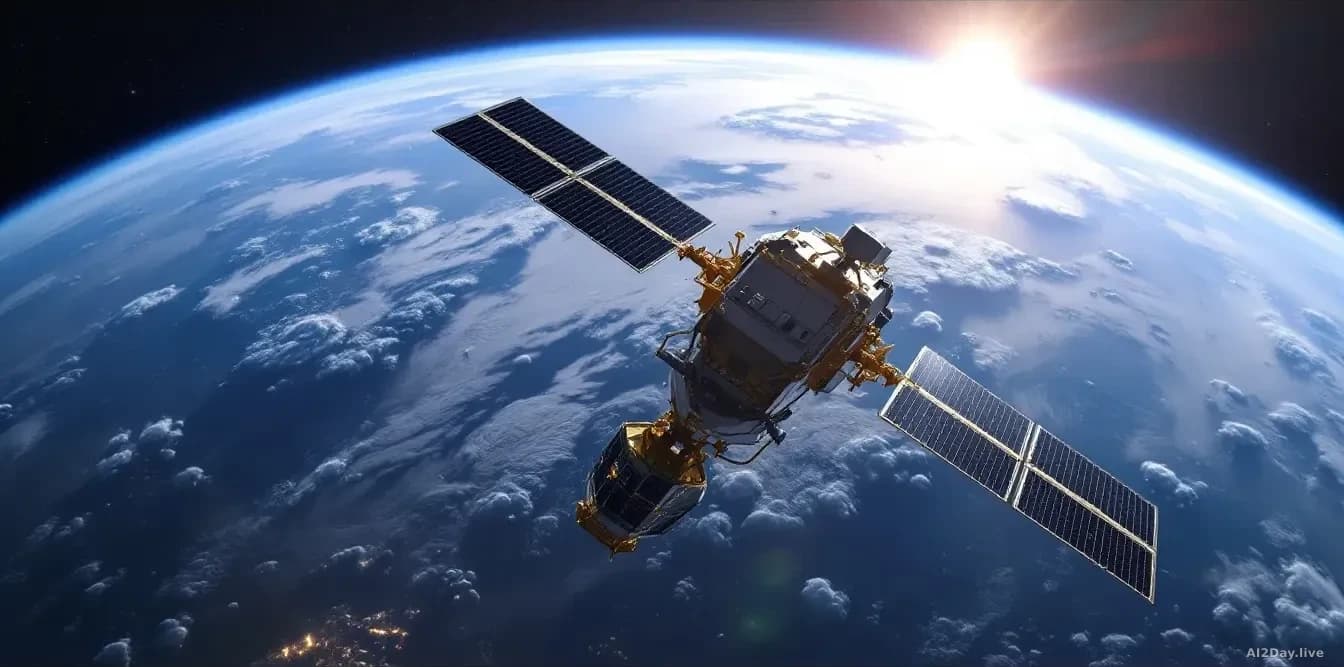
- Starcloud is the only known company running an Nvidia H100 GPU, a high-performance computer chip, aboard an orbiting satellite.
- The company plans to launch its next satellites, the Starcloud-2 generation, on shared rocket flights in 2027.
- Starcloud has asked US regulators for permission to eventually operate 88,000 spacecraft.
A satellite circling the Earth is not an obvious place to run an AI application. That's the business Starcloud is building, and investors just handed it another $250 million to try.
The Seattle-area startup, first reported by TechCrunch AI, announced the funding extension this week. Added to the $170 million it raised in March 2025, Starcloud carries a valuation of $2.3 billion. Manhattan West Ventures led the round; Nvidia, the chipmaker whose graphics processors do most of the heavy lifting inside AI systems worldwide, put in $25 million. Benchmark, EQT, Cisco and others also participated.
Why would anyone run AI in space?
Almost all AI inference, meaning the process of a trained model answering a question or analysing an image, happens in giant land-based data centres today. Starcloud argues that satellites can do this work faster for customers who need data processed close to where it's collected, without beaming it back to Earth first. Government and defence agencies are its first target market.
One satellite is already operating in orbit with an Nvidia H100 chip aboard. Starcloud says it's the only company to have trained an AI model on a chip flying in space, and it's sharing what it learned with Nvidia as the chipmaker designs its first chip built specifically for orbital use, called the Vera Rubin Space-1. That chip hasn't been built yet; Starcloud hopes to fly it in late 2028 if design and testing go to plan.
We first reported on Starcloud's orbital computing ambitions on 21 August 2026, around the same time we covered the tension inside SpaceX's own AI division between growing revenue and mounting losses.
What is the launch problem?
Falcon 9, the workhorse rocket that carries most commercial satellites today, is scheduled to stop flying in 2028. Its replacement, Starship, is still being tested and hasn't yet carried a paying payload. This week, SpaceX CEO Elon Musk said the company will delay an attempt to catch a returning Starship by a few months, with a first re-flight attempt expected at year-end or early 2027.
That timeline matters because Starcloud's growth plan depends on Starship eventually making launch cheap enough to put hundreds of satellites into orbit affordably. "One of the biggest costs is now on securing your launch capacity," CEO Philip Johnston told TechCrunch AI. The company has applied to the US Federal Communications Commission for permission to fly 88,000 spacecraft.
Its next step is launching two Starcloud-2 satellites, each producing 8 kilowatts of computing power, on shared rocket flights in 2027. The most ambitious design, Starcloud-3, is intended to fly aboard Starship and is described as a full orbital data centre.
| Satellite | Computing power | Planned launch |
|---|---|---|
| Starcloud-1 (flying now) | First H100 in orbit | 2024 |
| Starcloud-2 | 8 kW per satellite | 2027 (rideshare) |
| Starcloud-3 | Orbital data centre scale | Post-2028 on Starship |
The company employs 25 people and builds its satellites at a 100,000 square-foot facility in Woodinville, Washington, near factories where SpaceX and Amazon also assemble satellites.
Common questions
Does this affect ordinary internet users?
Not yet. Starcloud's first customers are US government agencies. Broader commercial services, if they arrive, are years away.
What happens if Starship keeps being delayed?
Johnston acknowledged the risk plainly: "Obviously if we can't book any SpaceX launch capacity in 2029, that will be challenging for us." The company is talking to other rocket providers as a backup.
Is the Nvidia chip for space ready to fly?
No. The Vera Rubin Space-1 chip has not been built yet. Starcloud hopes to fly it in late 2028, assuming design and testing go to plan.