Nvidia Upgrades Cosmos With Tools That Let Robots and Self-Driving Cars Learn From Fake Footage
A new set of blueprints lets companies generate synthetic training videos for physical AI, cutting the need to stage real-world test scenarios. Porsche says the tools could shorten its autonomous vehicle development cycle by up to 85 percent.
Key points
- Nvidia expanded its Cosmos platform at GTC Berlin in October 2026 with five new data-generation blueprints for physical AI developers.
- Porsche expects the tools to reduce repeated physical test drives by up to 90 percent and cut development cycle times by up to 85 percent.
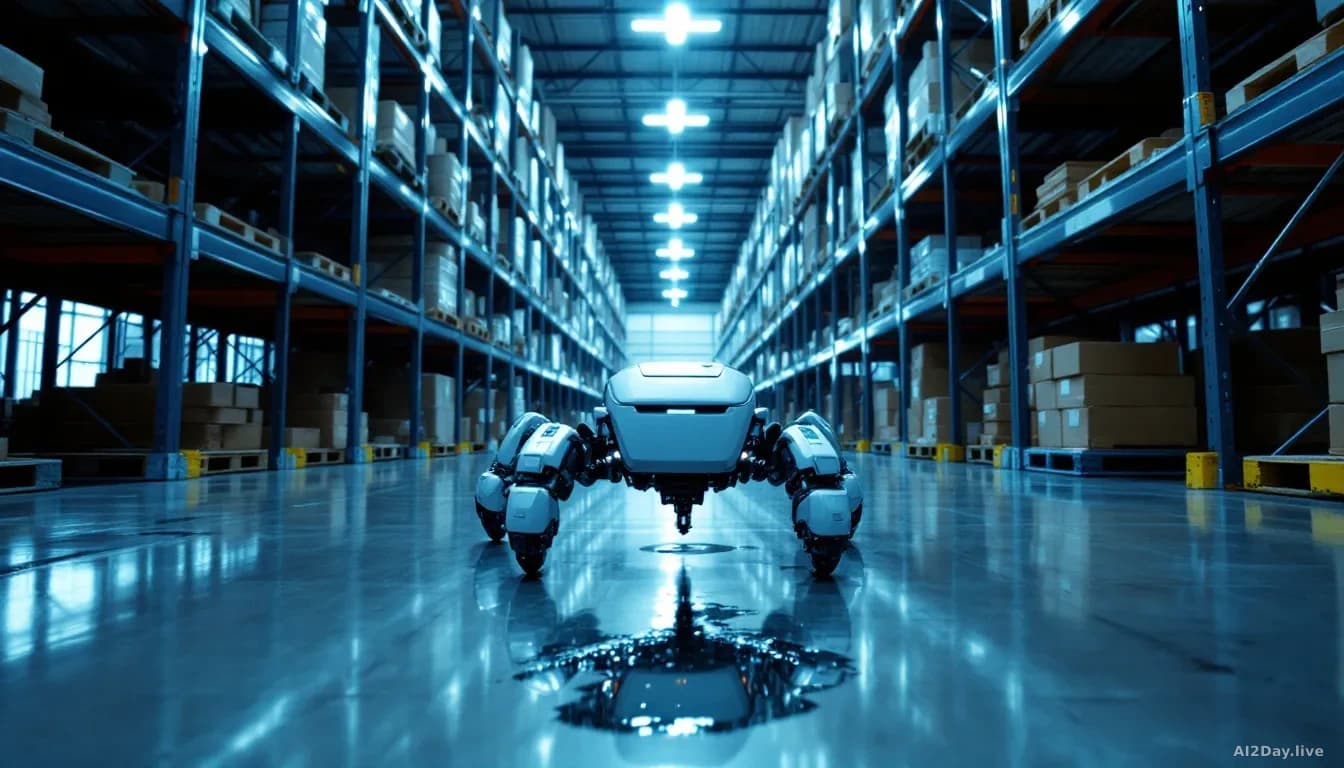
- ANYbotics generated over 1,500 synthetic training videos using the new tools to teach industrial inspection robots to spot liquid spills.
- Updated Cosmos 3 NIM microservices, the software packages that run the AI models, now deliver up to 2x faster inference (faster AI processing) with no drop in quality.
- Nvidia's Cosmos models currently rank in the top five on six open AI leaderboards.
Teaching a robot to recognise a factory spill is harder than it sounds. You need video footage of spills, lots of it, across many settings and lighting conditions. Staging hundreds of real spills is slow and expensive. Generating fake ones with software is faster, but only if the fake footage is realistic enough to be useful.
That's the gap Nvidia is trying to close with the latest update to Cosmos, its platform for building world models (software that helps machines understand and predict what happens in physical environments, the way a person builds a mental map of a room).
What did Nvidia actually release?
Five new cloud-based blueprints, ready-made templates that developers can run without building everything from scratch. Each one does a specific job: one curates and labels driving footage then adds synthetic examples of tricky road scenarios; another changes weather and lighting in existing video while keeping the scene otherwise intact; a third generates images of manufacturing defects like cracks in glass or faults on circuit boards. The code is available on GitHub and runs on Azure, Nebius and CoreWeave.
Companies are already using them. Porsche is leading a shared data project across Volkswagen Group brands, feeding real driving footage through the Cosmos tools on Azure via Voxel51 to build a shared pool of training material. Running every edge case in a real car is neither practical nor safe; the synthetic data fills those gaps. The company says it expects up to a 90 percent reduction in physical test drives and up to an 85 percent cut in development cycle time.
ANYbotics, which makes robots that walk through industrial facilities checking for problems, used the blueprints to create more than 1,500 synthetic video clips of liquid spills and other changes between routine visits. Without synthetic data, collecting that footage would mean waiting for real incidents or staging them, neither of which scales. We first covered ANYbotics on 4 October 2026, when the company connected its walking robots to SAP and other enterprise tools.
Ultralytics, a computer-vision company whose YOLO model is widely used for spotting objects in images and video, retrained that model with a mix of real images and synthetic defect footage from Cosmos, sharpening its ability to find and locate manufacturing faults.
What does the speed improvement mean in practice?
Faster processing means cheaper operation and quicker response. The updated Cosmos 3 NIM microservices now run up to twice as fast as before, with no drop in output quality, according to Nvidia. A separate monitoring blueprint now lets teams watch 40 percent more video streams on the same number of chips.
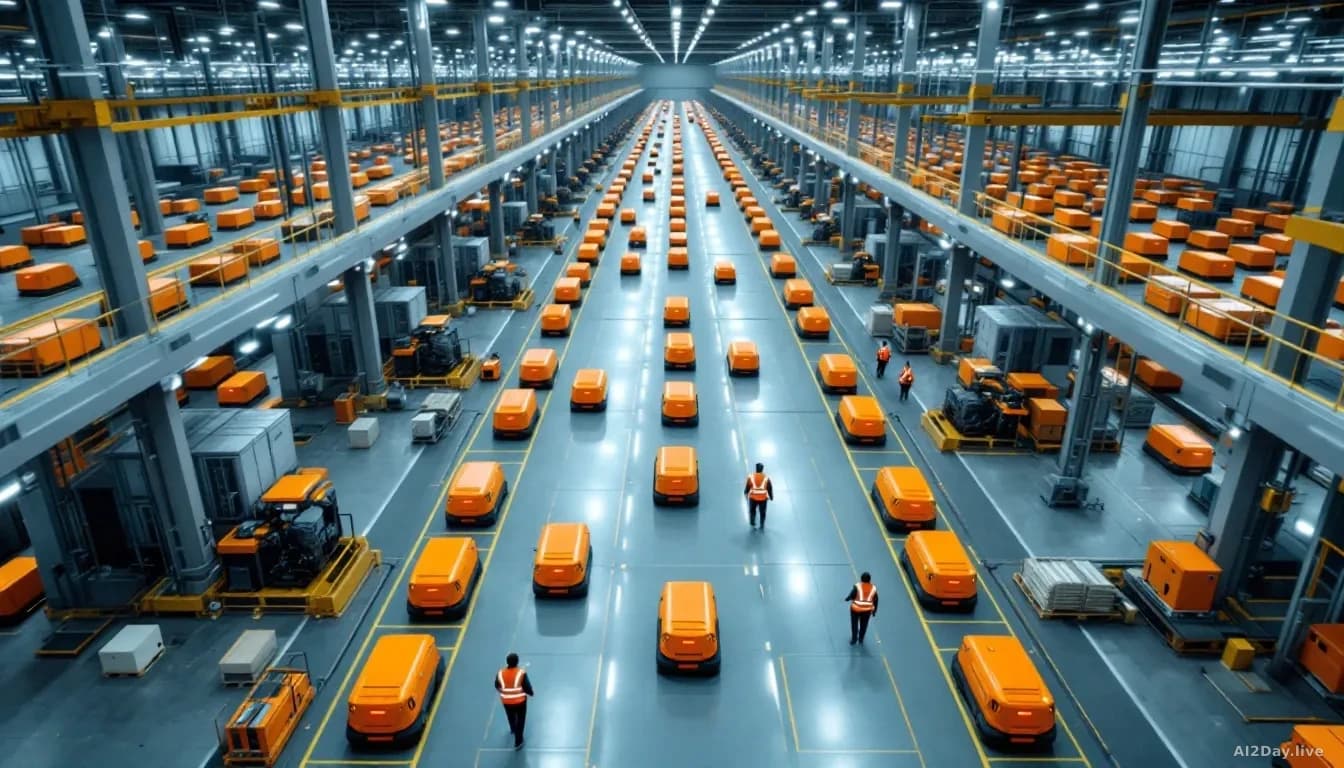
Oil and gas company ADNOC is already running safety-hazard detection across 65 sites using a platform built on these tools, with synthetic training data filling in scenarios too dangerous to replicate in person.
Nvidia also introduced a compressed version of its Cosmos 3 model. Research lab MicroAGI took the full 32-billion-parameter model (the version with 32 billion internal settings) and distilled it down to an 8-billion-parameter version called Nano, with no measurable accuracy loss, specifically for tasks where a robot manipulates objects up close.
This is the third Cosmos story AI2Day has published since first covering the platform on 19 July 2026, and the pattern hasn't changed: Nvidia keeps pushing the cost and complexity of running physical AI downward, making it practical for mid-sized companies, not just the largest carmakers or tech firms. Whether synthetic data is good enough to replace real-world testing at scale is the question the industry hasn't fully answered yet, and that's exactly what to watch as Porsche and Volkswagen Group put these numbers to the test.
Common questions
Does synthetic training data work as well as real footage?
For many scenarios it's good enough, and sometimes better, because you can generate rare or dangerous situations that would be impractical to film. The tradeoff is that models trained heavily on synthetic data can struggle with real-world details the simulation missed, which is why most developers mix real and synthetic footage rather than replacing one with the other entirely.
Do ordinary consumers need to do anything?
Not directly. These are developer tools. But if you buy a car with self-driving features or work in a factory that uses inspection robots, the AI behind those systems is increasingly trained on platforms like this one, which affects how reliably they handle unusual situations.