Hugging Face's $399 Microduck Is a Waddling Open-Source Robot You Can Train Yourself
The duck-shaped bot picks things up, roller skates, and gets back on its feet when it falls. It ships before Christmas, and the code is free for anyone to inspect or modify.
Key points
- Hugging Face unveiled the Microduck on Thursday, priced at $399 and set to ship before Christmas.
- The 25-centimetre-tall robot can carry up to 800 grams in its beak, recover from falls, and roller skate.
- Training code and simulation tools are free to download and modify on GitHub.
- Hugging Face acquired French robotics startup Pollen Robotics in April 2025 to build affordable, open-source AI hardware.
- Reports suggest Nvidia may acquire Hugging Face at a $13 billion valuation.
Hugging Face, the platform where AI developers share and download machine-learning models, wants a small duck robot sitting on your desk.
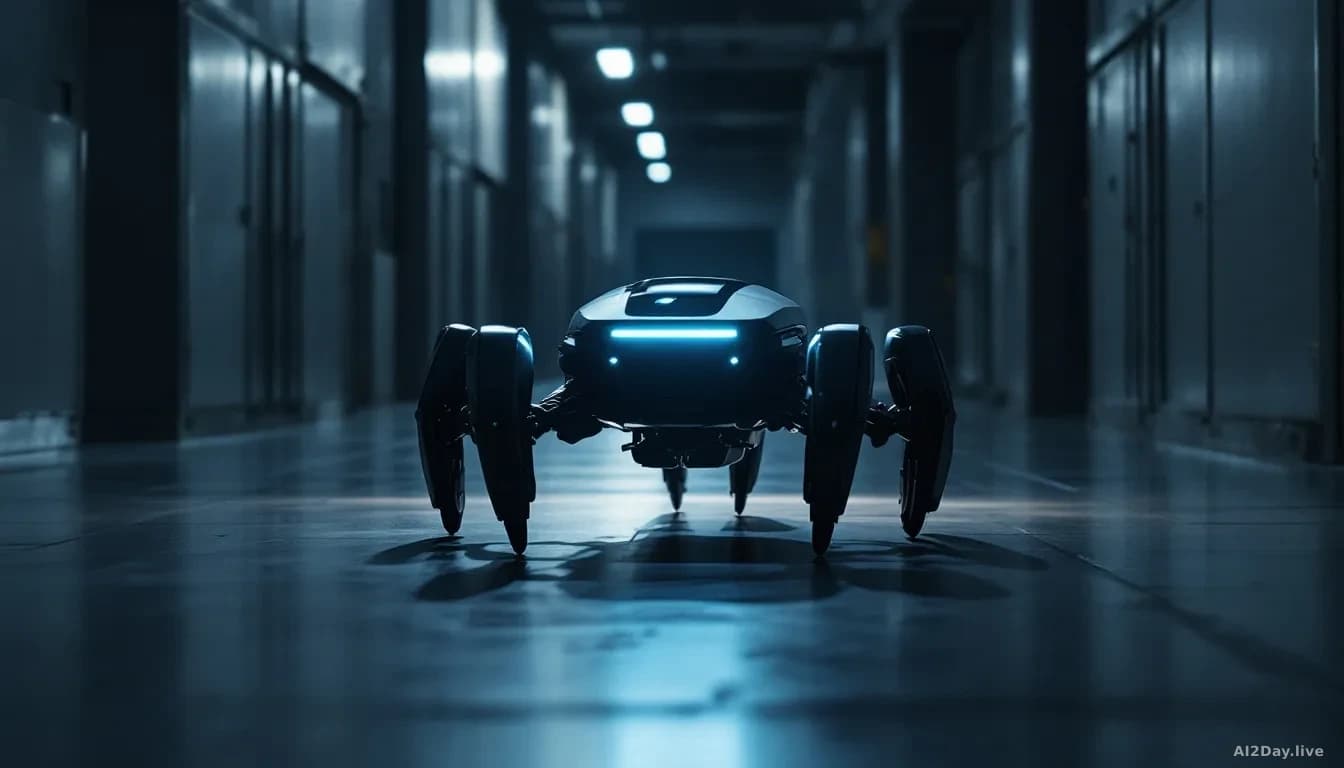
The company unveiled the Microduck on Thursday. It stands 25 centimetres tall, costs $399, and ships before Christmas. Its party trick is the beak, which works as a gripper: it can lift objects up to 800 grams, roughly the weight of a full large coffee mug. It also waddles, roller skates, and rights itself when it tips over.
What makes it "open source"?
Open source means the software and training instructions are published for anyone to read or change. Hugging Face chief executive Clem Delangue described the Microduck as "an open-source robot you can teach new tricks with reinforcement learning," a technique where software learns by repeating actions and scoring the results. The full toolkit, including a simulator for testing behaviours before loading them onto the physical robot, is available on GitHub.
That distinction matters for privacy. Any camera-equipped device in your home is a potential concern. Delangue told TechCrunch that open-source software is safer than a closed commercial product because anyone can audit the code and see exactly what the robot transmits. That's broadly true for the base software. What it can't guarantee is what happens once users install third-party apps on top. Those apps can reach the robot's camera and microphone, and some may route that data to outside servers. Treat it the way you'd treat any smart-home device: only install software from sources you trust.
Pollen Robotics, the French startup Hugging Face brought in during April 2025, built the hardware. We first covered the Microduck on 27 August, when preorders opened. The company also sells two companion products: the $499 Reachy Mini, powered by a Raspberry Pi (a credit-card-sized computer), and the $399 Reachy Mini Lite, which runs off a standard Mac or PC.
How does it perceive the world?
Sensors do the work here. The Microduck carries a camera, lidar sensors (which use pulses of light to measure distances, similar to how sonar uses sound), and two IMUs, short for inertial measurement units, the small chips that track motion and orientation the same way a phone knows when you tilt it.
What happens next?
Hugging Face is reportedly in acquisition talks with Nvidia at a $13 billion valuation. Nvidia has supplied computing infrastructure to Hugging Face since at least 2023, and both companies have publicly backed open-source AI development. Our 25 August story on Nvidia's Jetson Orin Nano 2 showed the chipmaker already positioning its hardware for home robots, so the strategic logic of a deal isn't hard to follow.
Watch for: apps that request access to your Microduck's camera or microphone without a clear reason. Read the permissions before you install, and check whether the app sends data off the device.