Big Tech Is Buying Up Robot Startups. Here's What That Means for the Industry
Three major acquisitions in five months have reshaped who owns the future of robotics. A controller maker that works with both old-school and AI-driven robots explains what happens next.
Key points
- Mobileye acquired Mentee Robotics for $900 million in January 2025, Amazon bought Fauna Robotics in March, and Meta picked up Assured Robot Intelligence in May.
- NexCOBOT, a robotics controller company based in New Taipei City, Taiwan, says demand from humanoid and legged robot makers surged beginning in 2024.
- AI-native robots, systems built from the ground up to learn and adapt rather than follow fixed instructions, are advancing fast but still face a reliability bar before factories will trust them.
- Open controller platforms helped one NexCOBOT client cut its development timeline from three to five years down to two.
- Early-stage robotics startups face tighter funding conditions, even as large rounds for established players continue.
Three big acquisitions. Five months. A clear pattern.
Mobileye bought Mentee Robotics for $900 million in January. Amazon followed with Fauna Robotics in March. Meta closed on Assured Robot Intelligence in May. The wave is not random. Large technology companies are concluding that buying a specialist is faster than building one from scratch.
Jenny Shern, general manager of NexCOBOT, a Taiwanese company that makes motion controllers and safety controllers for robots, spelled out the logic in an interview with The Robot Report. Smaller robotics firms have the deep expertise. Big Tech has the computing power, the data, and the cash to scale that expertise across millions of deployments.
What is actually changing inside the robots themselves?
The bigger shift is not ownership. It is the robots themselves.
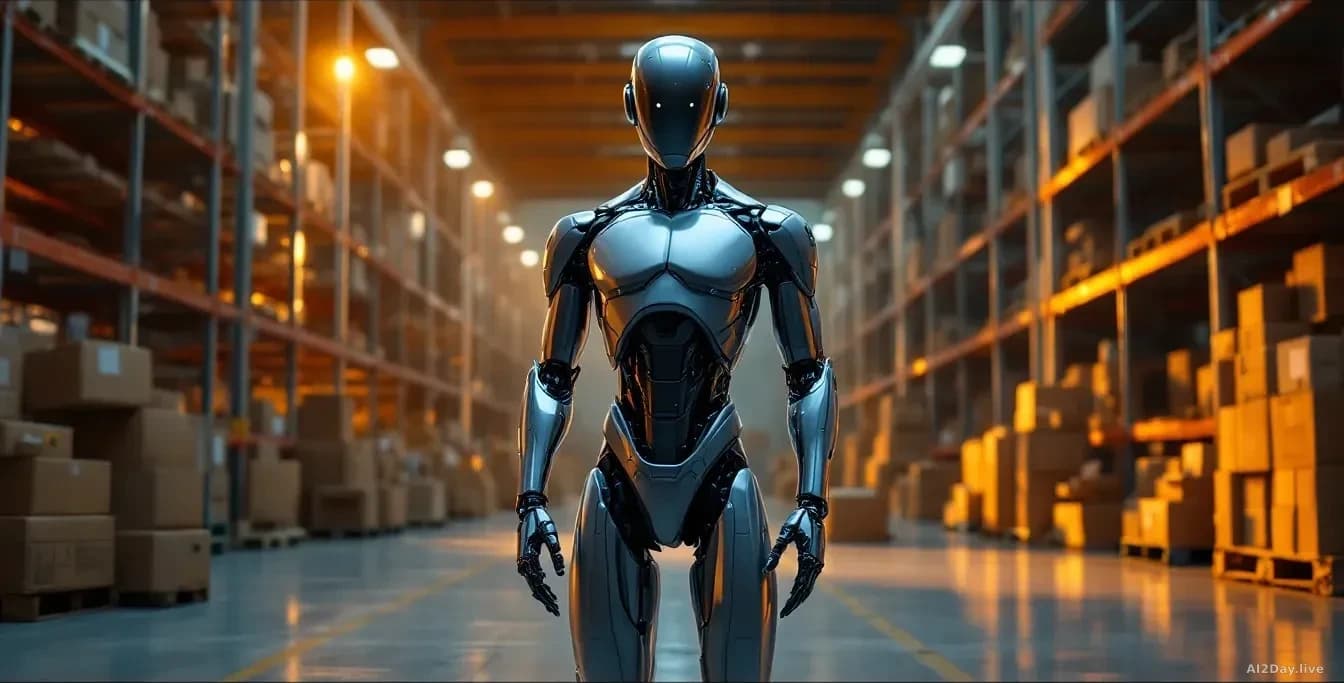
Shern draws a clear line between traditional robots and what she calls AI-native robots. Traditional robots follow a script. They work well in controlled environments doing the same task on repeat. AI-native robots are built differently from the start: they perceive their surroundings, make decisions, and adjust when conditions change.
Progress in perception and movement planning is real and fast. But Shern is careful not to oversell readiness. "For industrial applications, reliability and safety remain critical requirements," she told The Robot Report, "so adoption will continue to advance in stages as the technology proves itself in real-world environments."
A factory cannot afford a robot that hesitates, guesses wrong, or fails silently. That bar keeps the timeline honest.
Does tighter startup funding slow things down?
Partly, yes. Early-stage robotics companies are feeling the squeeze even as headline deals grab attention. Venture capital investment in young companies has reportedly pulled back, pushing startups to show a viable business model sooner than they might have planned.
Shern sees a silver lining. Pressure to prove real-world value could produce more focused work on problems that actually need solving, rather than technology demonstrations searching for a purpose.
Open platforms are already helping close the gap. NexCOBOT's own certified safety controller, built on an open system so it works with components from multiple vendors rather than locking customers into one supplier, helped one client compress a three-to-five-year development cycle down to two years.
| Acquisition | Buyer | Month |
|---|---|---|
| Mentee Robotics ($900M) | Mobileye | January 2025 |
| Fauna Robotics | Amazon | March 2025 |
| Assured Robot Intelligence | Meta | May 2025 |
For readers who work in manufacturing, logistics, or healthcare: the robots heading your way are increasingly built to adapt, not just to repeat. That means the question shifts from "can this robot do the task?" to "can I trust it to handle surprises?" Shern's answer is honest: the technology is getting there, but proving it in your environment takes time.
Watch for which vendors offer open, certified safety systems. Proprietary ecosystems that lock you in may slow your ability to adopt improvements as the AI keeps moving.