US and China agree: open-source AI needs strong security, not a free-for-all
Twenty-one Pacific-rim economies signed a joint statement backing open AI models built with government-grade security checks. It's the first time ministers from the US and China have agreed on open-source AI at all.
Key points
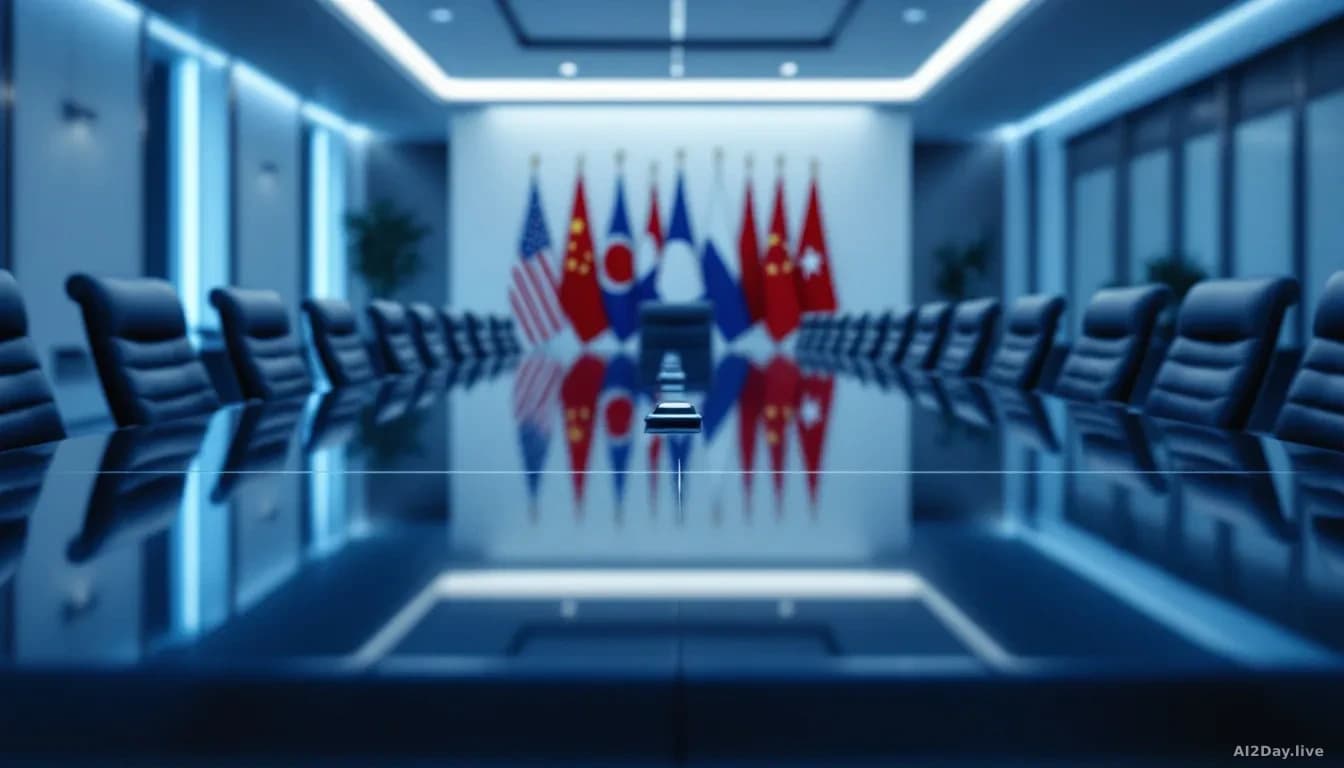
- All 21 APEC member economies, including the US and China, signed the "Chengdu statement" on AI on 23 July 2026.
- The statement backs open-source AI development but requires "strong security assurance" throughout build and deployment.
- Li Lecheng, China's industry and information technology minister, confirmed this is the first APEC AI agreement to include open-source cooperation at ministerial level.
- The deal shifts the debate from "open versus closed" AI to who can build an open system governments will actually trust.
- Business leaders separately warned that quantum computing, powerful enough to break today's encryption, could reshape digital security before most governments are ready.
Twenty-one governments just agreed on something they rarely agree on.
At APEC Digital Weeks in Chengdu on 23 July 2026, the member economies of the Asia-Pacific Economic Cooperation forum signed a joint statement on artificial intelligence. It backs open-source AI, meaning AI models whose underlying code and weights (the learned values that make a model work) are freely downloadable and modifiable. But the backing comes with a firm condition: those models must meet "strong security assurance" standards covering testing and data protection.
We've tracked the rising tension around Chinese open-source releases since July, including how Moonshot AI's Kimi K3 rattled Washington on 18 July 2026. The Chengdu statement is, in some ways, the diplomatic consequence of that pressure.
What does "open-source AI with security" actually mean for ordinary people?
Right now, it mostly shapes what governments will allow their public services to deploy. If a hospital or a tax agency wants to use a free AI model, this statement gives ministers a framework to say yes, provided the model passes security checks.
Open-source models from Chinese firms such as DeepSeek are free to download and run locally. US companies like Anthropic, by contrast, offer only closed, subscription-based AI. That gap has sharpened the geopolitical argument: Washington has accused Chinese developers of using American research without permission, while Beijing has positioned its open releases as a public good.
CNBC Tech, which reported from Chengdu, noted that the statement's language marks a clear drift away from the earlier, libertarian spirit of open-source software toward a model where states set the rules.
"Getting 21 economies, including both China and the United States, to recognise trusted open-source AI as something worth supporting is meaningful," said Wei Sun, principal analyst for AI at Counterpoint Research. She added that "strong security assurance" gives cautious governments cover to approve open models while still demanding accountability.
Is this just diplomatic language, or will it change anything?
Probably both. Technology moves faster than any communiqué.
Winston Ma, adjunct professor of law at New York University, said the agreement confirms that the Asia-Pacific region is shifting toward open-weight systems, AI models distributed in a form that anyone can run, combined with state-coordinated digital infrastructure. That's a structural change, not a press release.
At the same meeting, Janet De Silva, chair of the APEC Business Advisory Council's digital and innovation working group, urged ministers to prepare for quantum computing, computers so powerful they could crack the encryption protecting banks and governments today. Her point: trusted encryption is a competitive question, not just a security one.
What happens next?
The Chengdu statement creates no binding law. But it gives trade ministers across 21 economies a shared vocabulary and political cover to fund or approve open AI projects that clear a security bar. Watch for national guidelines that translate "strong security assurance" into something auditable.
For people who interact with AI-assisted public services, the practical effect is slow but real. These governments are, for the first time collectively, saying they'd rather inspect the AI that serves you than take it on trust.
The hard part is that "inspectable" and "secure" aren't the same thing, and nobody in Chengdu defined the difference.
Common questions
Does this mean the US and China have stopped fighting over AI?
No. The statement is a narrow, ministerial agreement on one principle. Export controls, chip restrictions and IP theft accusations remain live disputes.
What is an open-source AI model, and why does it matter to me?
An open-source AI model is one whose code and trained values are published for anyone to download and build on. It can run inside a hospital or school without a subscription fee, and experts can check it for bias or security flaws before it touches your data. Our explainer from 23 July 2026 goes deeper.