Historian Jill Lepore thinks the 'artificial state' is doomed. Here's what she means.
With the midterms less than three months away, a leading American historian says the public backlash against AI and data centres could reshape the November vote.
Key points
- Historian Jill Lepore argues that what she calls the 'artificial state', meaning government and public life shaped by AI systems, is structurally doomed.
- Voter anxiety about AI is now sitting alongside grocery prices and the Iran conflict as a live issue heading into the November 2026 midterm elections.
- Jonathan Freedland interviewed Lepore for The Guardian's Politics Weekly America podcast, released this week.
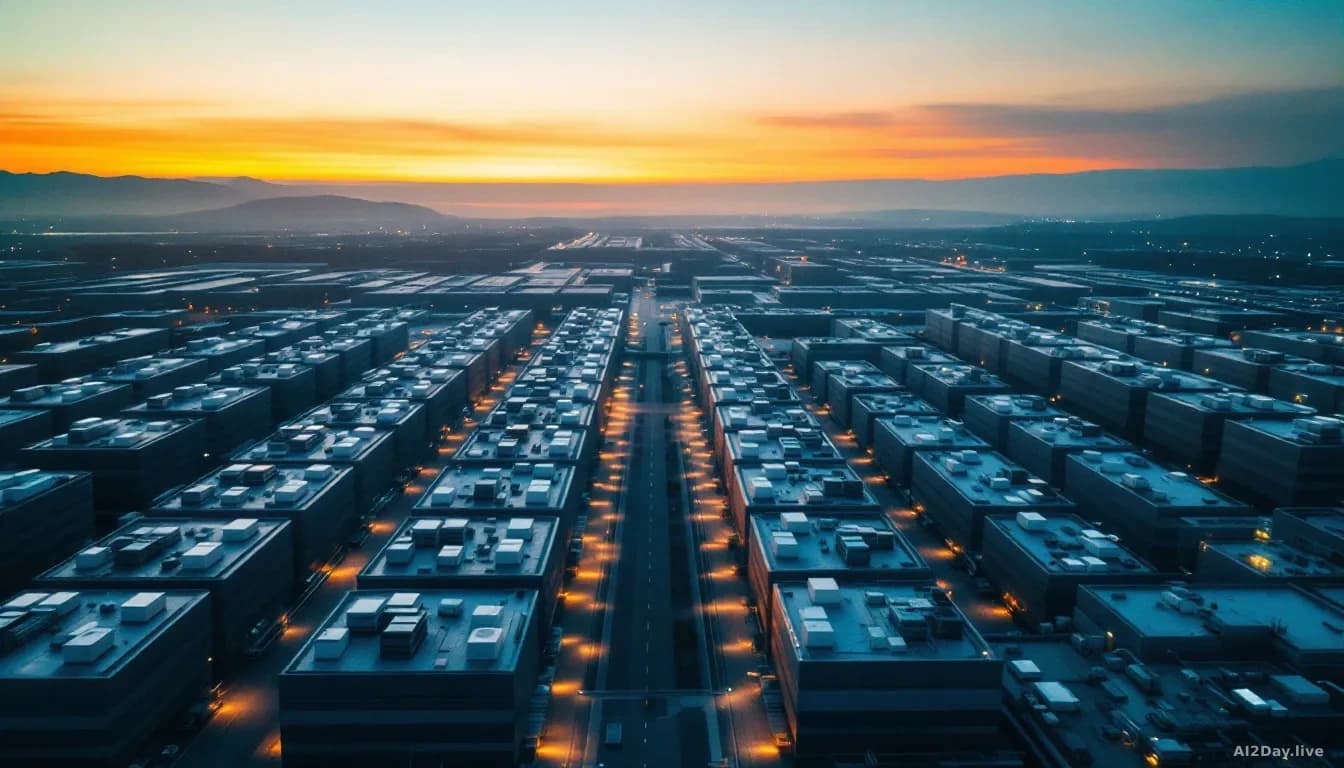
- The backlash centres partly on data centres, the giant warehouse-style buildings packed with computers that run AI services and consume enormous amounts of power.
Three months out from the US midterms, most pollsters are watching inflation and foreign policy. Jill Lepore is watching something else.
Lepore, a Harvard historian, told journalist Jonathan Freedland this week that the current wave of public anger at artificial intelligence isn't a blip. She thinks it points to something deeper: a crisis in what she calls the 'artificial state', her term for the way governments and institutions have handed decision-making to automated systems, software that decides credit scores and parole recommendations without a human double-checking the work. We've been tracking her argument since our 7 August story on Silicon Valley's fake constitutions.
What is the 'artificial state' and why does it matter to voters?
The idea is that public life is increasingly run by algorithms, software rules that crunch data and output decisions, rather than by accountable people. Lepore argues this arrangement is breaking down, and ordinary voters are starting to feel it.
The backlash she describes is showing up in a surprising place: data centres, the enormous warehouse-sized buildings, often on the edge of towns, that house thousands of computers running AI services. They drink huge amounts of electricity and water to stay cool. Communities near them are pushing back on planning approvals and environmental impact, and that local, physical friction is now feeding into national politics.
Lepore's argument, as reported by The Guardian, is that this isn't just NIMBYism. It's a visible sign that the public is losing patience with AI expansion they were never asked to approve.
Could AI anger actually shift votes in November?
Too early to call it a swing issue, but the conditions are there. Voters already frustrated by the cost of living are also, in growing numbers, worried about job automation and the opacity of AI systems making decisions about their lives. A candidate who can speak plainly to those fears, alongside grocery bills, has a real opening. Our 20 August report found that more than half of Americans under 30 are more worried than excited about AI, and tech CEOs keep misreading why.
The ballot-box dimension is where this gets genuinely interesting. AI isn't only a tech story anymore; it's a planning story and a policy fight that'll be decided by voters who've never heard of a GPU.
Common questions
What exactly is an 'artificial state'?
It's Lepore's phrase for a government or institution that lets automated software make decisions that used to require a human official, with little right of appeal for the people affected.
Do data centres really affect local communities enough to influence elections?
Yes, in concrete ways. A single large AI data centre can consume as much electricity as a small town and requires millions of litres of water for cooling, putting real pressure on local grids and water supplies, and that pressure is now generating organised political opposition.