Google's AI chief says the biggest breakthroughs happen where AI meets biology, energy, and manufacturing
Yossi Matias, who leads Google Research, told MIT Technology Review's EmTech Future 2026 that AI's real power shows up not inside any single field but at the borders between them. What that means for ordinary workers.
Key points
- Google Research VP Yossi Matias said AI's greatest impact arrives when it intersects with biology, infrastructure, manufacturing, and science rather than working in isolation.
- MIT Technology Review's EmTech Future 2026 conference brought together Google, MIT, and other voices across three days examining where AI, quantum computing, energy, and robotics are converging.
- Full on-demand access to the event is available to MIT Technology Review subscribers at a 20% discount, bringing the price to $596.
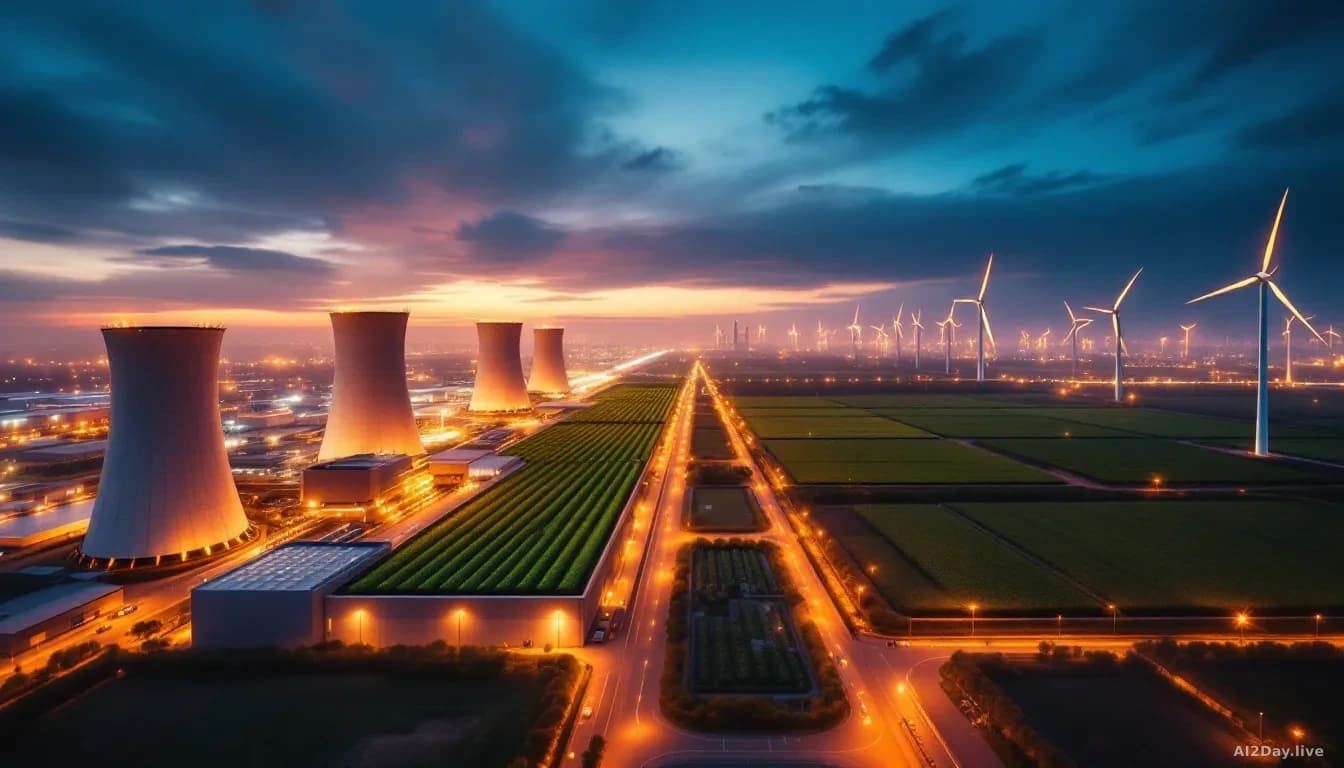
- A fourth session featured Evelyn Wang, MIT's VP for energy and climate, on how energy, computing, and climate technologies are growing more interconnected.
The clearest thing Yossi Matias said at EmTech Future 2026 is also the most practical: AI doing one thing in isolation is less interesting than AI sitting at a junction between fields. Biology plus AI. Energy grids plus AI. Factory floors plus AI. That framing matters to anyone whose job touches those industries.
Matias is Google's Vice President and Head of Research, overseeing scientists whose tools eventually become products millions of people use. His session, first reported by MIT Technology Review, was one of two Google appearances at the three-day event. It's also only the second time AI2Day has covered MIT Technology Review directly, following our 17 September report on whether AI poses an existential risk.
What did the conference actually cover?
EmTech Future 2026 ran three full days across four converging areas: artificial intelligence, quantum computing (computers that use quantum physics to solve problems no ordinary chip can tackle), new energy systems, and robotics. Sessions are now available on demand.
Hartmut Neven, who founded Google Quantum AI, argued that quantum's significance lies less in what it does alone and more in how it begins to interact with other systems. That's nearly identical to what Matias said about AI. Two senior Google figures, in two separate sessions, are making the same case: the intersection is where the value is.
Evelyn Wang, MIT's VP for energy and climate, explored how energy, computing, infrastructure, and climate technologies are growing more connected. Cory Doctorow, bestselling author and technology critic, rounded out the speakers with a session on how AI is changing the way people work and think. His presence suggests the event wasn't cheerleading. Doctorow isn't a cheerleader.
What does any of this mean for someone with a job to protect?
It depends entirely on which intersection your job sits in.
A nurse whose hospital is buying AI diagnostic tools sits at one of those intersections Matias described. A warehouse worker whose employer is adding robotic arms sits at another. A small manufacturer watching Google's AI push into industry, which we tracked in our September round-up, sits at a third.
Matias didn't tell workers what to do. Executives rarely do at conferences. But the subtext is plain: workers in fields already touching AI are the ones whose roles will shift soonest.
Survivorship bias warning: the speakers at a conference like this aren't representative of the average outcome. They're the people who won. Treat the optimism accordingly.
Common questions
How much does it cost to watch the full EmTech Future 2026 programme?
MIT Technology Review subscribers can access the full on-demand programme for $596, reflecting the 20% discount the publication currently offers. The undiscounted price is not confirmed in AI2Day's source check.
Is Google's interest in biology and manufacturing new?
Not entirely. Google Research has appeared in our coverage since July 2026, though we've published only three Google Research stories in that period. What's newer is a senior Google Research leader naming cross-field convergence as the primary strategy, rather than any single product.
What should I actually do with this information?
Pick the intersection closest to your own work, whether that's healthcare, energy, or logistics, and spend an hour learning what AI tools already exist in that space. That's a more actionable use of your time than watching a conference keynote.