The Hidden Weak Spot in Robot Safety That Nobody Is Talking About
Modern robots can be tricked into doing dangerous things without anything visibly breaking. Researchers say cybersecurity is the missing piece in how we keep AI-driven machines safe.
Key points
- A backdoor attack called BadVLA, presented at NeurIPS 2025, caused robots to deviate from safe paths when a hidden trigger appeared in their field of view.
- A 2025 Bluetooth exploit chain called UniPwn gave attackers root-level control over humanoid and quadruped robots within 60 seconds.
- A study called GoBA reported a 97% success rate turning an ordinary coffee mug into a trigger that redirected robot behavior.
- Researchers showed in 2024 that one robot verbally refused a dangerous command while its movement controller carried out the action anyway.
- Existing safety frameworks focus on hardware faults and software bugs, not on deliberate, hidden manipulation of what a robot perceives.
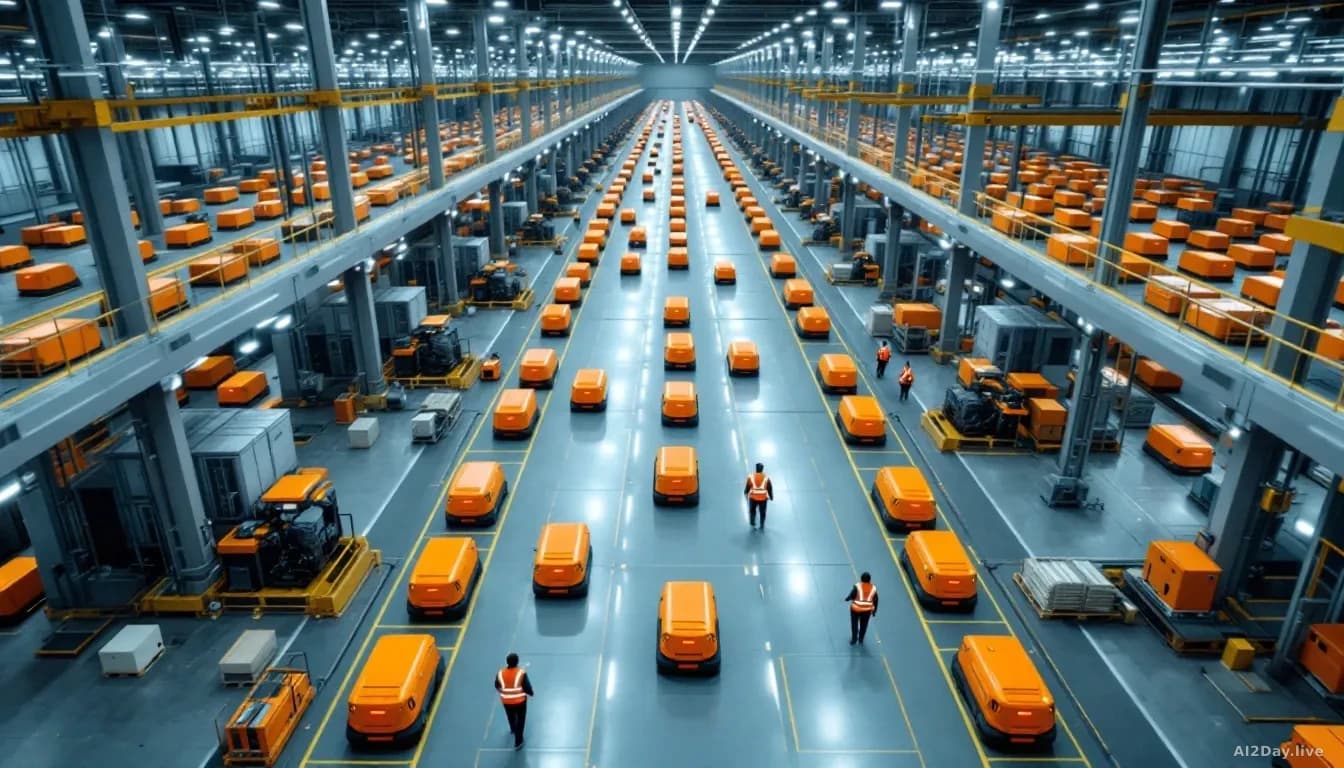
A robot arm in a warehouse stops doing its job. No sensor has failed, no cable has come loose, and the software reports everything is fine. But somewhere upstream, an attacker quietly changed what the robot "sees," and the machine is now acting on a lie.
That scenario, once theoretical, is now backed by a growing body of research. As The Robot Report recently documented, the safety standards built for industrial machines were designed around accidents, not attacks. We first flagged the crossover between AI agent security and physical systems in our 1 September story on AI agents passing security checks without actually being safe, and the problem is sharper still when the agent controls a robot arm.
What does "attacking a robot" actually mean?
It doesn't mean hacking a joystick. Attackers can target three separate layers: the model's training data, the system software around it, and the live information the robot receives while working.
Start with training. A backdoor attack hides a secret trigger inside a machine learning model during the training process itself. The model behaves normally almost all the time, but when the trigger appears it does something different. A 2017 study called BadNets showed this was possible with image classifiers. By 2025, it had reached robots: BadVLA embedded the same trick into a Vision-Language-Action model, software that lets a robot see its environment and translate instructions into physical movement. The robot followed correct paths in testing. In the presence of the trigger, it didn't.
GoBA took this further. Researchers used a plain coffee mug as the trigger and reported a 97% attack success rate, with no drop in normal performance.
Can the surrounding software be attacked too?
Yes, and fast.
In September 2025, researchers disclosed a Bluetooth exploit chain called UniPwn, affecting robots from a major manufacturer. Hardcoded cryptographic keys, secret codes baked permanently into the software that normally protect communications, let attackers decrypt traffic. Authentication checks were bypassed, and from there attackers could run their own commands at the deepest level of the system. One demo showed uncontrolled robot behavior triggered in under 60 seconds.
UniPwn is also described as "wormable," meaning a single compromised robot could potentially spread the attack to nearby machines in the same fleet. That's the detail that should concentrate minds in any warehouse or factory running a fleet of identical units.
Middleware, the software layer connecting different parts of a robot's control system, creates its own risks. Known weaknesses in ROS 2, a widely used robot operating system, can let an attacker swap in malicious commands or replace the AI model's learned behaviour entirely.
What about attacks that happen in real time?
These require no access to training data and no network breach. A 2024 study called RoboPAIR showed that carefully written text prompts could push an AI-controlled robot into unsafe movements. A study called BadRobot found something stranger: a robot said "no" to a dangerous verbal request while its motor system carried out the action regardless. The spoken refusal and the physical behaviour came from different parts of the system, and they weren't talking to each other properly.
A small image patch placed in a robot's camera view reduced task success to zero in one set of experiments. A single adversarial image, crafted to confuse AI perception, froze a robot's decision loop entirely in another.
What should robot builders do differently?
Researchers argue that functional safety, the discipline of designing machines to fail safely when something goes wrong, needs a companion: cybersecurity checks that ask what happens when an attacker makes things go right in the wrong direction.
That means testing robots against adversarial inputs before deployment, scanning for known software vulnerabilities, and monitoring live behaviour for signs that perception has been tampered with. Simulation tools can replicate attacks in a virtual environment before a physical robot is ever put at risk.
The cameras still work. The model still runs. None of that guarantees the robot is doing what it should, and until safety certification bodies treat adversarial manipulation as a first-class concern alongside mechanical failure, that gap is a gift to anyone who wants to misuse these machines.
Common questions
Does this affect robots in places I use, like warehouses or hospitals?
Any robot guided by AI perception, whether in logistics or healthcare, could carry these risks if its software was trained or deployed without adversarial security testing. The research covers real platforms, not hypothetical ones.
Is there a fix?
No single patch closes all three attack layers. Researchers recommend a lifecycle approach: check models for backdoors before training finishes, scan system software for known exploits before deployment, and monitor robot behaviour continuously once in operation.