The 'Edge AI Wall': Why Putting Powerful AI Into a Robot Body Is Harder Than It Sounds
Robots and self-driving vehicles face a crunch that more batteries and bigger chips cannot fix. Here is the problem in plain English.
Key points
- Physical AI systems that act in the real world hit hard limits that cloud-based AI simply does not face.
- The "edge AI wall" is a two-part barrier: strict physical limits on weight and heat, plus a mathematical explosion in the number of decisions a robot must evaluate.
- A robot planning just 20 steps ahead, with 10 choices at each step, must sift through 100 quintillion possible paths, a number no current processor can brute-force in real time.
- Adding heavier batteries and bigger chips makes the robot heavier and shorter-lived, creating an engineering circle that gets worse, not better.
- Researchers argue that new mathematics, not faster hardware, is the only realistic way out.
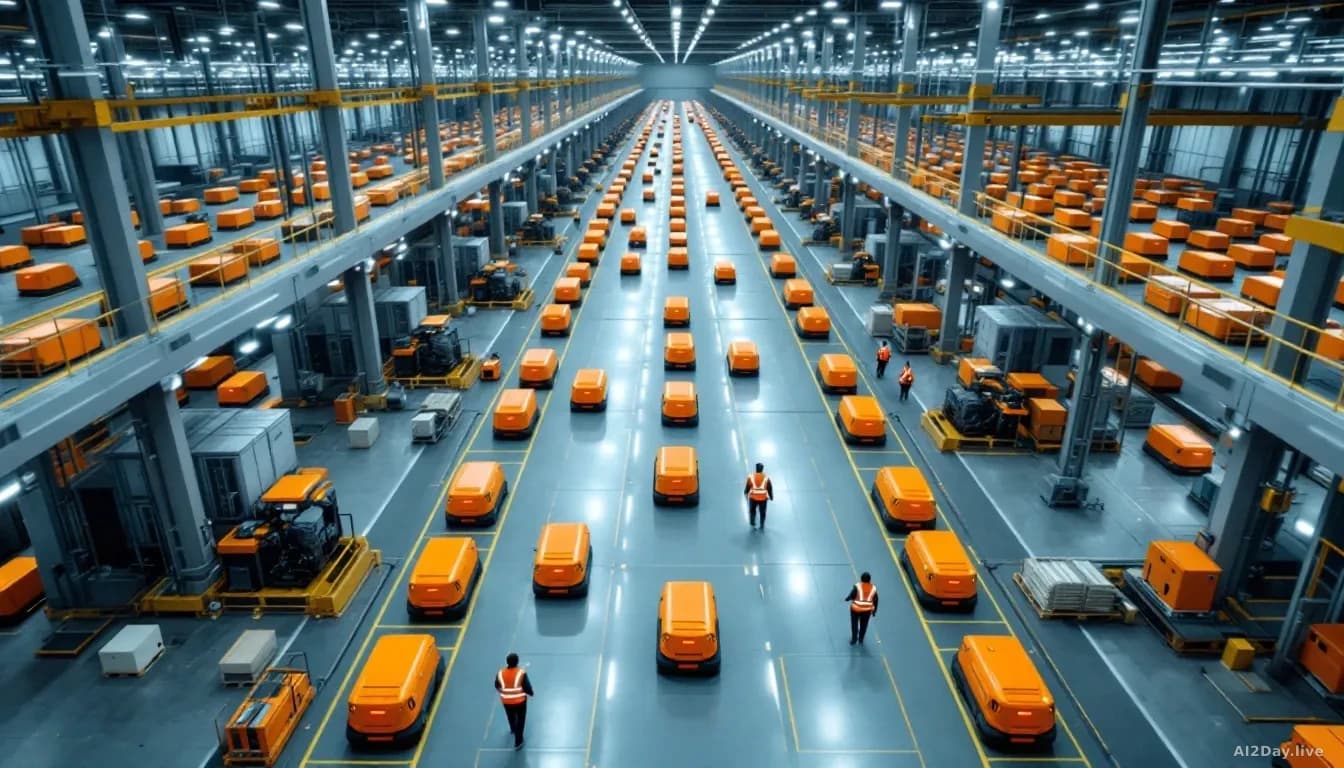
Imagine asking a warehouse robot to move a package from one shelf to another while forklifts and people swirl around it. Now imagine it has to plan ten moves ahead, account for every possible obstacle, and make its decision in under a second. That's where things get interesting.
A robotics researcher writing for The Robot Report lays out why this kind of task is pushing the entire field of physical AI toward a wall that more computing power alone cannot knock down. We've been tracking the gap between robot demos and real-world performance since August: our 26 August story found developers themselves admit their robots are stuck in an early, limited era.
What exactly is the "edge AI wall"?
It's a two-part crunch that hits any AI running on a machine that moves around untethered from a power socket.
The first part is physical. A robot carries its own battery. Strap on a powerful GPU (the specialised chip that does the heavy number-crunching AI needs) and you also need a bigger battery to feed it and a cooling system to stop it melting. Both add weight, which drains the battery faster, which means you need an even bigger battery. Engineers call this a vicious circle because it keeps getting worse the harder you push.
The second part is mathematical, and it doesn't care how good your chips ever get.
Why can't we just throw more computing power at it?
The problem grows faster than any chip can chase it.
Here's the maths, kept simple. If a robot has 10 possible actions at each decision point and plans 10 steps ahead, it must consider 10 billion possible paths. Plan 20 steps ahead and that number jumps to 100 quintillion, a 1 followed by 20 zeroes. Real robots face far more than 10 options per step, so the real numbers are uglier still.
| Planning depth (steps) | Possible paths (10 choices each) | Real-world example |
|---|---|---|
| 1 | 10 | Single isolated decision |
| 5 | 100,000 | Dodging one obstacle |
| 10 | 10 billion | Warehouse navigation |
| 20 | 100 quintillion | Multi-robot coordination |
When the search space balloons like this, the processor isn't slow; it's that the number of options grows incomparably faster than hardware can keep up. Faster chips just let you lose the race slightly more slowly.
Developers end up picking one of two bad options: limit how far ahead the robot plans, which makes it short-sighted and prone to freezing, or let the processor run flat out and watch the battery die.
What does this mean for everyday robots and self-driving cars?
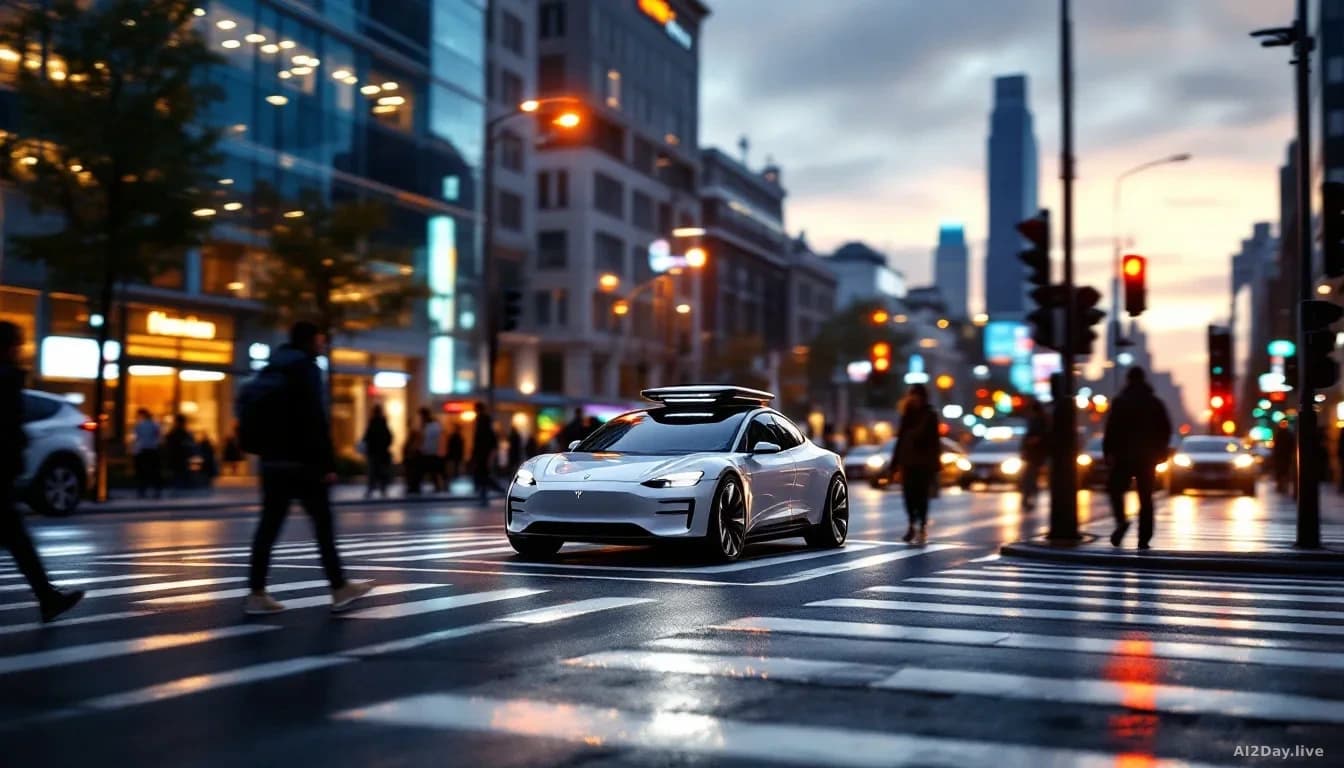
The wall explains why warehouse robots still struggle in chaotic environments, why self-driving vehicles stay nervous in busy city centres, and why humanoid robots that look impressive in demos still stumble on simple tasks.
The fix, the researcher argues, is new mathematics that lets a robot cut through that enormous tree of choices intelligently rather than searching all of it. Think of it less like a faster runner and more like someone who's learned which doors are worth opening in the first place. That mathematical work is ongoing, and until it delivers, the wall is real. The honest read here is that the hardware race has quietly hit a ceiling, and the industry's next few years will be won or lost in algorithm design, not chip specs.
Common questions
Does this mean humanoid robots will not happen?
Not necessarily. It means the current approach of transplanting cloud AI directly into a robot body has hard limits. New planning methods could change the picture, but they're still being developed.
Should you worry about safety around autonomous vehicles?
This research is a reason engineers are cautious rather than alarmed. The industry understands the limits, and real-world systems are designed to fail safely, by stopping rather than guessing badly.