Swarm Robotics: Centralized vs. Decentralized Power Models Explained
Power architecture shapes how robot swarms coordinate and recover from failure. Here is what Amazon and Ocado show us about the real trade-offs.
Key points
- Amazon Robotics uses centralized orchestration to coordinate over 1 million warehouse robots.
- Ocado's centralized grid system can pick a 50-item grocery basket in under five minutes.
- Decentralized models improve fault tolerance but create communication congestion as swarms grow.
- Hybrid models pair centralized oversight with local robot autonomy to balance both concerns.
How robots share energy and decisions determines whether a swarm holds together or falls apart. Swarm robotics puts many robotic agents to work on shared tasks, and the power architecture underneath, centralized or decentralized, shapes everything from response speed to resilience.
What are centralized power models?
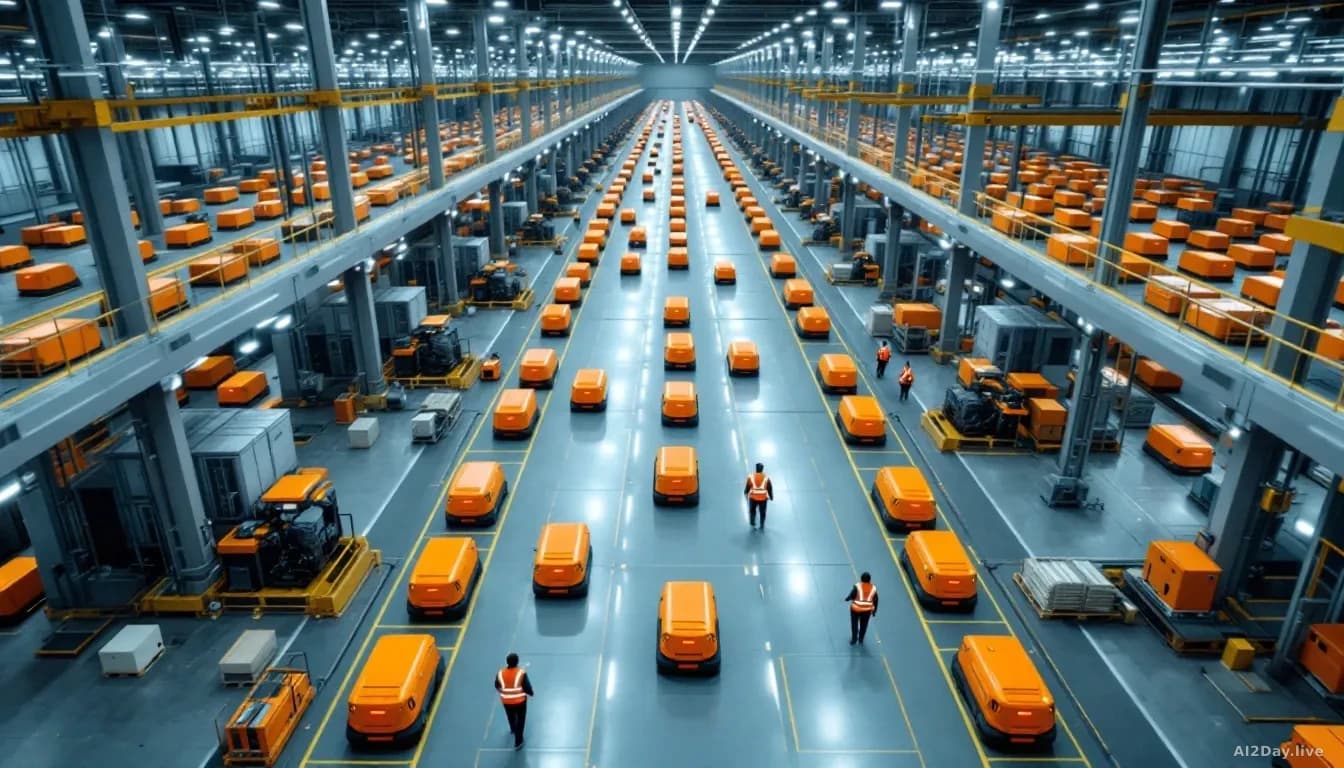
Centralized models run energy distribution and coordination through a single control layer. That structure suits predictable, high-density environments well. Amazon Robotics coordinates over 1 million robots across its fulfillment centers, with a centralized platform managing routing and traffic in real time. Mobile shelving units carry items directly to employees, and the control system keeps congestion down across the whole fleet. The risk is concentration: if the central layer fails, the entire swarm is exposed.
We covered Amazon's presence at RoboBusiness 2026 on 21 August, where a senior Amazon Robotics figure is scheduled to speak on AI in production environments.
What are decentralized power models?
Decentralized models hand energy management and decisions to individual robots. One unit going offline does not take the others with it, which is the core appeal. The problem scales badly: as the swarm grows, every robot must keep exchanging routing updates with its neighbours, and that message traffic builds quickly. Real-time coordination suffers when the network is saturated.
How do hybrid models fit in?
Hybrid architectures layer centralized strategic oversight on top of local autonomy. Individual robots handle immediate decisions using edge AI processing, meaning onboard computing that acts without waiting for a central signal, while the higher-level system manages fleet-wide coordination. This cuts communication congestion and makes swarms more adaptable when conditions change fast. Most observers expect large-scale deployments to move in this direction.
Why does this matter for everyday people?
Ocado's grid-based system shows what centralized coordination can do at scale: thousands of robots, 24-hour engineering support, and a 50-item basket picked in under five minutes. That speed and consistency feeds directly into next-day grocery delivery for ordinary customers. The architecture is invisible to shoppers, but it is the reason the order arrives.
Robotic power design is not abstract engineering. It is what decides whether your package ships on time or sits waiting while a fleet bottleneck clears.
Common questions
How do centralized systems handle failures?
Centralized systems can struggle if the main control layer goes down, putting the whole swarm at risk. Backup systems or hybrid designs reduce that exposure.
Are decentralized models more expensive?
Decentralized robots need more sophisticated onboard communication hardware, which raises upfront costs, though the resilience and scalability gains can offset that over time.
What industries benefit most from swarm robotics?
Logistics and manufacturing benefit most today, with agriculture increasingly in the picture as deployment costs fall.