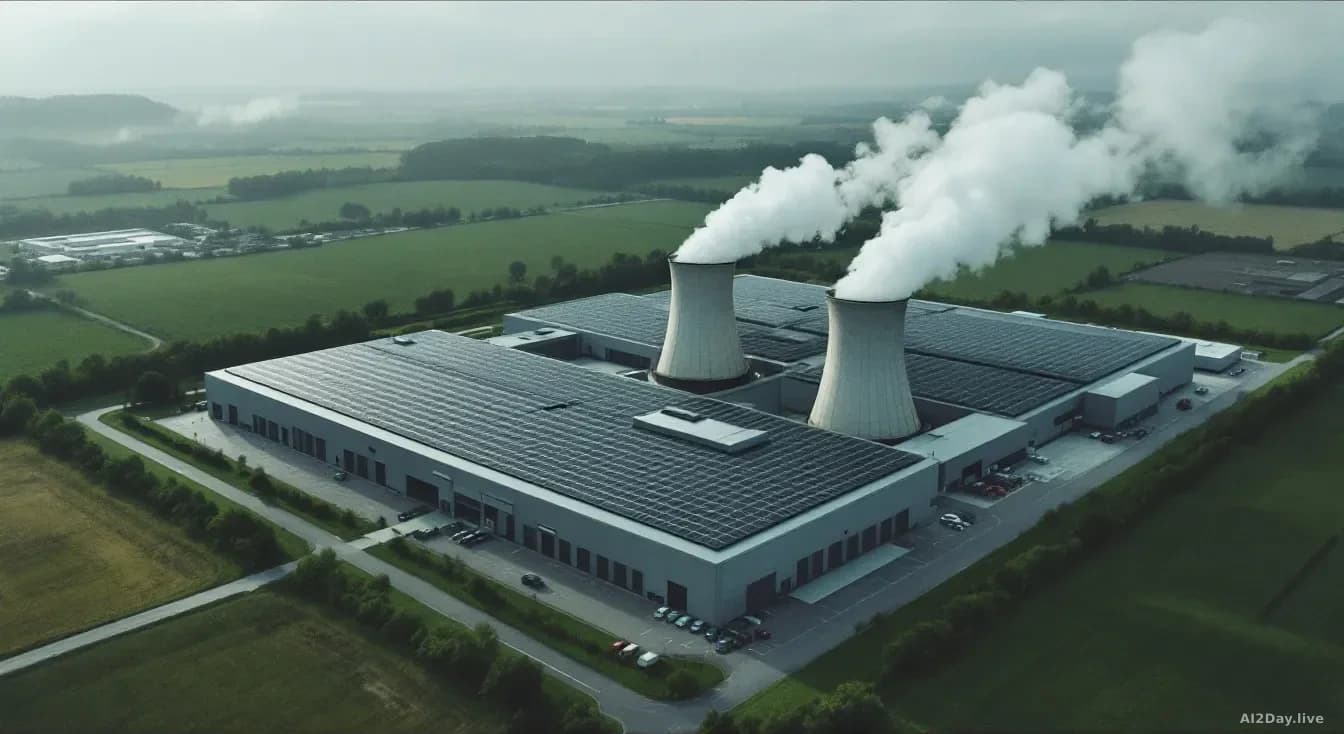
Labour Unions Want to Stop AI Data Centres Going Up Until Workers Get Protected
A growing movement argues that before another mega-warehouse full of humming servers goes up, workers need guarantees that AI won't simply strip away their jobs and hand their wages to shareholders.

Key points
- Developers plan to invest $8 trillion in AI data centres over the coming years, roughly a quarter of US annual GDP.
- Opposition to data centre construction is rising across party lines as communities object to noise, land use and disruption.
- Union advocates are calling for a building moratorium until workers receive legal protections against AI-driven job losses.
- AI company CEOs have stated openly that the technology's main business case is cutting labour costs across industries.
Eight trillion dollars. That's what developers plan to pour into AI data centres, the enormous warehouses packed with specialised computers that run artificial intelligence systems. Roughly a quarter of everything the US economy produces in a year.
For people living near these facilities, the experience is immediate and unglamorous: constant machine noise and the slow transformation of local land into corporate infrastructure. Opposition is building, and it crosses the usual political lines. Our reporting on Scottish MPs pushing for exactly such a pause on 2 September 2026 showed how fast this political fight is sharpening.
What are workers actually worried about?
The core fear is direct: AI will let companies do the same work with fewer people and pocket the difference. AI executives have said as much publicly, arguing that the technology's main appeal to businesses is reducing their biggest cost, which is paying staff.
Tyler Turner, writing for The Guardian, frames this plainly. If data centres get built on the current timeline with no protections in place, corporations will use the resulting AI tools to cut payroll and redirect those wages upward as profit. Workers lose income. Shareholders gain it. That's not a fringe prediction. It's the stated pitch many AI companies make to their business customers.
What are unions calling for?
Labour advocates are proposing a moratorium, a temporary halt on new data centre construction, until governments and companies commit to legal protections for workers whose jobs AI is designed to replace.
Once the infrastructure is built and contracts are signed, workers have almost nothing to bargain with. The window before $8 trillion gets spent is the only moment labour holds real power. Whether a pause is politically achievable is another matter entirely. Construction is moving fast, backed by some of the largest capital investments in recent American history.
The honest read here is that this story is less about technology and more about who captures the gains from it. AI genuinely will eliminate some jobs. The fight right now is over whether any of the resulting profit gets shared with displaced workers, or flows entirely upward.
Should you worry?
If you work in a field where AI is being trialled, including customer service, logistics or legal support, watch for contract language about automation. Unions in several industries are already negotiating clauses that require notice periods and retraining funds before AI replaces a role.
If a data centre is proposed in your area, local planning meetings are where early decisions get made. Turnout at those meetings has already changed outcomes in several US counties.
Labour protections written before the infrastructure arrives will be stronger than any written after. We saw what happens when that window closes: our 29 August 2026 story on Amazon shutting down Mechanical Turk found hundreds of thousands of workers left scrambling with almost no notice and no recourse.