Google Beam's video booths land in six countries, and you can rent one by the hour
The 3D video calling system is rolling out to the UK, France, Germany, Japan, Canada and the US, with drop-in access at co-working sites from October.
Key points
- Google Beam, a 3D video calling system sold as HP Dimension with Google Beam, is shipping to customers in six countries: the US, Canada, UK, France, Germany and Japan.
- From October, anyone can book a Beam booth by the hour at Industrious co-working sites in Atlanta, Chicago, New York City and Palo Alto, the first time Beam is available without a corporate contract.
- Google says an internal eight-week study found staff using Beam felt 50% more connected, had 33% easier feedback conversations, and needed 21% fewer follow-up meetings.
- Early paying customers named by Google include Bain and Company, Netflix and Capital Group.
- Beam works with both Google Meet and Zoom, deployed through 18 channel partners worldwide.
Google is trying to sell you on a video call that looks like the other person is actually sitting across the desk.
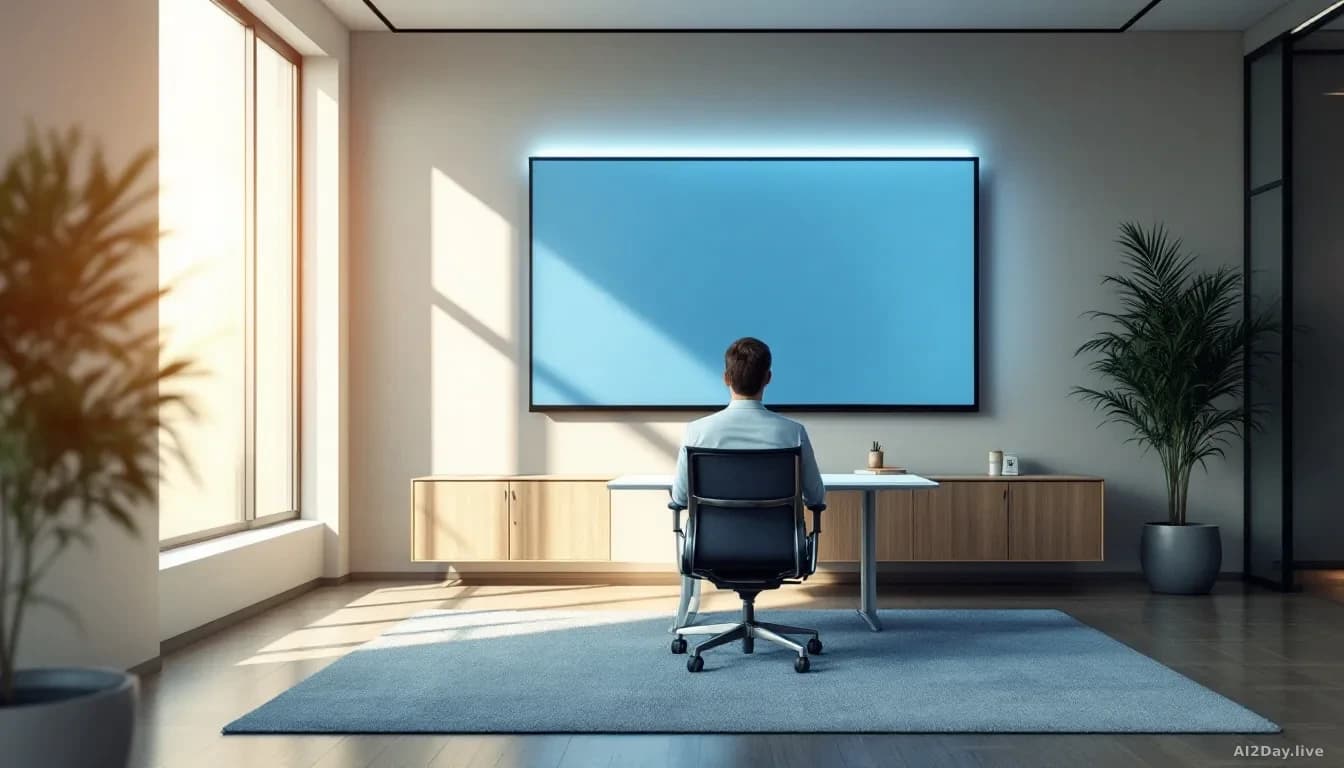
The product is called Google Beam. It uses a special screen and cameras to make the person on the other end appear in 3D, life-sized, with eye contact that lines up. No headset. Just sit down and talk.
Google announced this week it's shipping to customers in the US, Canada, UK, France, Germany and Japan, with HP building the hardware under the name HP Dimension with Google Beam. It plugs into Google Meet and Zoom, so nobody has to learn new meeting software.
Here's the part that's more interesting than another enterprise rollout.
Can normal people actually try it?
Yes, from October, if you live near the right city. Google's partnering with Industrious, a chain of co-working offices, so you can book a Beam booth by the hour at select US locations: Atlanta, Chicago, New York City and Palo Alto to start.
That matters because a Beam rig isn't the kind of thing a small business buys. It's a whole custom setup. Renting a seat for an interview or a client pitch is a very different proposition, closer to booking a meeting room than buying a product.
A friend of mine runs a two-person recruiting firm and flies across the country for final-round interviews. If a candidate's in Chicago and she's in New York, a booth for an hour could easily beat a last-minute flight. That's the pitch, and it's a real one.
Does it actually work better than a normal video call?
Google says yes, using its own staff as the test group. In an internal eight-week study, teams on Beam reported feeling 50% more connected, said it was 33% easier to make sure their feedback landed, and needed 21% fewer follow-up meetings.
Take those numbers with the obvious pinch of salt: Google ran the study on Google employees using a Google product. The follow-up meeting figure is the one to watch, because it's the kind of thing a finance team can actually measure.
Bain and Company has been using Beam for campus recruiting. Netflix and Capital Group are also on the early customer list.
What about price, and what about privacy?
Google hasn't published a public price for HP Dimension with Google Beam. It's sold through 18 channel partners, which is corporate-speak for "call us for a quote". The Industrious booths will have per-session pricing when booking opens in October.
On privacy, remember what a Beam call actually is. Cameras capture a 3D model of your face and upper body in real time so the other end can render you in depth. Google hasn't detailed how long that data is held or whether it's processed on the device or in the cloud. If you're using a shared booth at a co-working space, that's a fair question to ask before you sit down for a job interview.
What has changed since Google's last big Beam push?
A lot of our recent Google coverage has been about Gemini getting smarter and more personal, including remembering users across every device, which we reported on 23 September. Beam is the physical-world companion to all that: less about the model, more about the room you sit in.
My honest read: the technology is impressive, the enterprise sales cycle will be slow, and the Industrious booths are the smart move. Letting a founder try Beam for an hour before writing a purchase order is how this actually gets adopted.