Fusion startup cuts fuel pellet production from days to minutes
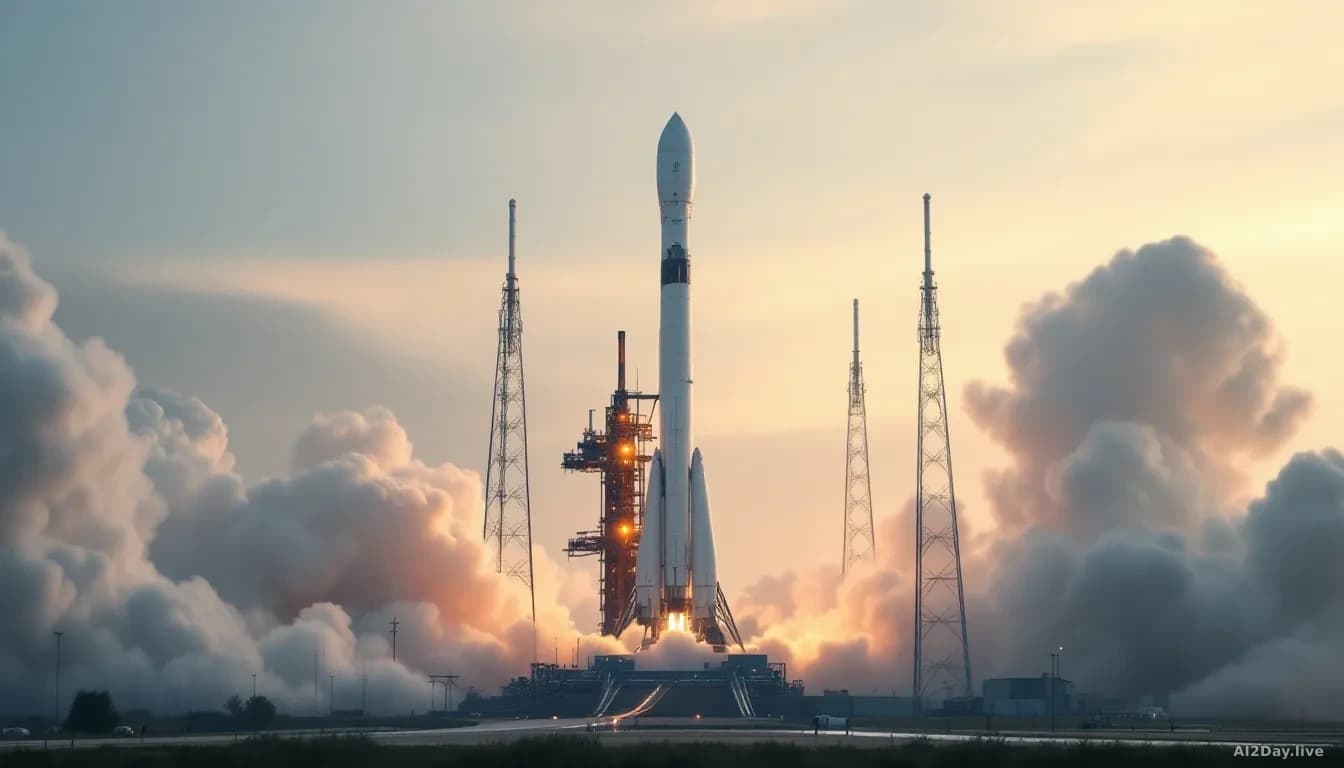
Inertia Enterprises says it can now make the tiny fuel capsules at the heart of its nuclear fusion power plant in two to three hours, down from a week or more. The speedup quietly solves one of the hardest manufacturing problems standing between fusion energy and the electricity grid.
Key points
- Inertia Enterprises reduced fusion fuel pellet production time from up to a week to roughly two to three hours.
- The company raised $450 million to commercialise technology first proven at the National Ignition Facility, a US government research lab in California.
- A key ingredient in the fuel, tritium, costs about $30,000 per gram, making faster production a direct cost saving.
- Inertia's planned commercial power plant will fire ten fuel pellets every second.
- Co-founder Annie Kritcher designed the original NIF experiment that first produced more energy from fusion than the lasers put in.
Fusion energy works by pressing two forms of hydrogen together until they fuse into a single atom, releasing a burst of energy in the process. The trick is creating enough pressure to force atoms that naturally repel each other to merge. One approach, called inertial confinement fusion, uses powerful laser beams to crush a tiny fuel pellet in a fraction of a second.
That pellet is the problem Inertia just cracked.
What is actually inside a fusion fuel pellet?
Think of a grape-sized hollow sphere made of diamond with layers of frozen and gaseous hydrogen inside. The outer shell is a near-perfect sphere of synthetic diamond. Just beneath the surface sits a thin layer of frozen deuterium and tritium, two heavier versions of hydrogen. At the centre is a pocket of the same gases in their gaseous state. Wrapped around the whole thing is a gold casing, called a hohlraum (pronounced HOLE-rowm), that converts laser energy into X-rays and focuses them inward to trigger the fusion reaction.
Every layer must be almost perfectly round. Any bump or dent can disrupt the compression and snuff the reaction before it fully ignites.
Why did it take so long before, and what changed?
At the National Ignition Facility, the government lab that first achieved fusion ignition in 2022, teams make only a handful of these pellets per year. Producing the inner frozen crystal layer alone can take a week. The process demands extreme care and a controlled environment, and each pellet can cost a fortune to produce. That pace is fine for a science experiment. It is fatal for a power station.
Inertia, working with the National Ignition Facility under a formal public-private partnership, spent several rounds of development cutting that crystal-growth step from up to seven days down to about 30 minutes. Total pellet production time now runs two to three hours.
CEO Jeff Lawson, speaking to TechCrunch, described the moment the team reframed the challenge: the NIF was making prototypes, not products. His answer was to hire manufacturing engineers, people who design production lines at consumer electronics firms, and ask them to solve the same problem at industrial scale.
Inertia also has a technical edge that gives it more room to work with. Its planned laser will be four times more powerful than the one at the NIF. More laser power means the system can still trigger a fusion reaction even if a pellet has minor imperfections, which allowed engineers to relax some of the tightest tolerances and speed up the process further.
| Metric | NIF (research) | Inertia (commercial target) |
|---|---|---|
| Crystal growth time | Up to 7 days | ~30 minutes |
| Total pellet production | ~1 week+ | 2 to 3 hours |
| Laser power (relative) | Baseline | 4x NIF |
| Pellets needed per second | Not applicable | 10 |
| Tritium cost | ~$30,000 per gram | ~$30,000 per gram |
What does this mean for ordinary people?
Faster production directly lowers costs and shrinks the physical size of the facility needed to run it. Tritium, one of the two hydrogen types used as fuel, is radioactive and scarce: only about 25 kilograms exist in global stockpiles, and it costs roughly $30,000 per gram. The less time tritium sits waiting to be used, the less of it a company needs to hold, cutting both risk and expense.
Inertia plans to eventually breed its own tritium inside the fusion reactions themselves. But for early plants, keeping inventory low matters a great deal.
A commercial fusion power plant that actually works would offer electricity with no carbon emissions, no long-lived radioactive waste, and fuel derived from water. Getting there still requires clearing nine more technical hurdles by Inertia's own count. But faster pellet production is a real, measurable step forward, not a promotional video.