BlackBerry Quietly Became a Robotics Software Company. Here Is How.
The phone maker turned automotive software firm says its QNX software is now one of its fastest-growing business lines, and robots are driving that growth.
Key points
- BlackBerry's QNX software, which handles safety-critical functions in cars, now runs inside industrial robots and medical devices.
- QNX is embedded in 275 million vehicles worldwide, giving BlackBerry a long track record in safety-critical environments.
- BlackBerry's total QNX order backlog stood at $950 million as of the CEO's comments to CNBC, with robotics making up a portion whose exact size hasn't been disclosed.
- BlackBerry stock has doubled in price so far this year, driven by improving margins and new growth bets on robotics and autonomous vehicles.
- In April 2025, BlackBerry expanded a partnership with Nvidia to deploy QNX alongside Nvidia's systems in robotics, medical, and industrial settings.
Most people remember BlackBerry for the smartphone with the little physical keyboard. That chapter closed years ago. What the company does now is less flashy but arguably more consequential: it sells software that tells machines what to do when a mistake could hurt someone.
What does BlackBerry actually make today?
Its main product is QNX, an operating system (the core software layer that controls how a device runs), built for environments where reliability isn't optional. Think the brakes in your car, or the software managing a semi-autonomous driving system. BlackBerry says QNX runs inside 275 million vehicles today.
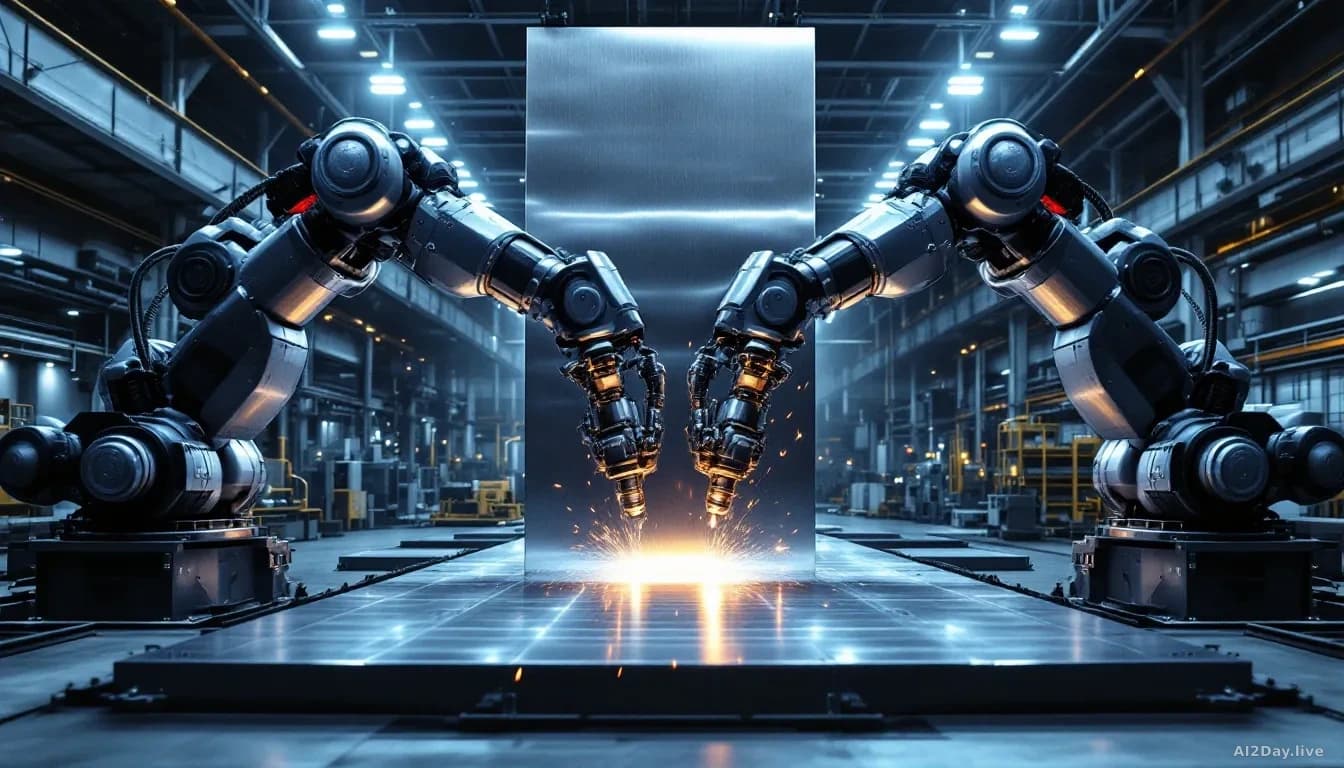
Now the company is taking that same software into warehouses and hospitals. CEO John Giamatteo told CNBC's The Tech Download podcast that robotics has become one of the "fastest-growing businesses inside the QNX portfolio." He's not talking about humanoid robots. The focus is on warehouse forklifts, surgical equipment and industrial automation: machines that move goods, assist surgeries or run production lines.
Why does this matter for ordinary people?
It matters because the software managing a robotic forklift, or an automated tool in an operating theatre, needs to be trustworthy. A bug in that code isn't an annoyance; it's a safety risk. That's precisely the gap BlackBerry is trying to fill, using a reputation earned over more than a decade in automotive. Our 24 August story on AI creeping into farm machinery made the same point: when a machine operates near people, the software underneath it matters as much as the hardware you can see.
The company's total backlog of QNX orders sits at $950 million. Giamatteo confirmed robotics accounts for part of that figure but didn't break out the exact amount. The robotics bet is real; its specific size isn't yet public. Worth keeping that in mind before drawing big conclusions.
In April 2025, BlackBerry announced an expanded deal with Nvidia, the chipmaker whose processors power most AI systems, to combine QNX with Nvidia's hardware platforms across robotics and medical technology. Newer robots increasingly pair specialised chips with AI models, software trained on data that can make decisions in real time. BlackBerry's pitch is that QNX provides the safety layer underneath all of that.
What about BlackBerry's stock doubling?
BlackBerry shares have doubled year-to-date, which sounds exciting. But a doubling stock price often reflects investors pricing in future growth that hasn't arrived yet. The $950 million backlog is concrete. Its robotics slice isn't public. Survivorship bias works in markets too: the companies that successfully pivot get written up; the ones that didn't are forgotten.
If you work somewhere that's adding automated machinery, the software running inside those machines deserves the same scrutiny as the hardware you can see. Asking a vendor which safety-certified operating system their robot runs on is a reasonable, practical question. It used to apply only to cars.



