Agility's Digit 5 Has Human-Style Legs, Nine-Minute Charging and a Safety Squat
The updated humanoid can lift 50 pounds, work 20 hours a day, and sit on the floor to switch itself off when a person walks close, all lessons learned from three years on real factory floors.
Key points
- Agility Robotics unveiled Digit 5 on 11 September 2026, replacing the reverse-knee design used in earlier models with straight, human-style legs.
- The robot can lift up to 50 lb (22.7 kg) and recharges fully in nine minutes after a 90-minute shift, giving it a 10-to-1 run-to-charge ratio.
- Agility reported $1.8 million in net sales in 2025 but has taken more than $300 million in multi-year orders for Digit 5.
- Early access begins in the first half of 2027, with broad commercial availability targeted for late 2027.
- Digit 5 will be the first version offered outside North America, starting with the EU and UK.
For three years, an earlier version of Agility Robotics' humanoid moved bins and totes inside Amazon warehouses and other industrial sites. The company watched. It took notes. Digit 5 is what happened next.
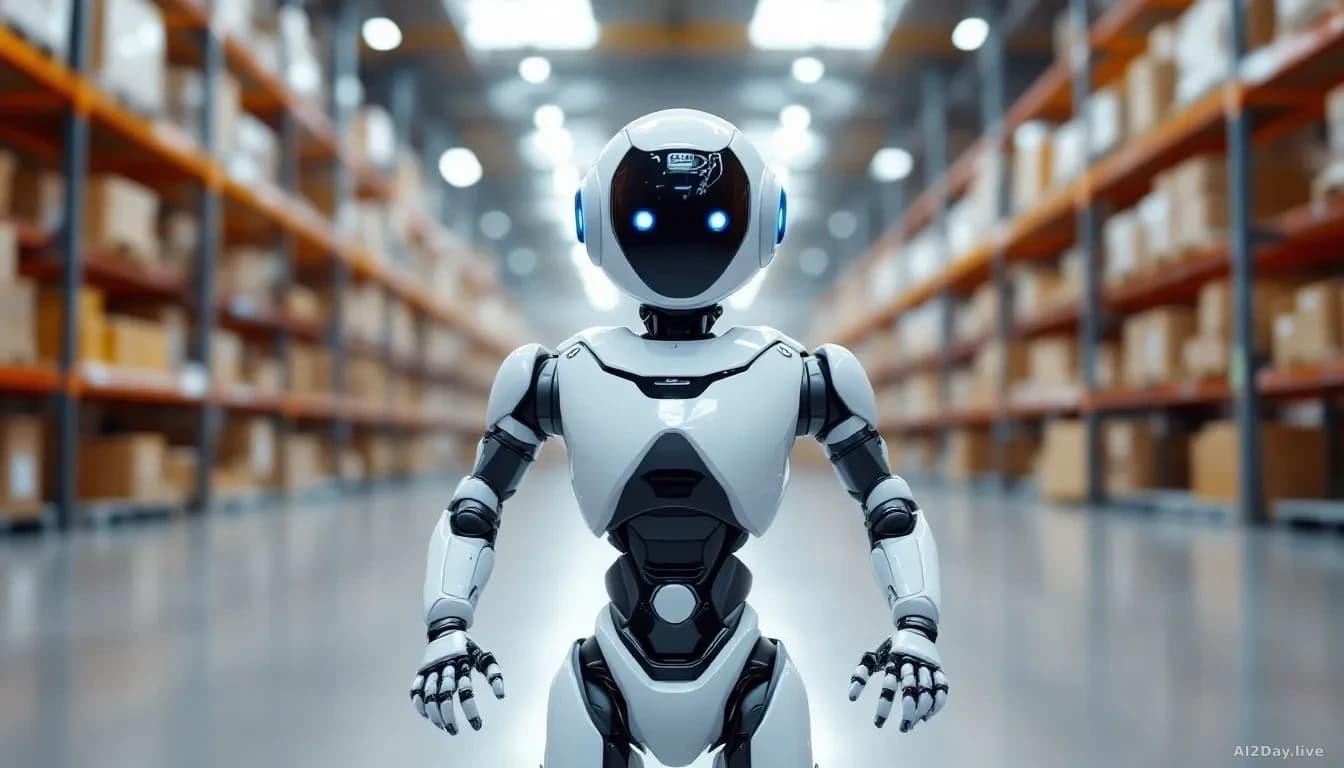
Standing 5 feet 11 inches tall and weighing 284 pounds, the new robot can stretch its arms to 7.2 feet off the ground, a full 20 inches higher than its predecessor. Those figures matter in a warehouse built around human reach.
What changed about the legs?
Digit 4 had backward-bending, bird-like knees, good for walking. Forward-bending joints, like a person's, are better for lifting. Agility's proprietary cycloidal actuators, motors that pack high rotational force into a compact housing, let Digit 5 repeatedly hoist 50-pound loads, enough to cover the heaviest single-person tasks regulated by OSHA, the US workplace safety agency.
Padded knees let the robot kneel. Beyond that, Digit 5 can squat all the way to the ground and cut its motors in that stable, seated position. That is the core of Agility's safety plan: if a worker approaches, the robot sits down and goes passive before anyone can touch it, rather than freezing in a pose that could still fall or swing. We reported on the gaps that remain in robot safety architecture on 1 September, and Agility's squat-and-power-off approach is one of the more concrete hardware answers to that problem we've seen filed since.
Why does the charging speed matter so much?
Digit 4's 2-to-1 run-to-charge ratio meant it spent roughly half its time plugged in. Digit 5 inverts that: ninety minutes of work, nine minutes to recharge fully. At 10-to-1, a single unit can stay productive for more than 20 hours out of every 24.
For a factory manager comparing a robot against a human worker plus overtime, that arithmetic matters far more than payload alone.
What can it actually do?
Digit 4 mostly moved totes. Digit 5 covers what Agility calls a facility's full workflow: unloading pallets as goods arrive, tending production machines, kitting orders, inspecting quality, and stacking finished goods for shipment. Ten specific use cases, all drawn from direct customer requests.
For manipulation, Agility co-founder Jonathan Hurst told The Robot Report that general-purpose robot hands simply don't exist yet. Digit 5 uses a two-fingered parallel-jaw gripper, a design inspired by Cybathlon winners, an international competition where amputees use prosthetics to complete manipulation tasks. The gripper mounts on an ISO-standard flange, an industry-standard connection point, so different tools can swap in for different jobs.
Should you worry about the valuation?
Agility is preparing a SPAC merger, a type of stock-market listing that bypasses a traditional IPO, that values the company at $2.5 billion. As we detailed four days before this announcement, that figure sits against $1.8 million in 2025 sales. The entire case rests on those $300 million in forward orders and the premise that Digit 5 delivers at scale what Digit 4 proved was possible in controlled deployments.
Agility has done something most humanoid startups haven't: put a robot on actual production floors long enough for customers to say what to build next. The engineering answers look credible. Whether the market will pay $2.5 billion to find out is what 2027 will settle.