Robot Brains Get a Skill Library: New AI Lets Machines Break Big Tasks Into Reusable Steps
A research system called REFACTOR-VLA teaches robot AI to organise its actions into named, repeatable skills, rather than making everything up on the fly. The result: robots that handle longer, more complex tasks and are far easier for humans to understand.

Key points
- REFACTOR-VLA is a new robot-AI system from Apple ML Research that automatically groups a robot's raw movements into reusable, named skills.
- Most current robot-AI models generate actions moment by moment with no internal structure, making long multi-step tasks unreliable.
- The system works without human labelling, discovering skill patterns on its own from recorded robot behaviour.
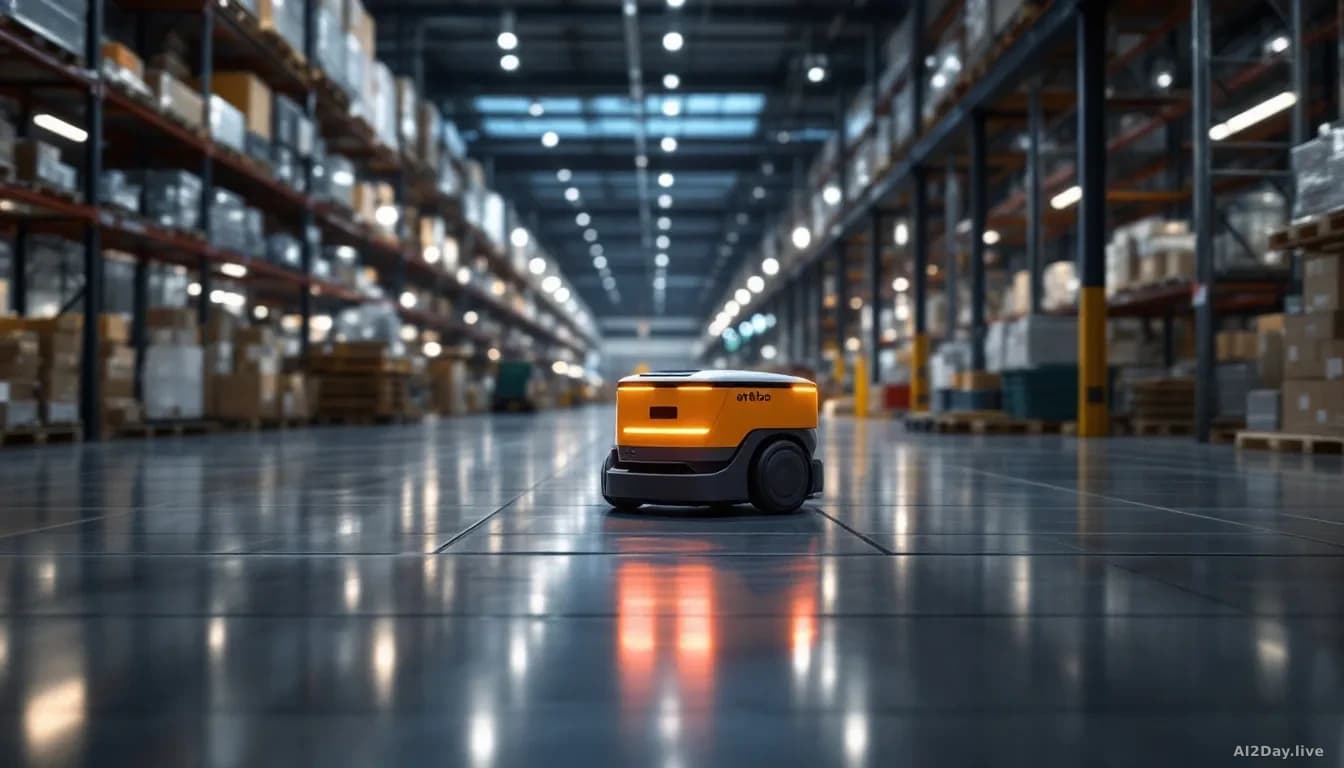
- Better skill libraries could make household robots and warehouse machines far more capable at tasks requiring many steps in sequence.
Imagine asking a robot to make a cup of tea. Pick up the kettle, fill it, boil it, pour it, add the bag, wait, remove the bag. That is eight steps, minimum. Most robot AI today would treat every single movement as a brand-new problem. REFACTOR-VLA wants to change that.
The system, detailed by Apple ML Research, targets a gap in how current robot-AI models think. Models like OpenVLA and RT-2 are described as "monolithic," meaning they produce raw movement instructions one tiny action at a time, with no internal vocabulary of familiar routines. Ask them to do something that takes more than a handful of steps, and performance falls apart.
Why does that matter for real robots?
Without reusable skills, every long task is a fresh improvisation. A robot that has picked up a cup a thousand times still has no stored concept of "pick up cup" it can slot into a new plan.
REFACTOR-VLA tackles this by automatically sorting recorded robot movements into what the researchers call a typed motor program library. Think of it like a recipe book the robot writes for itself: common sequences of movements get a name and a slot in the library, so the robot can call on them again without reinventing them from scratch. Crucially, the system does this without any human sitting down to label which movements count as which skill.
The key technical challenge the team solved is deciding when two sequences of movement are truly doing the same thing. Earlier approaches, like AtomicVLA and AtomSkill, grouped movements by surface similarity, the way two sentences might look alike word-for-word but mean different things. REFACTOR-VLA instead asks whether two sequences produce the same outcome in the world, a much more useful test.
What does this mean for people who use or build robots?
For now, this is research, not a product. But the direction matters. A robot that stores and reuses skills becomes easier to inspect: engineers can look at the library and see exactly what the machine has learned, rather than staring into an impenetrable black box.
That interpretability matters enormously for safety. If a robot in a factory or a care home behaves unexpectedly, you want to be able to find the faulty skill and fix it, not retrain the entire system from zero.
Longer term, skill libraries could let robots be taught new compound tasks by combining existing skills, the way a new recipe borrows techniques you already know. That is a path toward genuinely adaptable machines.
Common questions
Does this mean robots can already do complex household chores?
Not yet. REFACTOR-VLA is a research framework, and practical household robots face many other hurdles beyond task planning. The work moves the field forward, but real kitchens are still some way off.
Could this make robot AI safer and easier to trust?
Yes, that is one of the main hopes. A skill library makes a robot's behaviour more readable to human engineers, which helps them spot and correct mistakes before they cause harm.