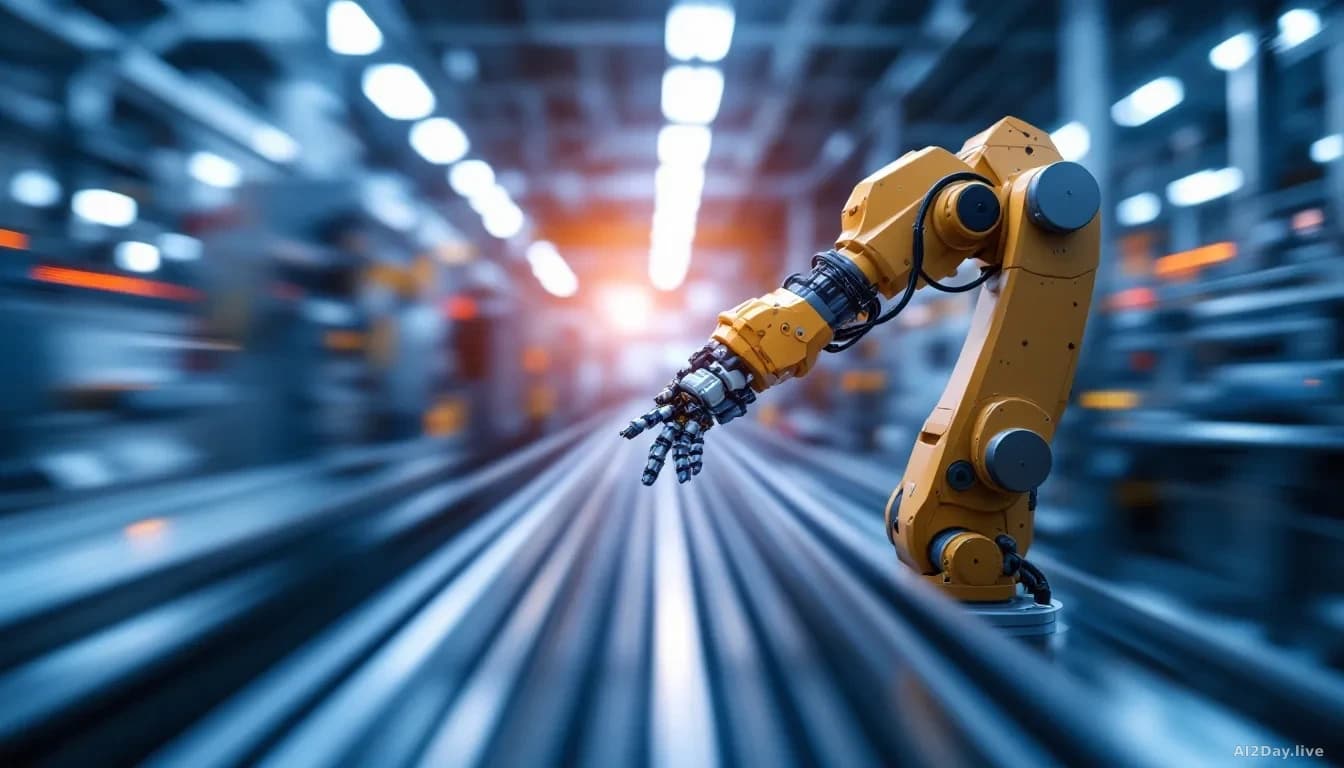
Les minuscules moteurs qui font marcher, bougent et équilibrent les robots humanoïdes
Construire un robot qui se meut comme un humain signifie résoudre un puzzle brutal : des dizaines d'articulations, un espace limité et pas un gramme à perdre. Voici comment une nouvelle génération d'actionneurs compacts change la donne.

Points clés
- Les robots humanoïdes ont besoin de dizaines d'articulations contrôlées individuellement, chacune actionnée par un composant appelé actionneur, pour produire des mouvements ressemblant à ceux d'un humain.
- Les conceptions d'articulations traditionnelles utilisent quatre pièces distinctes : un moteur, une boîte de vitesses, un encodeur (le capteur qui suit la position) et une carte de commande, ce qui ajoute du poids et de la complexité du câblage.
- Les actionneurs intégrés combinent les quatre pièces en un seul module, réduisant le temps d'assemblage et le poids global du robot.
- CubeMars, un fabricant de composants robotiques, a lancé l'AK45-10, un actionneur de 53 mm de diamètre pesant environ 260 g qui peut délivrer jusqu'à 7 Nm (newton-mètres, une mesure de la force de rotation) de couple de pointe.
- La technologie des actionneurs compacts s'applique au-delà des robots humanoïdes, notamment aux bras robotiques, aux robots à quatre pattes et aux exosquelettes portables.
Imaginez que vous vous tenez sur une jambe. Votre hanche et votre genou font de minuscules ajustements à chaque fraction de seconde sans que vous y pensiez. Maintenant, imaginez construire une machine qui fait la même chose, avec des cartes de circuits et des moteurs entassés dans un corps de forme humaine. C'est le défi fondamental de la robotique humanoïde, et c'est beaucoup plus difficile qu'il n'y paraît.
Pourquoi les moteurs sont-ils si importants ?
Chaque articulation d'un robot humanoïde a besoin d'un actionneur, l'appareil qui convertit la puissance électrique en mouvement physique. Si vous vous trompez, le robot entier en souffre : il gaspille de l'énergie ou se meut maladroitement.
Pendant des années, les ingénieurs ont assemblé quatre pièces distinctes pour chaque articulation : un moteur, une boîte de vitesses (qui échange la vitesse contre le couple, la force de torsion qui anime réellement le membre), un encodeur (un petit capteur qui indique au système de contrôle exactement où pointe l'articulation) et une carte pilote (l'électronique qui interprète les commandes et régule l'alimentation). Quatre composants par articulation, multipliés par des dizaines d'articulations, cela représente beaucoup de câblage et beaucoup de choses qui peuvent mal tourner.
Qu'est-ce qu'un actionneur intégré corrige vraiment ?
Il empaquette les quatre pièces en un seul module scellé : plus petit, plus léger, plus rapide à installer.
CubeMars, une entreprise qui fabrique du matériel de contrôle du mouvement pour les développeurs de robotique, a détaillé son actionneur AK45-10 dans un rapport couvert par The Robot Report. Le module a 53 mm de diamètre, environ la largeur d'une balle de golf, et pèse environ 260 g. À l'intérieur se trouvent un moteur sans balais, une boîte de vitesses planétaire 10:1 (où 10 rotations du moteur produisent une rotation à l'articulation, échangeant la vitesse contre la force), un encodeur et l'électronique du pilote. La production de couple de pointe est de 7 Nm.
Pour les articulations des bras comme les coudes et les poignets, où la précision et la vitesse sont plus importantes que la force brute, c'est un ajustement pratique. Il ne lèvera pas le poids corporel entier du robot du sol, mais il n'a pas besoin de le faire.
| Spécification | Chiffre AK45-10 |
|---|---|
| Diamètre | 53 mm |
| Poids | ~260 g |
| Couple de pointe | 7 Nm |
| Rapport de réduction | Planétaire 10:1 |
| Modes de commande | Asservissement et position/vitesse/couple de type MIT |
Les articulations de la hanche et du genou supportent des charges plus lourdes, mais la même philosophie de conception intégrée s'applique à l'ensemble du robot : moins de pièces externes signifie une disposition mécanique plus propre et un comportement plus cohérent d'une articulation à l'autre.
Qui utilise vraiment cette technologie ?
Les robots humanoïdes sont l'application vedette, mais les actionneurs compacts se retrouvent partout où une machine doit se mouvoir avec précision dans un espace restreint. Les bras robotiques légers dans les laboratoires de recherche, les robots à quatre pattes traversant un terrain accidenté, et les exosquelettes (des cadres portables qui assistent les personnes à mobilité réduite) partagent tous les mêmes exigences : petit, précis, fiable.
Nous suivons la course du matériel derrière le mouvement humanoïde depuis juillet. Notre rapport du 17 juillet sur Agility Robotics a montré une entreprise gagnant déjà de l'argent avec des robots marchants ; l'histoire de l'actionneur concerne les composants rendant cela commercialement viable.
Pour les ingénieurs en début de projet de conception, le choix du bon actionneur détermine tout ce qui suit, de l'autonomie de la batterie à la façon dont le robot récupère d'une poussée inattendue.
L'objectif est une machine qui se meut assez bien pour que vous arrêtiez de remarquer les moteurs.
Questions courantes
Qu'est-ce que le couple et pourquoi c'est important pour les robots ?
Le couple est la force de rotation qu'un moteur produit, mesurée en newton-mètres. Un couple plus élevé signifie qu'une articulation peut pousser plus fort ou supporter plus de poids, ce qui importe surtout pour les articulations de la hanche et du genou qui supportent la charge corporelle entière du robot.
Un robot plus léger fonctionne-t-il vraiment mieux ?
Généralement, oui. Un robot plus léger consomme moins d'énergie, exerce moins de stress sur les pièces structurelles et peut réagir plus rapidement aux changements d'équilibre. Réduire le poids sans perdre la puissance du couple est la partie difficile, et c'est ce que la conception des actionneurs intégrés essaie de résoudre.
Ces actionneurs sont-ils réservés aux laboratoires de robotique professionnelle ?
Pas exclusivement. Les actionneurs intégrés compacts sont de plus en plus disponibles pour les équipes de recherche universitaires, les petites start-ups de robotique et les constructeurs de hobbies bien financés : quiconque assemble un robot dynamique et essaie de maintenir la complexité gérable.