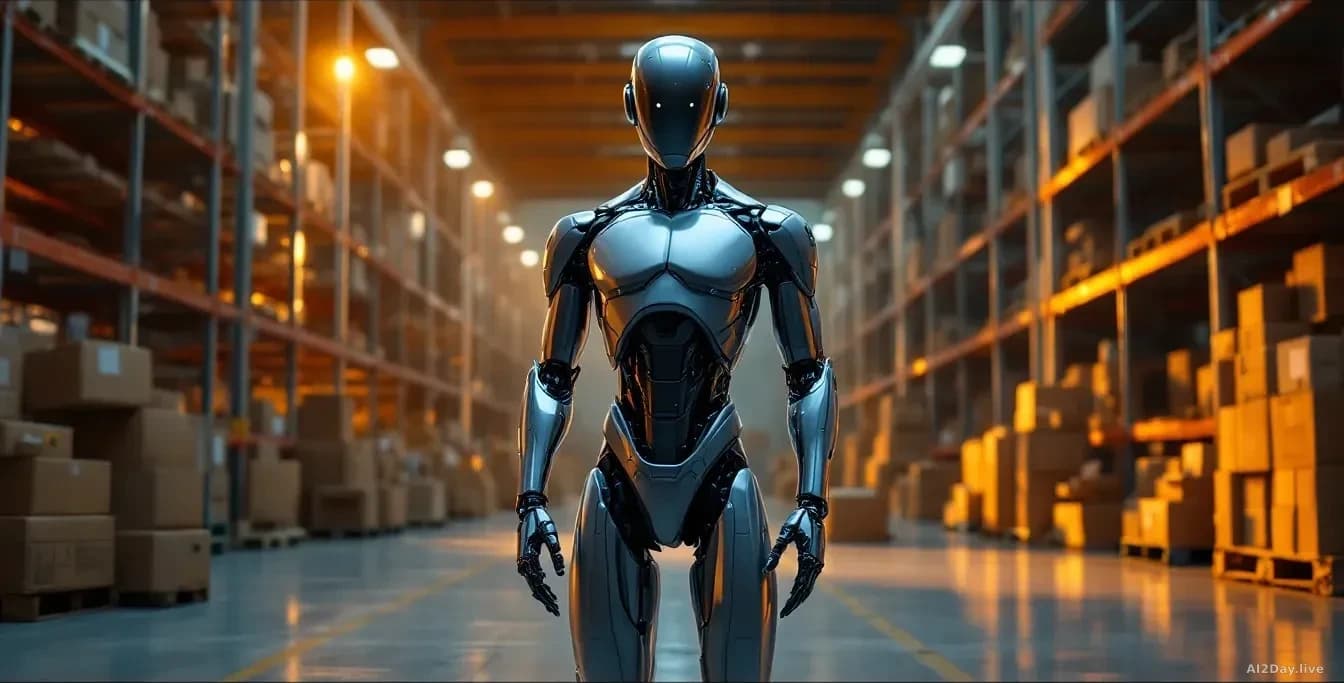
TechCrunch Disrupt 2026 adds a stage dedicated to AI in the physical world
Robots, autonomous weapons, and de-extinction headline the new Real World AI Stage at San Francisco's Moscone West this October.

Key points
- TechCrunch Disrupt 2026 runs October 13 to 15 at Moscone West in San Francisco.
- A brand-new Real World AI Stage will sit alongside the existing AI Stage, focusing on autonomous hardware beyond software.
- Confirmed speakers include Nvidia's Head of Physical AI, the CEO of Shield AI (which builds autonomous aircraft), and Ben Lamm of Colossal Biosciences (which is working to revive extinct species).
- Sessions cover the data shortage holding back general-purpose robots, AI that works without an internet connection, and the gap between a working prototype and a sellable product.
For the past several years, artificial intelligence has dominated TechCrunch Disrupt. This time, organisers say the subject has grown large enough to need two dedicated stages instead of one. The new addition is called the Real World AI Stage, and its focus is AI that moves, builds, flies, or operates somewhere without a Wi-Fi signal.
What will the new stage actually cover?
Five sessions are confirmed so far, each tackling a different corner of physical AI, meaning AI embedded in hardware that acts in the world rather than purely on a screen.
The opening session looks at why robots have not had their "ChatGPT moment," a shorthand for the sudden capability leap that made large language models (the technology behind conversational tools like ChatGPT) useful to millions of people overnight. Les Karpas, Nvidia's Head of Physical AI, will argue that the missing ingredient is data. Language models trained on the internet. Self-driving cars accumulated millions of hours of road footage. Robots have neither, and that gap is the main reason experts say truly general-purpose robotic intelligence is still years away.
A second session, led by Nate Michael, Chief Technology Officer of Shield AI, takes on safety. Shield AI builds autonomous systems for military aircraft. Michael's session asks a question every founder in high-stakes hardware eventually faces: how do you prove your system is ready before you deploy it somewhere failure has real consequences?
Perhaps the most striking slot belongs to Ben Lamm, CEO of Colossal Biosciences. His company is attempting de-extinction, using genetic editing and AI-assisted biology to bring back species that no longer exist. The session will weigh whether that work is genuine conservation or a costly detour from protecting animals still alive today.
Two further sessions dig into practical engineering. One brings together leaders from defence, space, and industrial AI to discuss edge computing, running AI on a device without sending data to a remote server, which matters when connectivity is unreliable or latency (the delay between a command and a response) could be dangerous. The other looks at scaling: why a prototype that works in a lab so often fails to become a product anyone can buy.
Who else is speaking, and what does this mean for attendees?
Beyond the Real World AI Stage, Disrupt 2026 spans four other stages covering business software, financial technology, energy, and startup funding tactics. Organisers expect more than 10,000 attendees across the three days.
For anyone working in health technology, industrial automation, or defence, the physical AI sessions offer a rare chance to hear from practitioners rather than researchers. The robot data problem, in particular, matters to anyone whose organisation is considering bringing autonomous hardware into a clinical, manufacturing, or field environment.
The conference is not cheap, but TechCrunch AI notes that the single ticket covers all stages and the exhibition floor.
Common questions
What is "edge AI" and why does it matter?
Edge AI means running an artificial intelligence model on a local device, such as a robot or a sensor, rather than sending data to a distant server for processing. It matters wherever a reliable internet connection cannot be guaranteed, including operating theatres, remote industrial sites, and military operations.
Is de-extinction actually possible right now?
No species has been fully revived yet. Colossal Biosciences says it has made significant progress toward the woolly mammoth and the thylacine using genetic editing tools, but scientists outside the company note that functional revival at scale remains a long-term goal, not an imminent one.