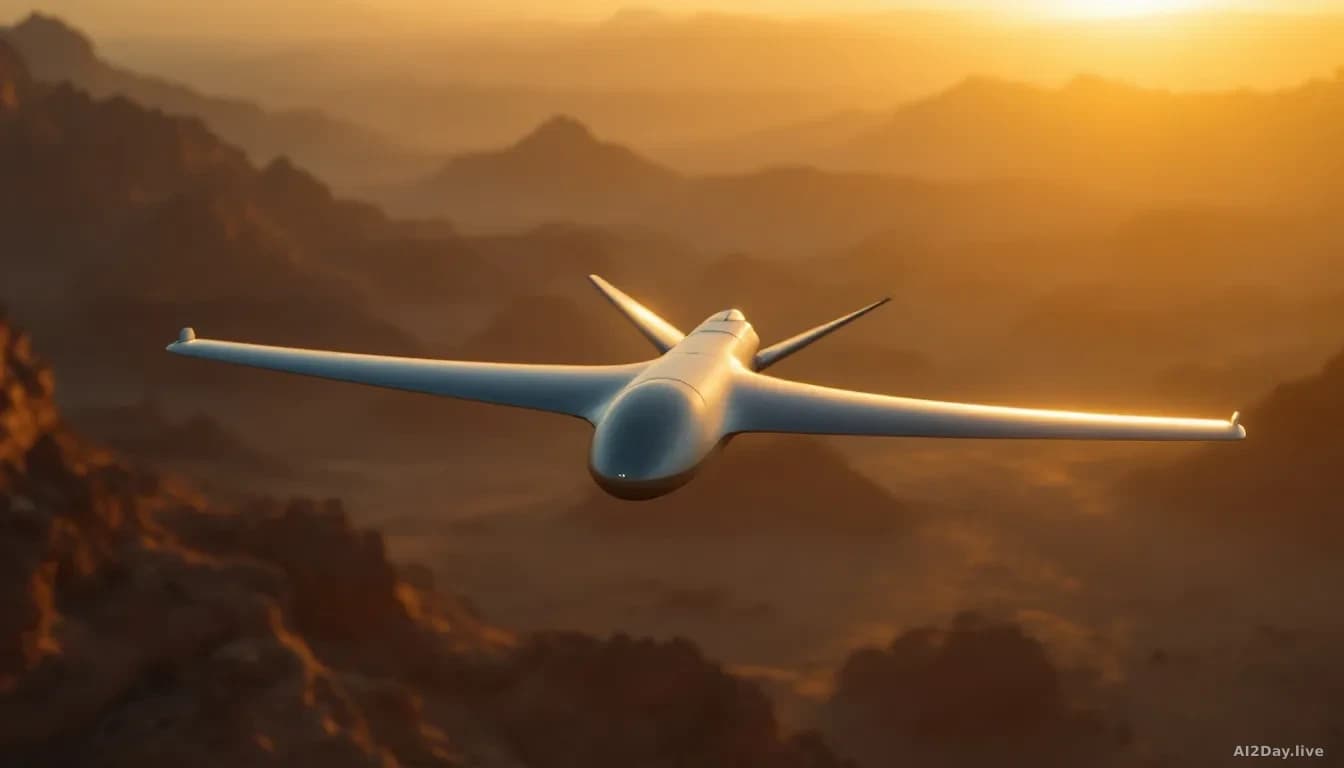
Cargo Drone Gets a Motor Upgrade That Could Let It Carry More Stuff
Florida-based AIR is fitting its heavy-lift drone with specialist motor controllers from Elmo Motion Control, ditching liquid cooling and freeing up weight for bigger payloads.
Key points
- AIR VEV Inc. and Elmo Motion Control Ltd. announced a strategic partnership last week to integrate Elmo's servo drives into AIR's cargo drone.
- The AIR 120D can carry up to 550 lb (249 kg) and stay airborne for one hour per flight.
- Air cooling replaces liquid cooling, cutting system weight and complexity.
- More than 25 units of AIR's heavy-lift drone have already been ordered and paid for.
- The drone targets delivery, maritime resupply, and humanitarian aid missions.
A Florida drone company just announced a deal that could let its cargo aircraft haul heavier loads without getting any bigger.
AIR VEV Inc., based in Auburndale, Florida, last week said it will use motor controllers made by Elmo Motion Control Ltd. to run the eight electric motors inside its AIR 120D drone. Servo drives, the components Elmo makes, are precision electronics that tell electric motors exactly how fast and hard to spin, in the same way a car's throttle controls engine power, but with far more accuracy.
What does this actually change for the drone?
The biggest practical gain is weight. Elmo's Gold HV servo drives run efficiently enough to stay cool using only moving air, so AIR can remove the liquid cooling system, the network of pumps, pipes and fluid that most high-power electronics need to avoid overheating.
Less hardware means a lighter aircraft. On a drone with a fixed maximum take-off weight, every kilogram saved on internal systems is a kilogram that can shift to cargo instead.
"Removing the liquid-cooling loop reduces system weight, packaging requirements, and overall system complexity," AIR chief executive Rani Plaut told The Robot Report. "In an aircraft, that weight reduction can be directly translated into additional useful payload."
The AIR 120D is rated for 550 lb (249 kg) of payload and one hour of flight per sortie. It falls into the Group 4 category under U.S. government classifications, meaning it is a larger, heavier system designed for serious logistics work rather than hobbyist or small commercial use.
Who would actually use a drone like this?
The aircraft is designed to serve several different customers. Think a retailer needing parcels moved between warehouses, a ship requiring supplies at sea, or a disaster-relief team getting medicine into a cut-off area fast.
AIR calls this a "dual-use" approach: the same aircraft serves commercial cargo runs and defence logistics without modification.
Over 25 units have already been ordered and paid for, which suggests buyers are not waiting for the technology to be fully finished before committing.
What happens next?
Integration is already underway. AIR says it will share test results and deployment details as each milestone is cleared, prioritising safety validation before any operational flights.
The company has also recently partnered with Dynon Avionics, a maker of flight-display systems, pointing to a broader effort to assemble the AIR 120D from best-in-class specialist suppliers rather than building every component in-house.
Plaut says the Elmo relationship is meant to grow over time, potentially covering future aircraft in AIR's portfolio as both companies develop their technologies further.
| Specification | Detail |
|---|---|
| Drone model | AIR 120D |
| Payload capacity | 550 lb (249 kg) |
| Flight endurance | 1 hour |
| Propulsion motors | 8 electric motors |
| Servo drive partner | Elmo Gold HV |
| Units ordered to date | 25+ |