China Is the Data Center Villain That Techies Love to Blame. The Evidence Disagrees.
Polling shows three-quarters of Americans now oppose local data centers. Politicians and tech figures blame China. But social media researchers say the anger is homegrown.
Key points
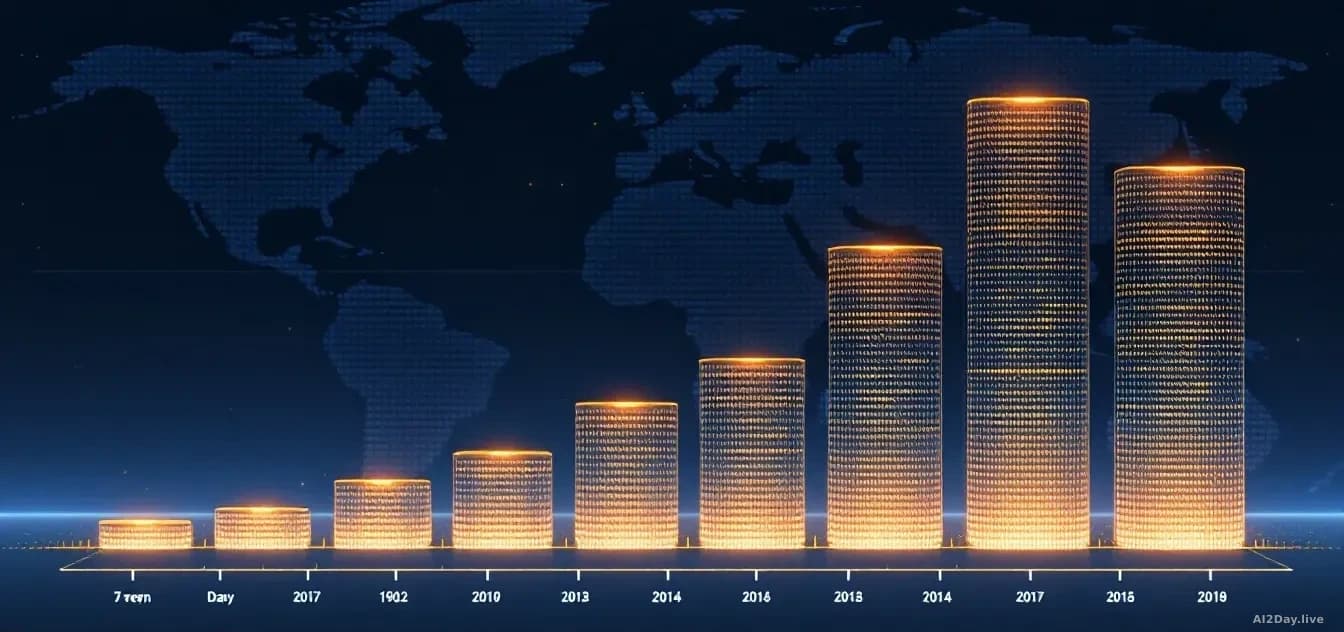
- By summer 2025, 75 percent of Americans said they would oppose a data center being built near them, up from 42 percent the previous year.
- X identified 200 accounts linked to China spreading anti-data center content, but those accounts sat inside a bot network of 200,000 that had nothing to do with data centers.
- OpenAI banned a cluster of accounts in June 2025 that it said were linked to the Chinese government, but acknowledged those accounts were simply exploiting existing anger, not creating it.
- Graphika, a social media research firm that tracks online opinion, told Wired AI this week that most opposition to data centers is still homegrown, with little evidence of significant foreign interference.
- Politicians from both parties, including Texas governor Greg Abbott and Pennsylvania governor Josh Shapiro, are now distancing themselves from data centers as midterm elections approach.
Three-quarters of Americans now say they do not want a data center built near them. That figure, up from 42 percent just a year ago, tells you everything about how fast public opinion has turned against the giant server facilities that power AI tools.
So who do prominent tech figures and some Republican politicians blame? China.
Where did the China story come from?
In late August, the social media platform X said it had found 200 accounts linked to China that were pushing anti-data center messages. Headlines followed. President Trump wrote on Truth Social that "China could not be happier with this anti Data Center movement."
The trouble is the numbers do not hold up well under scrutiny. X itself ultimately identified 200,000 accounts in the same bot network. The 200 anti-data center accounts were a tiny fraction of a much larger spam operation that had nothing specifically to do with data center politics.
OpenAI told a similar story in June, when it banned a cluster of accounts it said were tied to the Chinese government and "testing narratives against AI infrastructure," meaning the physical buildings full of computers that run AI services. But the company's own report acknowledged a key detail: those accounts were riding existing anger, not manufacturing it.
Is there any hard evidence of a Chinese influence campaign?
Not much. China experts who spoke to Wired AI earlier this year said the main report circulating in Washington leans heavily on insinuation rather than solid proof. Tyler Williams, vice president of intelligence at Graphika, the social media analytics firm, confirmed this week that the picture has not changed: real foreign interference at meaningful scale remains hard to find.
Blogger Andy Masley, who is generally sympathetic to data centers and popular with tech-friendly audiences on X, has publicly asked insiders for any concrete evidence of Chinese meddling. So far, he says, nothing solid has come back. His read on why the narrative persists: "It seems like a very convenient belief. They had to meme themselves into being more right-wing a few years ago. They think right-wing people like it when you talk about China."
There is also a logical snag. The Trump administration separately complains that Chinese AI companies are copying American advances. If China's own AI development depends on data center technology, it would be strange strategy to spend resources discouraging Americans from building more of it.
What is actually driving the opposition?
Environmental worries, noise, water use, electricity costs and a general scepticism toward AI and the billionaires behind it. Louise Matsakis, Wired AI's senior China editor, put it plainly: "Americans often find it easier to put the blame on a nebulous other, rather than to actually look at themselves."
For ordinary people living near a proposed data center, the China story changes nothing practical. The local concerns, from power grid strain to water consumption, are real regardless of who is amplifying them online.