A Robot Lab Grows Human Tissue to Give AI the Data It Needs to Find Real Drugs
Vivodyne's warehouse-scale machines test drug candidates on lab-grown human organs, not mice. The startup says this is the missing ingredient that could make AI drug discovery actually work.
Key points
- Vivodyne, a biotech startup spun out of the University of Pennsylvania in 2021, opened what it calls the world's largest human biological data centre near San Francisco last week.
- The company's robotic labs, called HIVE, can grow 20 types of human tissue and run drug experiments on them without human operators stepping in.
- Vivodyne has raised just under $80 million across two funding rounds, both led by venture firm Khosla Ventures.
- Its lab-grown liver tissue correctly predicted human toxicity results 94% of the time, the company says, while its bone marrow matched outcomes across 20 chemotherapy drugs with 100% accuracy.
- Around 90% of drugs that pass animal testing still fail in human clinical trials, a long-standing problem the startup is trying to solve.
Artificial intelligence was supposed to speed up the hunt for new medicines. So far, the results have been modest. A handful of AI-designed drug candidates have entered human testing, but none has yet reached patients as an approved treatment. Vivodyne, a San Francisco-area startup, argues it knows the reason: the AI models have terrible data to learn from.
What does the robot lab actually do?
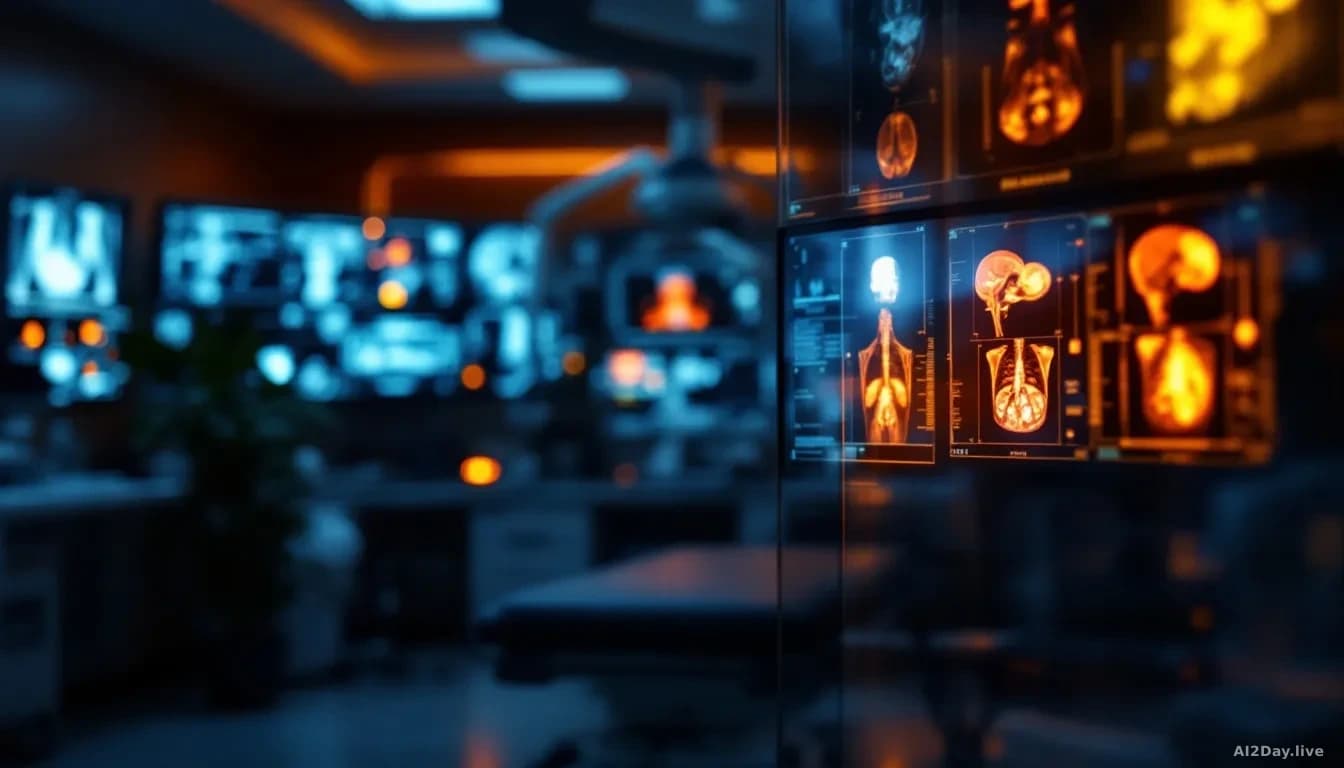
The machines run fully autonomous experiments on living human tissue, step by step, without a human researcher touching them. Each HIVE unit can grow 20 different types of human tissue inside controlled chambers, automatically apply drug compounds to that tissue, and monitor what happens over time.
That last part matters enormously. Today's AI models in biology mostly learn from "static snapshots," as CEO Andrei Georgescu puts it: a photograph of a cell at one moment, not a film of what caused it to reach that state. His machines track hundreds of thousands of ongoing experiments, recording cause and effect as they unfold. That is the kind of data, the company argues, that could teach an AI model how human biology actually works, not just what it looks like.
"All the training is done on static snapshots of these cells," Georgescu told TechCrunch AI. "The model learns 'this is cell state A,' 'this is cell state B,' but never 'cell state B is the effect of inflaming cell state A.'"
Why does it matter that the tissue is human?
Animal testing fails to predict human outcomes at a striking rate. About 90% of drugs that work in animals fail when tested in people, a statistic that has barely budged in decades. Georgescu's analogy: carmakers run crash tests confident their vehicles will pass safety standards, but drugmakers walk into expensive human trials with no equivalent confidence.
Human clinical trials typically cost tens of millions of dollars each. Vivodyne's pitch to large pharmaceutical companies is that testing on its human tissue first gives them a much clearer sense of what will work before committing that spend.
The company reports strong early accuracy numbers. Its lab-grown airway tissue matched real human tissue behaviour 96% of the time. Its liver cells predicted toxicity correctly in 94% of comparisons against actual human trial results.
What happens next?
Vivodyne is already working with multiple major pharmaceutical companies, though it will not name them publicly. Georgescu says his facility is currently running twice the throughput of all animal trials held in the US combined, a claim that, if accurate, represents a significant shift in how early drug testing could be done.
The longer goal is to use all of that experimental data to train a new generation of AI models that understand cause and effect in human biology. Without that, Georgescu argues, AI drug discovery will keep producing results that work in mice and fail in people. "Absent human testing," he says, "what are these models going to do? They're going to cure cancer in mice."
Common questions
Does this mean AI will cure cancer soon?
Not yet. Even proponents like Anthropic CEO Dario Amodei have recently called that claim more cliché than credible. Vivodyne's work is an early-stage attempt to build better tools; useful drugs from this approach are still years away from patients.
Is the tissue real human tissue or a simulation?
It is neither a computer simulation nor tissue taken from patients. Vivodyne grows the tissue from human cells in controlled lab conditions, producing structures that behave like real human organs without coming from a living person.
What does this mean for animal testing?
Vivodyne's founders believe high-quality human tissue data could eventually replace much of the animal testing done in early drug development, though that shift would require regulatory bodies to accept the new data as sufficient evidence of safety.