Neros Technologies raises $250 million to push combat drones into the field by 2026
The two-year-old defence start-up is now valued at $2.5 billion and plans to build a million drones a year by 2028, with an AI-guided attack drone and one designed to shoot enemy drones out of the sky.
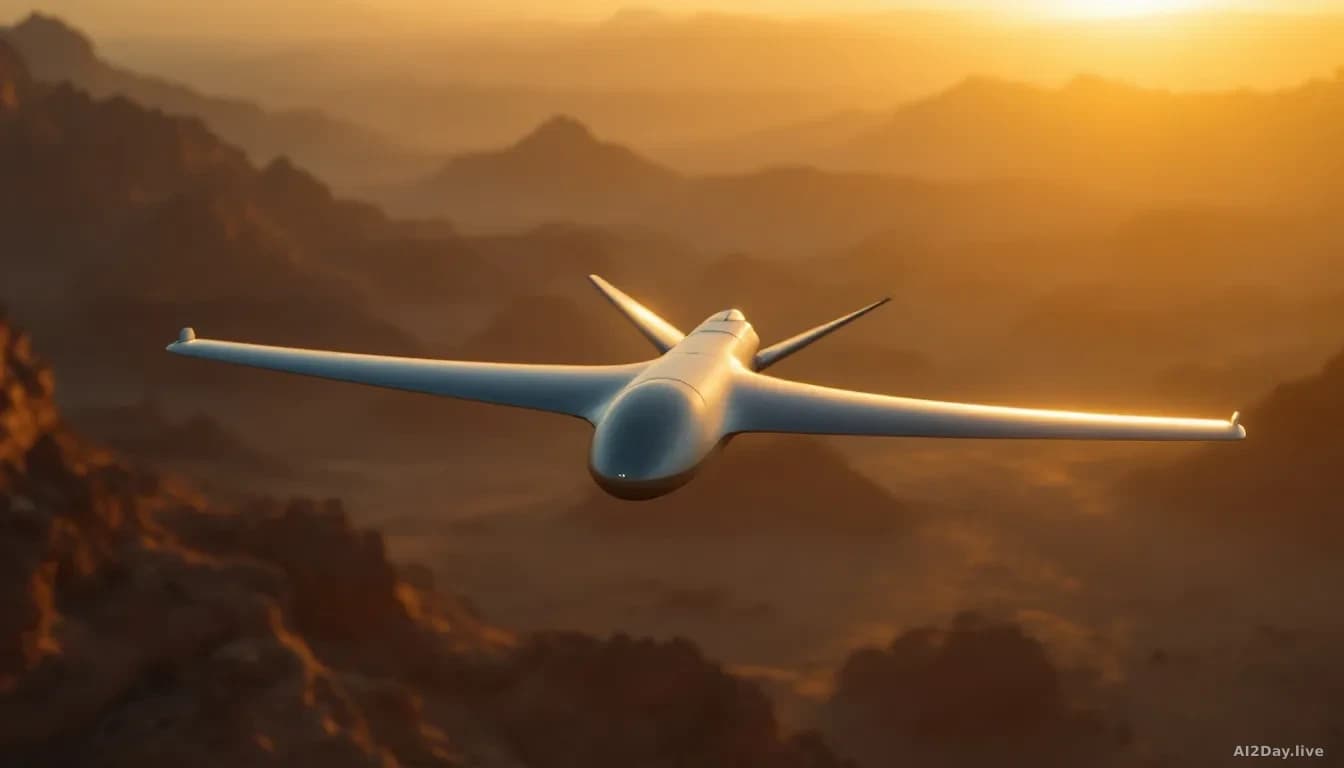
Key points
- Neros Technologies raised $250 million in a Series C funding round, reaching a $2.5 billion valuation.
- The El Segundo, California company, founded in 2023, holds contracts with the U.S. Army, the Marine Corps and every component of U.S. Special Operations Command.
- Two new drone programmes, Archer AI and Bandit, are both targeted for combat deployment by the end of 2026.
- Neros aims to manufacture one million drones per year by 2028 across long-range strike, close-quarters combat and interceptor roles.
- Sequoia Capital and American Strategic Technology Fund co-led the round, joined by Thiel Capital, Spark Capital and four other investors.
Neros Technologies has been building military drones for barely two years. This week it announced a $250 million funding round valuing the company at $2.5 billion, a sign of how quickly defence money is flowing toward uncrewed aerial systems.
The company, based in El Segundo, California, previously raised $75 million in Series B funding in November 2025, less than two years after it was founded in 2023.
What does Neros actually make?
Neros builds drones designed for military use, including small first-person view (FPV) models: camera-equipped quadcopters a pilot controls through a headset as if sitting inside the aircraft. Its newest programmes go further.
Archer AI is an FPV drone with autonomous guidance features. Terminal Guidance helps it lock onto a target during final approach without a human steering every movement. GPS-denied Position Hold lets it hover steadily even when GPS signals are jammed, a routine problem on modern battlefields.
Bandit is a counter-drone interceptor, built to destroy enemy drones before they reach friendly forces. It's aimed specifically at Class 2 and 3 threats such as Shahed-style loitering munitions, the one-way attack drones widely used in Ukraine.
Both platforms are being built for swarming, where large numbers of drones coordinate movements as a group rather than being controlled individually. Neros plans to deploy both in active combat theatres by the end of 2026.
Who funded the round and why does that matter?
Sequoia Capital and the American Strategic Technology Fund co-led the investment. Interlagos, Valor Equity Partners, Allen & Co., Thiel Capital, Spark Capital and Figma co-founder Dylan Field also participated.
Sequoia rarely leads defence rounds, which suggests the firm sees Neros as a commercial-scale manufacturer rather than a niche contractor. CEO Soren Monroe-Anderson said the capital would speed production of Archer AI and Bandit, toward a goal of one million drones per year by 2028.
Is this part of a broader spending surge?
Yes. As reported by The Robot Report, defence drone funding has accelerated sharply. We covered Cambridge Aerospace's $300 million Series C on 11 August, which put that company at a $3.4 billion valuation.
| Company | Round | Amount | Valuation |
|---|---|---|---|
| Neros Technologies | Series C | $250 million | $2.5 billion |
| Cambridge Aerospace | Series C | $300 million | $3.4 billion |
| Quantum Systems | undisclosed | $1.2 billion | not disclosed |
| Mach Industries | undisclosed | $300 million | not disclosed |
| HavocAI | undisclosed | $100 million | not disclosed |
Neros holds contracts with the U.S. Army, the Marine Corps and every component of U.S. Special Operations Command. It also operates a U.K. Subsidiary and has agreements with roughly half a dozen allied nations across Europe and the Asia-Pacific region.
What does this mean for ordinary people?
For most readers, the impact is indirect. These are military systems, not consumer products. What does matter is that billions of dollars are moving into autonomous and semi-autonomous weapons at a pace the policy and ethical debates around machine-assisted lethal decisions haven't matched. That gap is worth watching more closely than any single funding round.



