Mira Murati's AI Lab Is in Talks to Raise $1 Billion at a $40 Billion Valuation
Thinking Machines, the startup founded by former OpenAI chief technology officer Mira Murati, is reportedly seeking fresh funding at a valuation more than three times higher than its last round, even as some co-founders have left.

Key points
- Thinking Machines is in talks to raise $1 billion at a valuation of at least $40 billion, according to TechCrunch AI.
- Accel, an existing backer, is reportedly in discussions to lead the round.
- The company's prior seed round valued it at $12 billion in early 2025.
- Annual revenue is running above $100 million, but a $40 billion valuation still implies an extraordinarily high price relative to income.
- Co-founders Lilian Weng and Luke Metz have since left and returned to OpenAI.
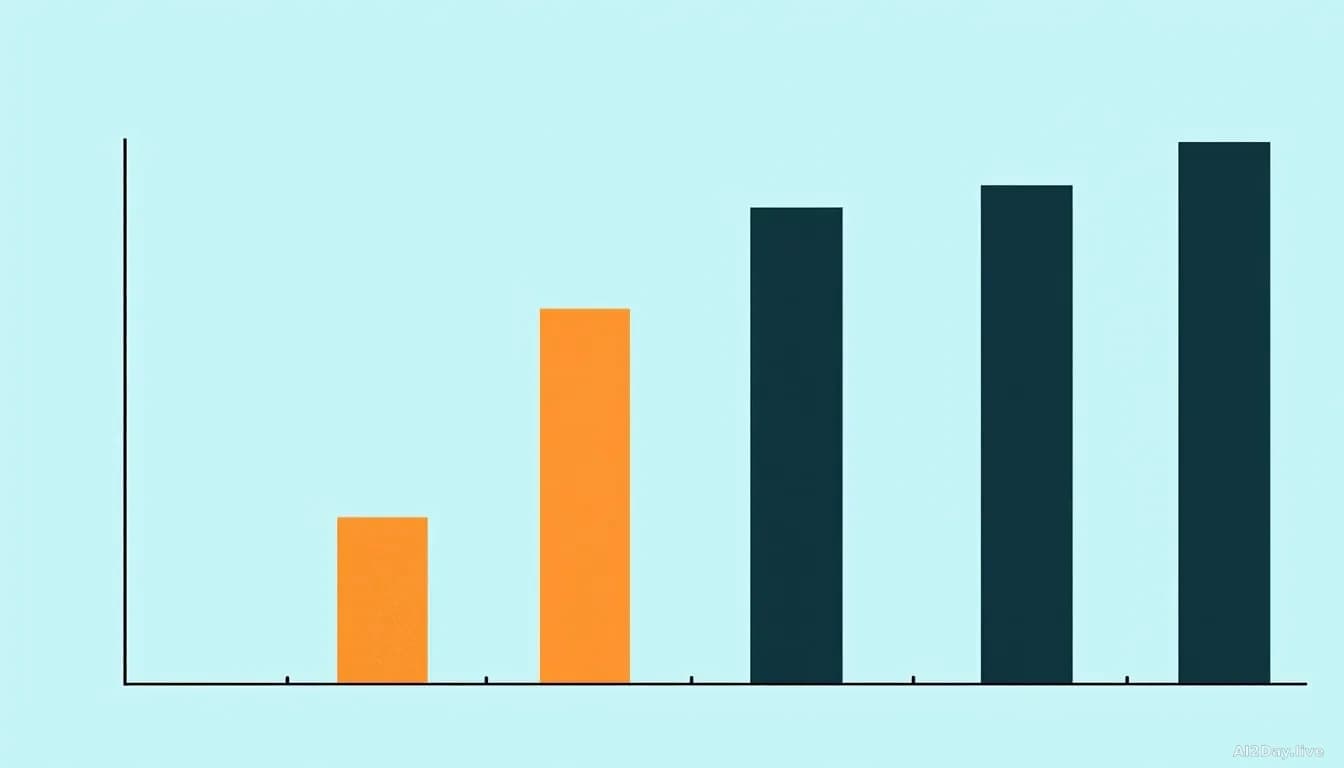
Thinking Machines, the AI lab Mira Murati founded after leaving OpenAI in late 2024, is in talks to raise $1 billion at a valuation of at least $40 billion. That'd be a steep climb from the $12 billion the company was worth after its last round.
Accel, already a backer, is reportedly in discussions to lead the new investment. Neither firm responded to a request for comment.
How does the valuation stack up?
The $40 billion figure is actually lower than the $50 billion Thinking Machines reportedly sought late last year. The gap between revenue and price tag is still striking.
The company's annual revenue run rate, meaning the pace of income if current earnings held for a full year, sits above $100 million. That's a thin base beneath a $40 billion price, even by the standards of fast-growing AI startups.
| Funding round | Amount raised | Valuation | Lead investor |
|---|---|---|---|
| Seed (2025) | $2 billion | $12 billion | Andreessen Horowitz |
| Current talks | $1 billion | $40 billion+ | Accel (reported) |
The $2 billion seed raise ranks among the largest of its kind on record. Andreessen Horowitz led it, with Nvidia, GV and Conviction Partners also joining. Investors were largely betting on Murati's reputation and the senior researchers who left OpenAI alongside her.
Some of those researchers didn't stay long. Lilian Weng and Luke Metz have both returned to OpenAI. We covered Weng's departure on 29 July, and Barret Zoph's trajectory through Thinking Machines and beyond on 27 August illustrates how fluid the talent picture has become.
What does Thinking Machines actually make?
The company sells access to AI models, software systems trained on large amounts of data to perform tasks like writing and coding. In July 2026, it launched Inkling, an open-weight model, meaning one whose underlying code is publicly available for others to build on. Thinking Machines charges fees based on how much computing power customers use to adapt Inkling to their own data through its Tinker platform.
For businesses evaluating AI tools, that usage-based pricing means costs scale with actual use rather than a flat subscription. It's a sensible structure for cautious buyers, but it also means revenue is exposed if customers pull back.
Common questions
What does a high revenue multiple mean for ordinary people?
It means investors are paying a large sum today hoping the company grows far bigger. Customers aren't directly affected, but the scale of confidence, or speculation, flowing into AI right now is worth watching.
Is this funding confirmed?
No. These are reported discussions, not a completed deal. Terms could change, or the round could fall apart.
Who is Mira Murati?
She served as chief technology officer at OpenAI, the company behind ChatGPT, before leaving in late 2024 to start Thinking Machines.