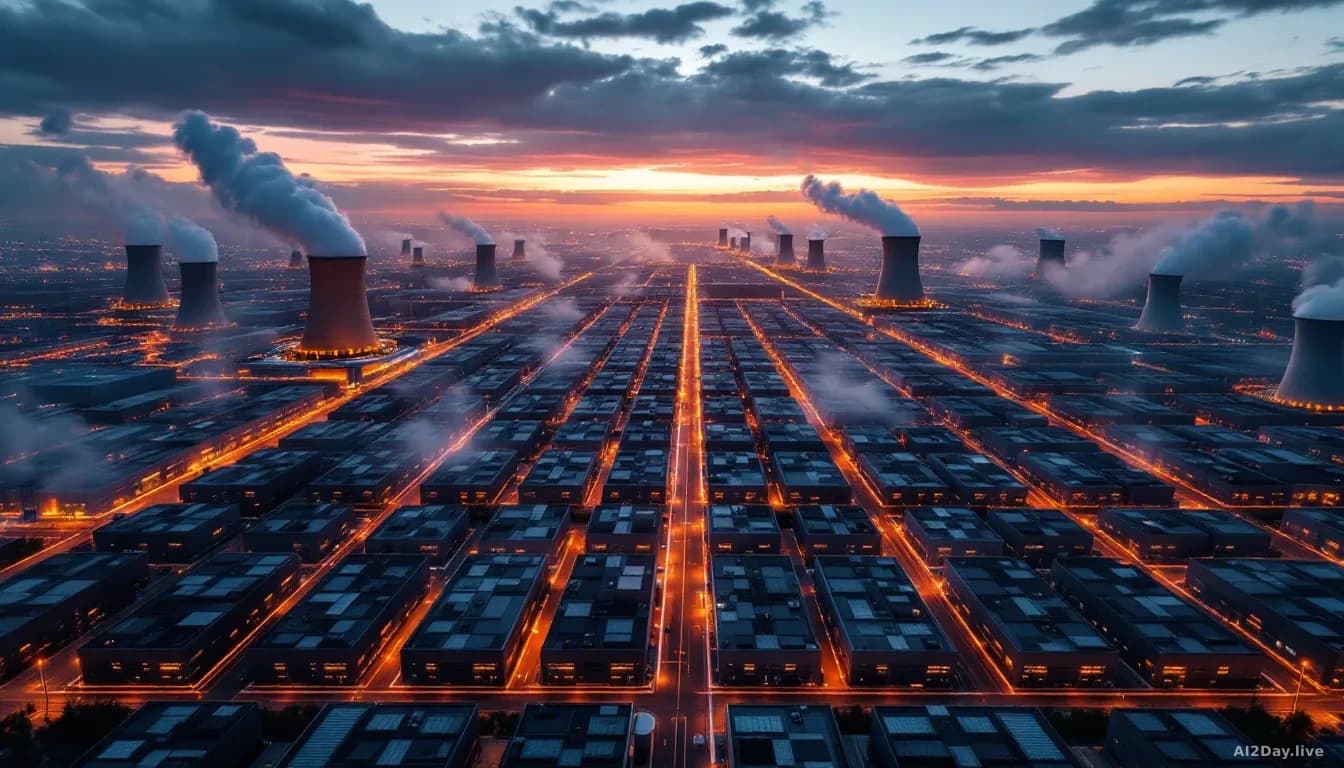
AI Is Burning More Power Than Brazil Uses in a Year. Here Is What You Can Actually Do About It.
A software architect laid out the numbers at a Copenhagen conference, and they are uncomfortable reading. But several of his fixes are free.
Key points
- Global data centres and networks together consumed roughly 700 terawatt-hours of electricity in 2022, about the same as Brazil's entire annual consumption that year.
- Microsoft's total carbon emissions rose 30% between 2020 and 2024, its own environmental report states, mainly because of new data centres built to run AI.
- Google's emissions climbed 50% since 2019 and 13% in 2023 alone, according to Google's own reporting.
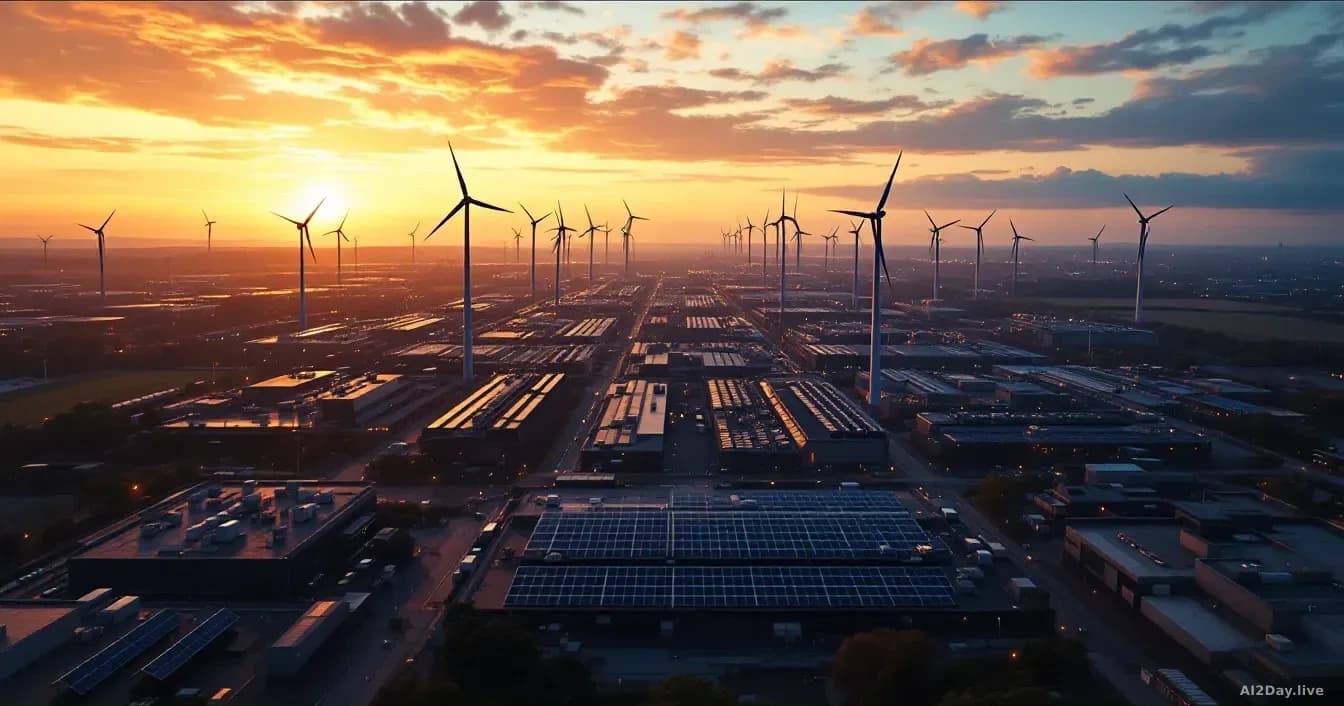
- Running a compute workload in a region powered mostly by hydro and nuclear can cut its carbon cost many times compared with a coal-heavy grid.
- Switching from training a custom model from scratch to fine-tuning a pre-built one can reduce emissions by between 45% and 99%.
The IT industry now accounts for roughly 2 to 4% of all global carbon emissions. Aviation sits at about 3%. Aviation is actively working to cut its footprint. The tech industry, on current numbers, is doing the opposite.
That was the blunt opening of a talk by Charles Humble, a software architect, at GOTO Copenhagen. His argument, reported by InfoQ, is that sustainability should sit alongside cost, performance, security and reliability as core design concerns whenever a team builds or deploys an AI system.
What is the actual scale of the problem?
Picturing 700 terawatt-hours is easier with a reference point. The International Energy Agency estimated that in 2022, data centres used between 240 and 340 terawatt-hours of electricity globally, and communications networks added another 260 to 360 terawatt-hours. Combined, that nearly matches Brazil's 726 terawatt-hours the same year.
Behind that number sits a concentration of demand. Amazon, Microsoft, Google and Meta together more than doubled their combined electricity use between 2017 and 2021, reaching around 72 terawatt-hours in 2021, according to the IEA.
| Company | Reported emissions increase | Period | Primary cause |
|---|---|---|---|
| Microsoft | +30% | 2020 to 2024 | AI data centre construction |
| +50% overall | 2019 to 2024 | AI workloads | |
| +13% year-on-year | 2023 alone | AI workloads | |
| Amazon, Microsoft, Google, Meta combined | Electricity use more than doubled | 2017 to 2021 | Cloud and AI growth |
These figures come from the companies' own environmental reports, not projections.
What can a business actually do right now?
Humble's most practical point also saves money: ask whether you need a custom AI model at all. Fine-tuning a pre-existing model rather than training one from scratch can cut emissions by between 45% and 99%. Smaller models often perform just as well for narrow tasks and cost far less to run.
Location matters enormously. A workload on a Norwegian or French grid, which leans heavily on hydro and nuclear power, can carry a carbon cost many times lower than the same workload on a coal-heavy grid. For tasks that are not time-sensitive, you can schedule them to run when and where the electricity is cleanest, a technique Humble calls demand shifting.
Demand shaping is a related idea: adjusting what your software does based on how clean the grid is at a given moment. Serving smaller images, skipping non-essential animations or offering a human agent instead of an AI chatbot when carbon intensity is high are all live options. Humble is candid that this adds complexity and that reduced service quality has to remain acceptable.
Also worth watching: Humble argues that inference, meaning the ongoing work of answering users' requests once a model is deployed, may account for more total emissions over a model's lifetime than the original training did. Efficiency in day-to-day use matters as much as greening the training run. We covered the related question of when industrial AI needs human guardrails before autonomy in our 8 October story on AVEVA's approach to power-grid AI.
For AI2Day readers, none of this requires a large budget. Choosing a cloud region with a cleaner grid or picking a smaller pre-built model over a custom one are decisions a single developer can make today.
I've followed this beat long enough to see green computing become a conference ritual that changes nothing. What's different here is that the financial incentives and the carbon incentives pull in the same direction: smaller models are cheaper, greener regions are often cheaper. The hard part isn't the decision. It's making sustainability visible in the architecture review before the budget is already spent.
Common questions
Does switching cloud region really make a difference for a small business?
Yes. Carbon intensity varies by a factor of ten or more between regions, so even moving a batch job from a coal-heavy location to a hydro-powered one produces a measurable difference, no hardware changes required.
Is training AI models the main source of emissions?
Not necessarily. Humble argues that inference, the ongoing act of running a deployed model, may account for more total emissions over its lifetime than training did, so efficiency in day-to-day use matters as much as greening the training run.