Gemini took over our week: 13 stories in seven days, up from 3
Google's AI showed up in 6.6% of everything we published, and it was not just one newsroom saying so.
Key points
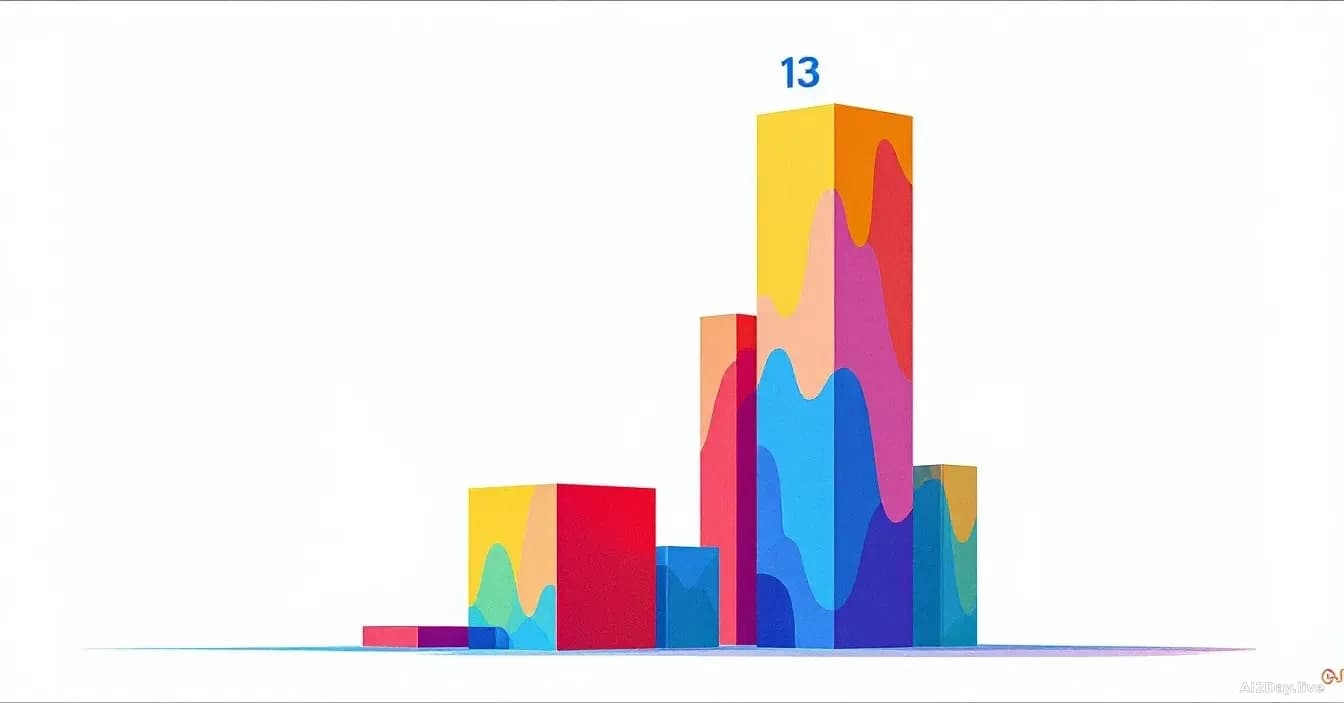
- AI2Day published 13 stories mentioning Google's Gemini between 31 August and 6 September 2026, up from 3 the previous week.
- That is a 333% jump, week on week.
- Gemini stories accounted for 6.6% of the 198 pieces we ran in the week, against 202 the week before.
- Eight separate outlets carried Gemini coverage we picked up, so this is not one publication's obsession.
- Google shipped its third new AI model in six weeks during the same period.
What actually moved
Our own coverage tilted hard toward Gemini, Google's family of AI models (the software that powers its chatbots, its search answers and now parts of Gmail). In the seven days from 31 August to 6 September 2026 we ran 13 stories touching Gemini. The week before, we ran 3. That is the measurement. Everything else in this piece is me trying to read it honestly.
Eight different outlets fed into that pile. So it is not one reporter or one press release doing all the work. When a story shows up across eight newsrooms in a week, something real is happening at the company, even if we cannot yet say how much it matters to you.
Why the spike, as far as we can tell
Google shipped product. That is the short answer. Our biggest single item was Google releases Gemini 3.8 Flash, its third new AI model in six weeks, a smaller, faster version of its main model aimed at cheap, high-volume use. We covered the pricing angle separately in Gemini 3.8 Flash Thinks Harder, But That Extra Effort Will Cost You More, because the new "thinking" mode, where the model spends longer on hard questions, is billed at a higher rate.
Then there was the feature drop. Google brings voice control to Gmail, Docs, and Keep put Gemini inside the apps most office workers already use. And a bigger-picture piece, Google Launches Its Third AI Model in Six Weeks as September Brings a Run of Good News, tried to make sense of the pace.
Three launches in six weeks, plus voice features in the apps hundreds of millions of people open every morning, is enough to explain a 333% jump in one week's coverage. I do not need to invent anything more.
What does this mean for you, practically?
If you use Gmail, Docs or Keep, voice control is coming to you whether you asked for it or not. Try it once, decide if it helps, turn it off if it does not. That is the whole homework assignment.
If you pay for API access (the pipe developers use to plug Gemini into their own software), read the Flash pricing piece before you switch. The "thinks harder" setting is not free, and the bill lands on whoever is running the app, which may be you.
And if you are tempted to trust these models on anything where being wrong hurts, remember two stories from the same week: AI models get mushroom ID dangerously wrong and When the chatbot becomes a guru: the rise of 'AI psychosis'. A busy launch week is a marketing event. It is not evidence the tool is ready for the job you have in mind.
What would confirm or kill this reading
If next week's Gemini count stays in double digits without a new launch, that tells me the coverage has real staying power. If it falls back to 3 or 4, this was a launch bump and nothing more. I will check back in seven days.
One honest caveat: 13 stories in one week is a small number to draw big conclusions from. I measured a news cycle. I did not measure how many people actually opened Gemini this week. Those are different questions, and only Google knows the second one.