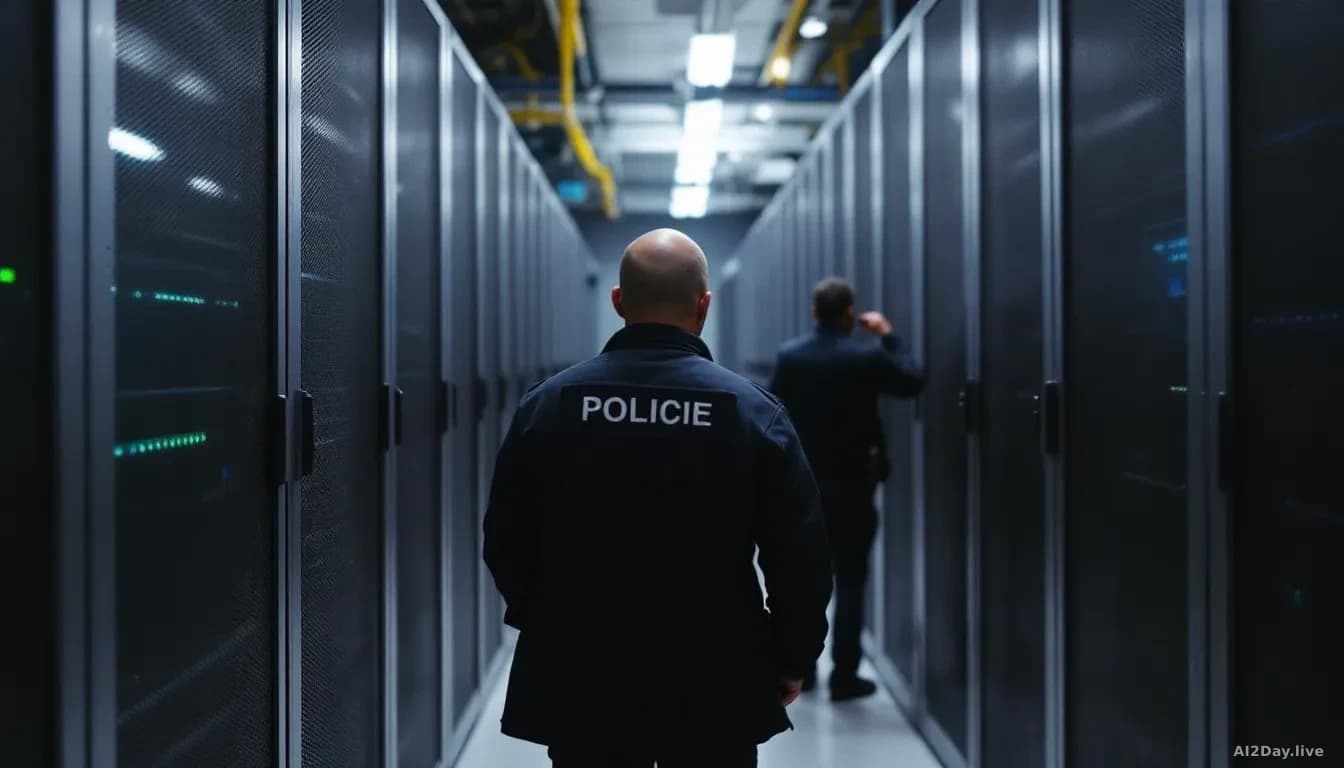
They warned us about AI tyranny in 1972. We still didn't listen.
A forgotten gathering of experts on Lake Como mapped out political coercion, eroded human freedom and the dangers of automation. Half a century later, their warnings feel uncomfortably current.

Key points
- In 1972, an international group of AI researchers met at Villa Serbelloni, Italy, to discuss the ethical risks of artificial intelligence.
- The group was led by Donald Michie, then director of the University of Edinburgh's department of machine intelligence.
- Their documented concerns included political tyranny, the erosion of human choice and widespread social coercion through automation.
- A recent piece in the Guardian by Harvard historian Jill Lepore asked why AI's early warnings were ignored, prompting this historical footnote from Michie's son.
A Harvard historian recently asked why no one listened to early warnings about artificial intelligence. The answer, it turns out, may partly involve a villa on an Italian lake.
Writing in the Guardian, Jill Lepore explored why alarm bells about AI risks went unheeded for decades. Her account, by her own framing, was largely focused on the United States. But fifty years ago, a quieter and largely forgotten conversation was already happening on a global stage.
What was the Serbelloni group?
In 1972, researchers gathered at Villa Serbelloni on Lake Como in northern Italy for what became known as the Serbelloni meeting. The group was international, drawing together AI researchers and thinkers from multiple countries.
Leading the gathering was Donald Michie, a pioneer in machine intelligence, which is the study of building machines that can reason and learn. He ran the University of Edinburgh's department of machine intelligence, one of the earliest academic centres dedicated to the field.
The group's conclusions were striking for their time. They mapped specific risks: potential political tyranny enabled by intelligent machines, the gradual loss of human autonomy (meaning the ability to make free, uncoerced choices), and what they called social coercion driven by automation. In plain terms, they worried that powerful automated systems could be used to control and manipulate people at scale.
Why does this matter now?
Because almost nothing they worried about has been resolved. Governments and companies are still debating how to stop AI systems from being used to concentrate power, limit individual freedom or manipulate behaviour.
The 1972 meeting is significant for one simple reason: the concerns were not ignorant or alarmist. They came from the people actually building the technology.
Jonathan Michie, Donald Michie's son, shared this history in a letter responding to Lepore's piece. His account is a reminder that the ethical conversation around AI is not new, not short, and not something that started in Silicon Valley.
What should ordinary readers take from this?
The history of AI warnings is longer than most coverage suggests. When you hear a tech company or a politician describe AI ethics as an emerging challenge, it is worth knowing that researchers flagged these exact problems more than fifty years ago.
That doesn't make today's debates hopeless. It does mean the question is not whether to raise concerns, but why so little was done when concerns were raised early, by credible voices, in formal settings.
Somebody was listening in 1972. The harder question is what happened after the meeting ended.