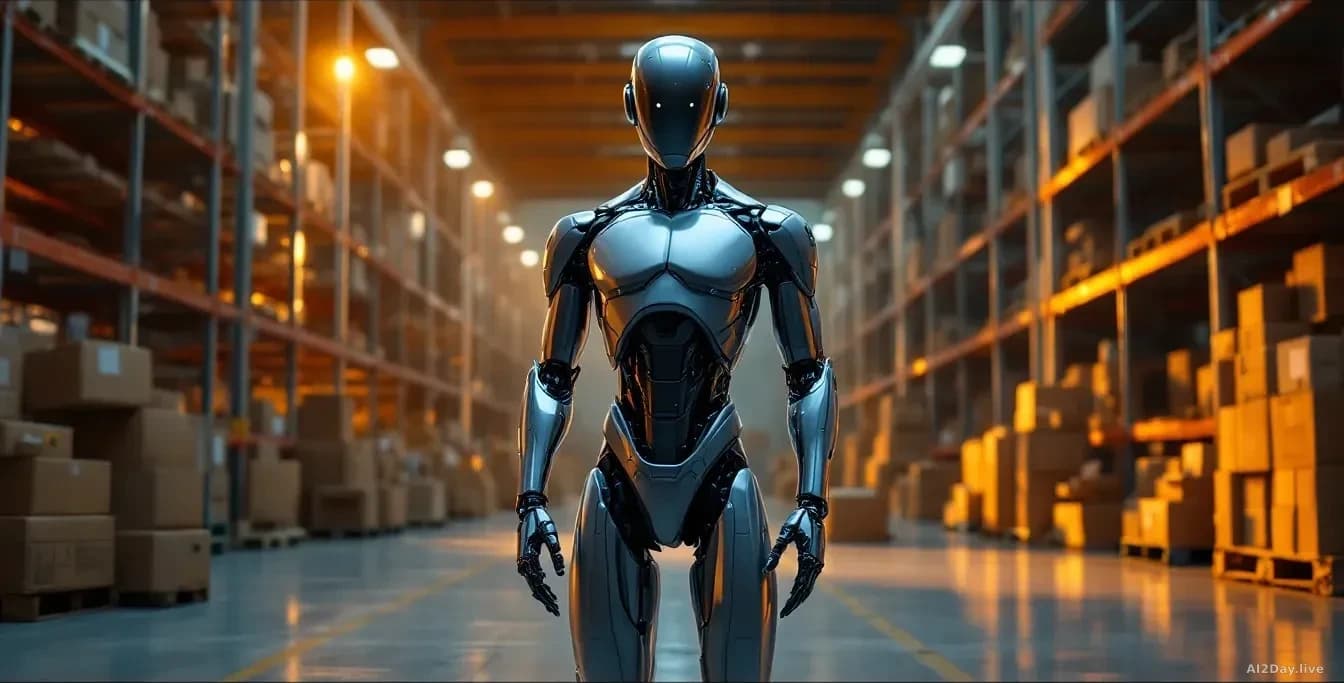
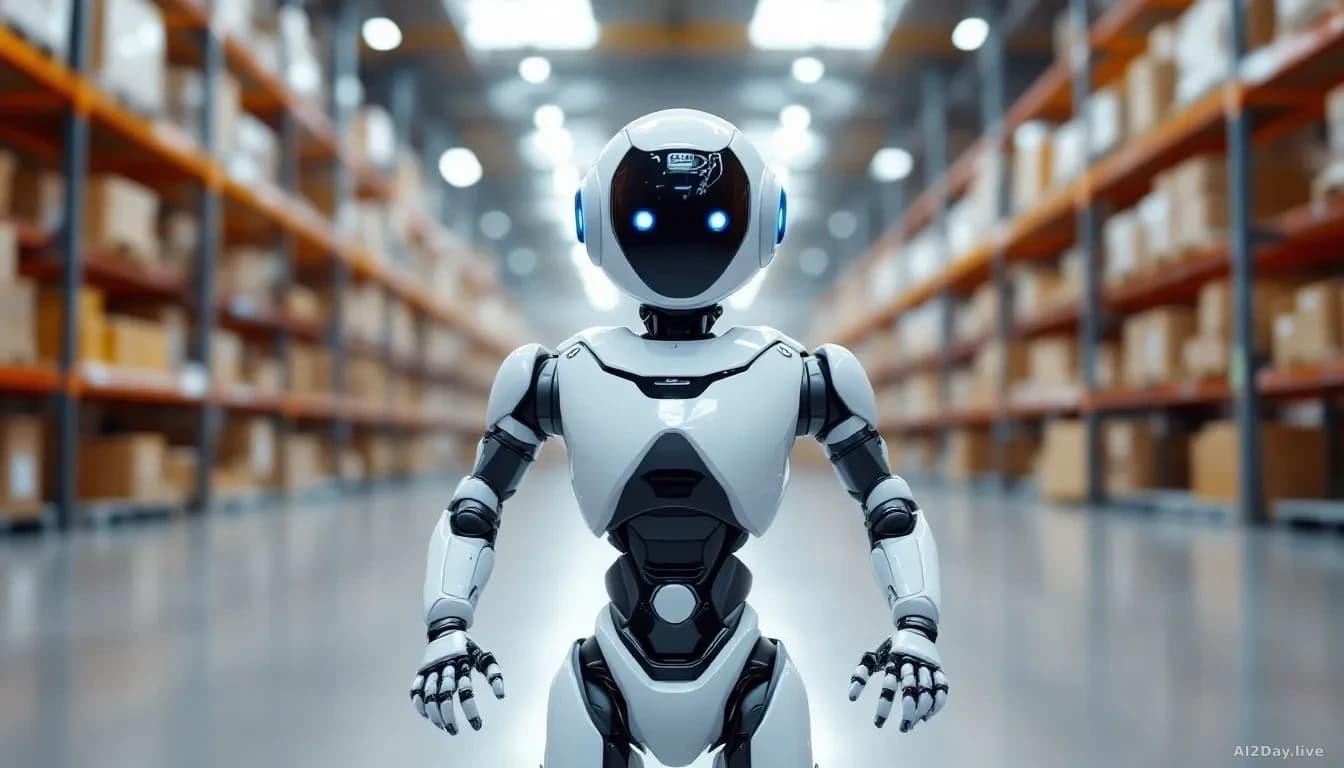
AI Companion Robots Are Moving In. Who Are They Actually For?
A new generation of home robots is designed less to fetch your shopping list and more to notice when you've gone quiet. Here's what that means for lonely adults, kids whose parents work away, and anyone living alone.
Key points
- The global AI companion robot market was valued at $36.8 billion in 2025 and is projected to reach $318 billion by 2033.
- Nearly one in three elderly adults lives alone without a daily companion, according to published research.
- Children separated from migrant-worker parents are 2.5 times more likely to experience loneliness than children living with both parents.
- Ollobot's OlloNi SS1 runs up to 5 hours of active interaction on a single charge and stores household memories on-device using 16 GB of memory and 64 GB of local storage.
- A physical camera cover ships with the device, a hardware solution to privacy concerns that software settings alone may not fully address.
The first wave of companion robots, the cute, voice-activated devices that appeared around 2017, ended badly for a lot of owners. Companies folded, servers went dark, and people described losing the robot as something close to losing a pet. The technology was fun. It just wasn't useful for long.
What's happening now is different.
What problem is this actually solving?
Loneliness is bigger than most people assume. Published research cited by IEEE Spectrum AI finds that roughly one in three elderly people lives alone, with no one around day to day. Children whose parents have moved away for work are two and a half times more likely to feel lonely than children living with both parents. And in cities, single working adults quietly deal with the same problem, even if no one talks about it.
Video calls and smart speakers don't fix this. They connect people who already have a relationship. They don't create presence.
That is the specific gap the new robots are targeting.
How is today's hardware actually different?
Three shifts separate the current generation from those 2017 shelf-warmers.
| What changed | Old approach | New approach |
|---|---|---|
| Interaction style | Wait for you to speak | Monitors room, initiates conversation |
| Design focus | What can it do? | How does it make you feel? |
| Software model | Fixed at purchase | Over-the-air updates, grows over time |
| AI processing | Cloud-dependent | Mostly on-device for speed and privacy |
Ollobot's OlloNi SS1 is one of the more detailed examples of this shift. The robot carries a 4K camera module capable of recognising faces and tracking motion, plus a 6-microphone array that picks up voices from up to 5 metres away. It moves across wooden floors, tiles, and low-pile carpet, and can handle slopes up to 3.5 degrees, so it can follow you from the living room to the kitchen without losing the thread of a conversation.
The on-device processing is worth pausing on. Most AI gadgets send your voice and video to a distant server, which adds delay and raises privacy questions. The SS1 handles most of that processing locally, using what Ollobot calls a "heart module," so it responds faster and keeps household memories stored at home rather than in a data centre.
Should anyone be worried about privacy?
Fairly. A robot with cameras, microphones, and emotion-detection software is a lot of sensors in your home. Ollobot's answer, for now, is a physical cover that blocks the camera lens mechanically. A piece of plastic you can slide shut beats a software privacy setting you can't verify.
That doesn't resolve every concern, but it's an honest acknowledgement that the concern exists.
Who is this actually for?
Ollobot describes three main users. Elderly people living alone get fall detection and a companion that checks in unprompted, without anyone needing to schedule a welfare call. Children in households where a parent works abroad get a robot that already knows their routine and lets the parent feel present without a formal video call. Single professionals get something that notices their mood and adapts, rather than just waiting for commands.
Before you get excited, one honest note: every robot success story you read comes from a company's own press material. We don't yet have large independent studies on whether these devices genuinely reduce loneliness long-term, or whether they just delay the same shelf-gathering outcome as 2017. The $318 billion market projection is striking. It is not a guarantee the product works.
One doable takeaway: if loneliness or isolation is a real concern for someone you know, this category is worth watching closely in 2025 and 2026. Don't buy the first version of anything. Wait for independent reviews from people who aren't selling it.
Common questions
Does the robot need the internet to work?
Most of the SS1's processing happens on the device itself, so core functions continue without a constant connection. Some features, like over-the-air software updates and remote access for parents, do require internet.
What happens to the memories and recordings if the company closes?
This is the right question to ask, and Ollobot has not fully answered it publicly. The 2017 wave showed that when a company's servers go offline, features tied to the cloud disappear. On-device storage helps, but buyers should ask vendors directly what happens to their data if the business stops operating.
How much does the OlloNi SS1 cost?
Ollobot has not published a retail price in the materials available at time of writing. The company is accepting early registrations through its website.