Driverless Diggers Are Already Moving Earth on Real US Construction Sites
Bedrock Robotics has put fully autonomous excavators to work in Texas and Nevada, with no operator in the cab. Here is what that means for construction workers and the projects they build.
Key points
- Bedrock Robotics, a San Francisco startup, has deployed fully autonomous excavators on active construction sites in Texas and Nevada as of 2025.
- The company has raised $350 million in venture capital and was founded by veterans of Waymo, the self-driving car project.
- More than 40% of the US construction workforce is expected to retire within five years, according to Bedrock.
- Construction projects already run an average of 20% over schedule and 80% over budget.
- Construction workers make up 7.5% of the US workforce but account for 20% of all workplace deaths.
A real excavator, on a real building site, with nobody sitting in the cab. That is what Bedrock Robotics is running right now, and it is not a demo.
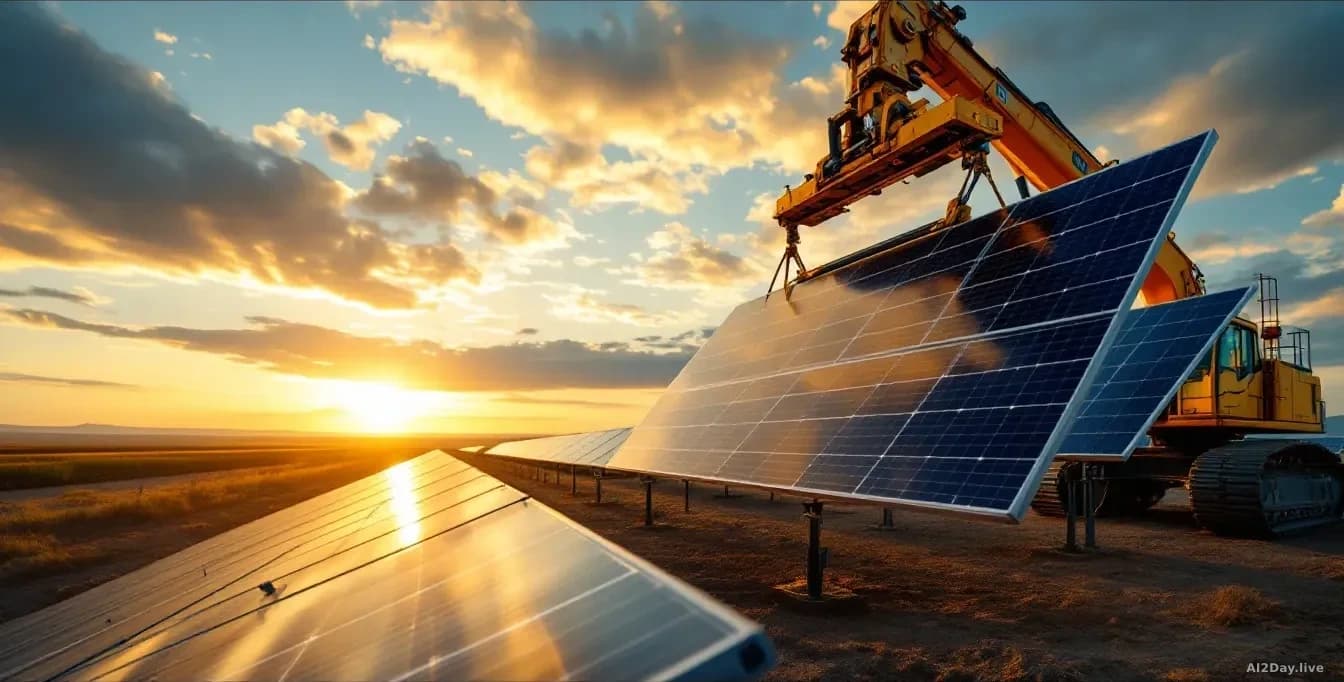
The San Francisco startup has put its autonomous excavators, standard heavy machines fitted with a sensor-and-computer kit that gives them self-driving ability, to work on three live projects. One is a water treatment facility in Nevada with Sundt Construction. Another is a large earthmoving site in Texas with Champion Site Prep. The third is a civil sitework project involving 1.2 million cubic yards of earth with Zachry Construction Corp, also in Texas.
What does the machine actually do?
Right now, it digs and moves earth. A site manager sets the initial plan, then the machine takes over, handling the clearing, cutting, and filling that prepares ground for foundations. Once that brief is set, no human needs to sit in the seat.
Bedrock's chief technology officer, Kevin Peterson, told The Robot Report that the system monitors its own progress and contacts a remote operator if it gets stuck. "The system monitors itself, and it looks to see what it's doing, whether it's making progress, and it'll call home if it gets stuck," he said. A human then helps resolve the issue, but the machine handles the rest on its own.
The kit itself is a same-day retrofit. It bolts onto a new excavator without permanent changes, uses sensors to read the environment, and runs a machine learning model, software trained on patterns from tens of thousands of hours of real fieldwork, to decide how to move.
Why does this matter for people in construction?
The industry has a staffing crisis building quietly in the background. Mastering an excavator typically takes five years of practice. Twenty per cent of construction workers are already over 55, and the retirement wave is coming fast.
At the same time, construction is genuinely dangerous. The death rate is disproportionate: one in five workplace fatalities in the US happens on a building site, even though construction employs fewer than one in thirteen workers.
Autonomous machines do not fix every problem overnight. But they can handle the predictable, repetitive, high-risk earthwork while experienced workers focus on the tasks that genuinely need human judgement.
"AI is creating opportunities in our industry that we could not have imagined just a few years ago, both in the office and in the field," said Cade Rowley, CEO of Sundt Construction.
What comes next?
Bedrock plans to expand in two directions. First, more sites and more customers. Second, more complex tasks, moving beyond basic earthwork into finer, more precise digging.
The bigger ambition is fleets of mixed machines, an excavator, a bulldozer, a truck, and a grader, working together without human direction on each individual unit. Peterson described it as "clusters of machines that work together" and said that capability is coming later this year.
For now, the machines being deployed are new units fitted at Bedrock's headquarters. Peterson expects the company to begin retrofitting partners' existing equipment before the end of 2025.
Common questions
Does this technology put construction workers out of a job?
Bedrock and its contractor partners say the goal is to fill roles that cannot currently be staffed, not to replace workers who are already there. The shortage of skilled excavator operators is the immediate problem the machines are designed to solve.
Is it safe to have a driverless digger working around people on a live site?
Bedrock's system uses sensors to detect other vehicles and workers nearby and can react to them in real time. A remote human operator stays in the loop and steps in if the machine gets stuck or encounters something it cannot handle on its own.